0
.223 Remington vs 5.56 NATO: What’s the Difference for AR-15 Owners?
If you’ve recently purchased an AR-15 or are shopping for ammunition, you’ve probably noticed two cartridges that appear almost identical sitting side by side on the shelf: .223 Remington and 5.56 NATO. At first glance, it’s easy to assume they’re interchangeable. After all, they use the same magazines, look virtually identical, and even share many of the same bullet weights.
The reality is a little more complicated.
While the cartridges have nearly identical external dimensions, they’re designed around different chamber specifications. That difference is important because using the wrong ammunition in the wrong rifle can create unsafe pressure levels.
The good news is that the compatibility rule is easy to remember. A rifle chambered for 5.56 NATO can safely fire both 5.56 NATO and .223 Remington ammunition. A rifle chambered only for .223 Remington should not fire 5.56 NATO ammunition.
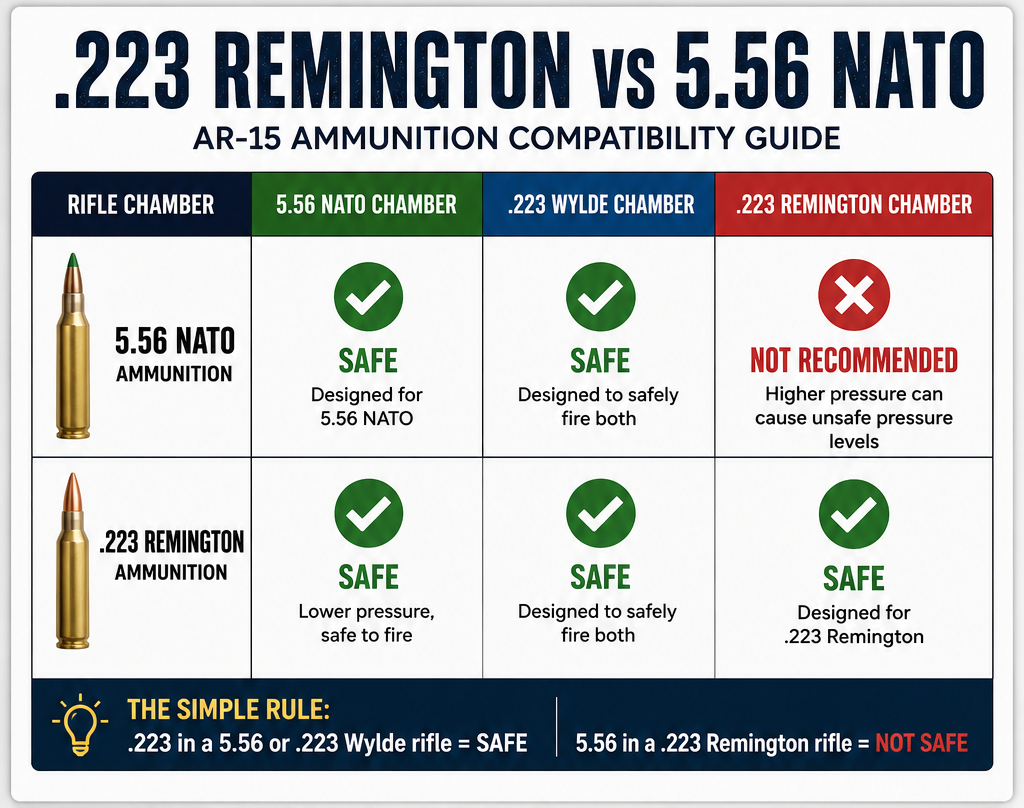
A simple chart to help you remember.
If you only remember one thing from this article, remember this table. It answers the question that thousands of new AR owners ask every year and could save you from making an expensive or potentially dangerous mistake.
In this guide, we’ll also break down exactly what separates these two cartridges, explain why chamber markings matter, show you how to identify what your rifle is chambered for, and help you decide which ammunition makes the most sense for your shooting style.
Are .223 and 5.56 the Same Thing?
Although .223 Remington and 5.56 NATO look nearly identical and share the same external dimensions, they are not the same cartridge. The differences lie in the chamber they were designed for, their operating pressures, and their intended applications.
The confusion is understandable because the cartridges are visually almost impossible to tell apart. Both use the same diameter bullet, both fit standard AR-15 magazines, and both function through the same bolt and magazine system.

Your standard AR-15 magazines will all accept both .223 Remington and 5.56 NATO ammunition.
The differences begin inside the rifle.
The .223 Remington cartridge was originally introduced as a commercial sporting cartridge. It quickly became popular with hunters, recreational shooters, and competitive marksmen because of its mild recoil, excellent accuracy, and relatively low price.
As military interest in the platform grew, the cartridge evolved into what became known as the 5.56 NATO. While it retained nearly identical external dimensions for logistical reasons, the chamber specifications were modified to better handle military ammunition loaded to higher operating pressures.
The biggest difference is the throat, also known as the leade.
A .223 chamber has a shorter throat, meaning the bullet begins engaging the rifling almost immediately after ignition. A 5.56 NATO chamber uses a slightly longer throat that gives the bullet more room before contacting the rifling. That extra space helps manage pressure.
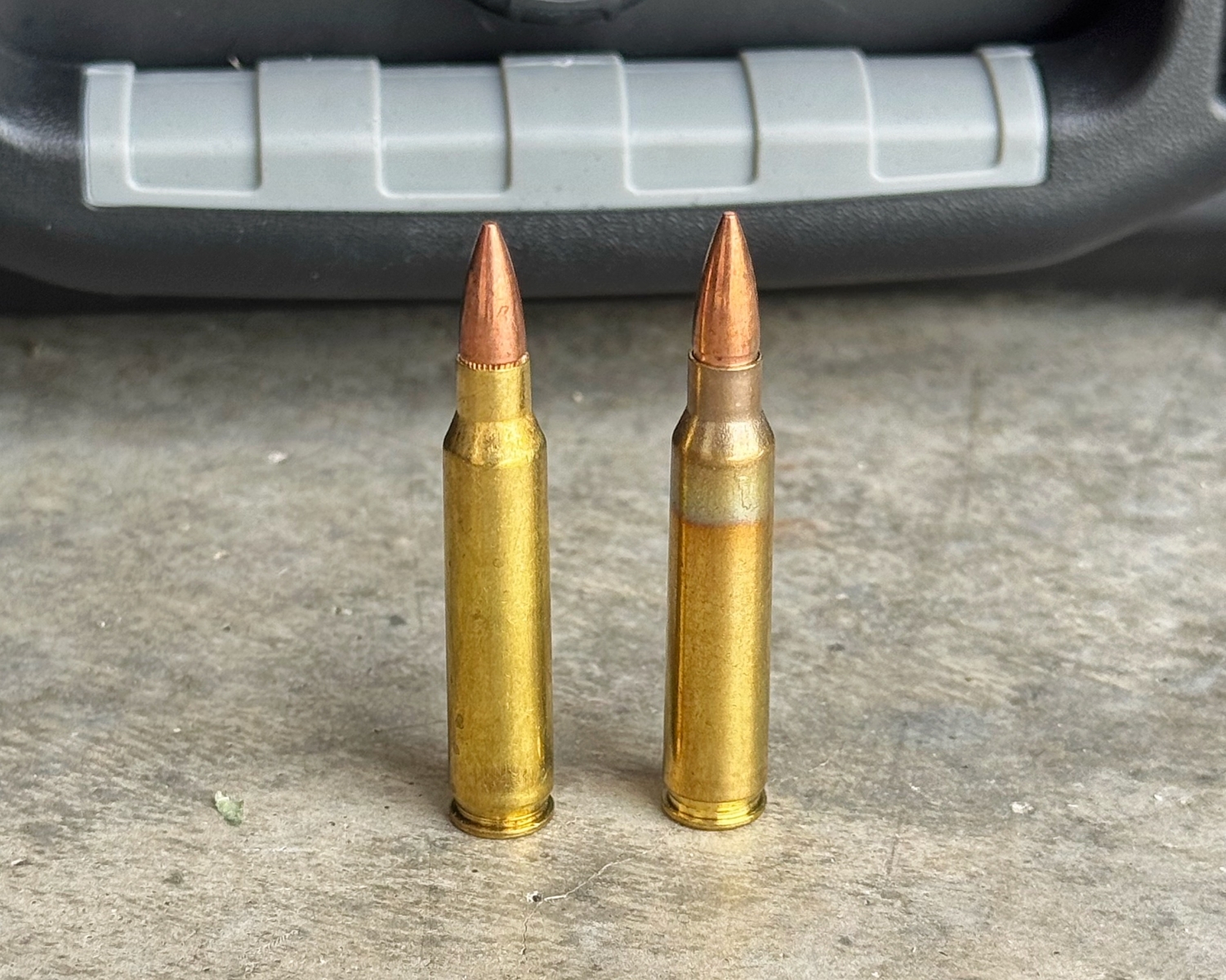
On the left is .223, and on the right is 5.56.
In simple terms:
.223 Remington is a civilian cartridge standardized around SAAMI specifications.
5.56 NATO is a military cartridge designed around NATO chamber dimensions and military pressure standards.
.223 vs 5.56: The Key Differences
Looking strictly at the numbers, the pressure difference may not seem significant. In reality, it’s the combination of higher pressure and different chamber geometry that matters.
Many shooters also assume 5.56 NATO is automatically more accurate because it typically produces slightly higher velocities. That’s not necessarily true. Accuracy depends on far more than velocity alone. Barrel quality, ammunition consistency, bullet weight, twist rate, and shooter skill all play a much larger role.
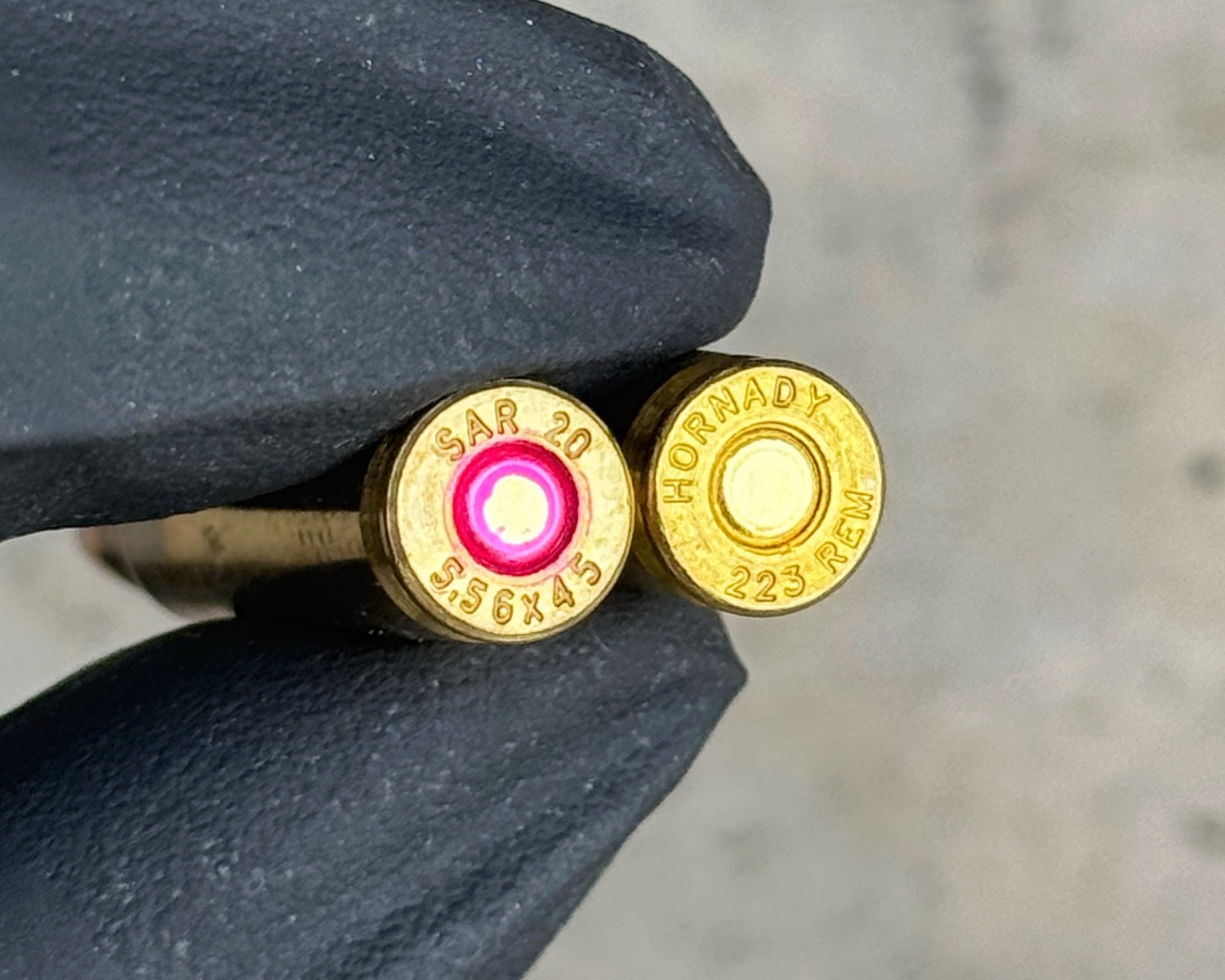
If you’re unclear, you can always check the headstamp.
For example, many precision shooters intentionally choose high-quality .223 Remington match ammunition because it’s loaded for consistency rather than maximum velocity. On the other hand, someone buying bulk ammunition for weekend range sessions may find 5.56 NATO to be the better value.
The good news is that if your rifle is chambered appropriately, both cartridges are capable of excellent performance out to several hundred yards.
Can You Shoot 5.56 in a .223 Rifle?
A rifle chambered only for .223 Remington should not be fired with 5.56 NATO ammunition.
This is by far the most important takeaway for new AR owners.
Although many people have done it without immediately experiencing a problem, that doesn’t make it a good practice. Firearms manufacturers and industry organizations all recommend using ammunition appropriate for your rifle’s chamber.
The reason comes down to pressure.
Over time, excessive pressure increases stress on components such as the bolt, locking lugs, and barrel extension. In extreme cases, it can contribute to difficult extraction, flattened primers, blown primers, or other pressure-related issues.
Fortunately, the opposite combination doesn’t present the same concern.
Since .223 Remington generally operates at lower pressure, it functions safely in a 5.56 chamber without creating excessive pressure.
If you’re ever unsure what your rifle is chambered for, it’s always better to play it safe until you’ve confirmed the markings.
How to Tell What Your Rifle Is Chambered For
The easiest way to determine which ammunition your rifle can safely fire is to look at the barrel.
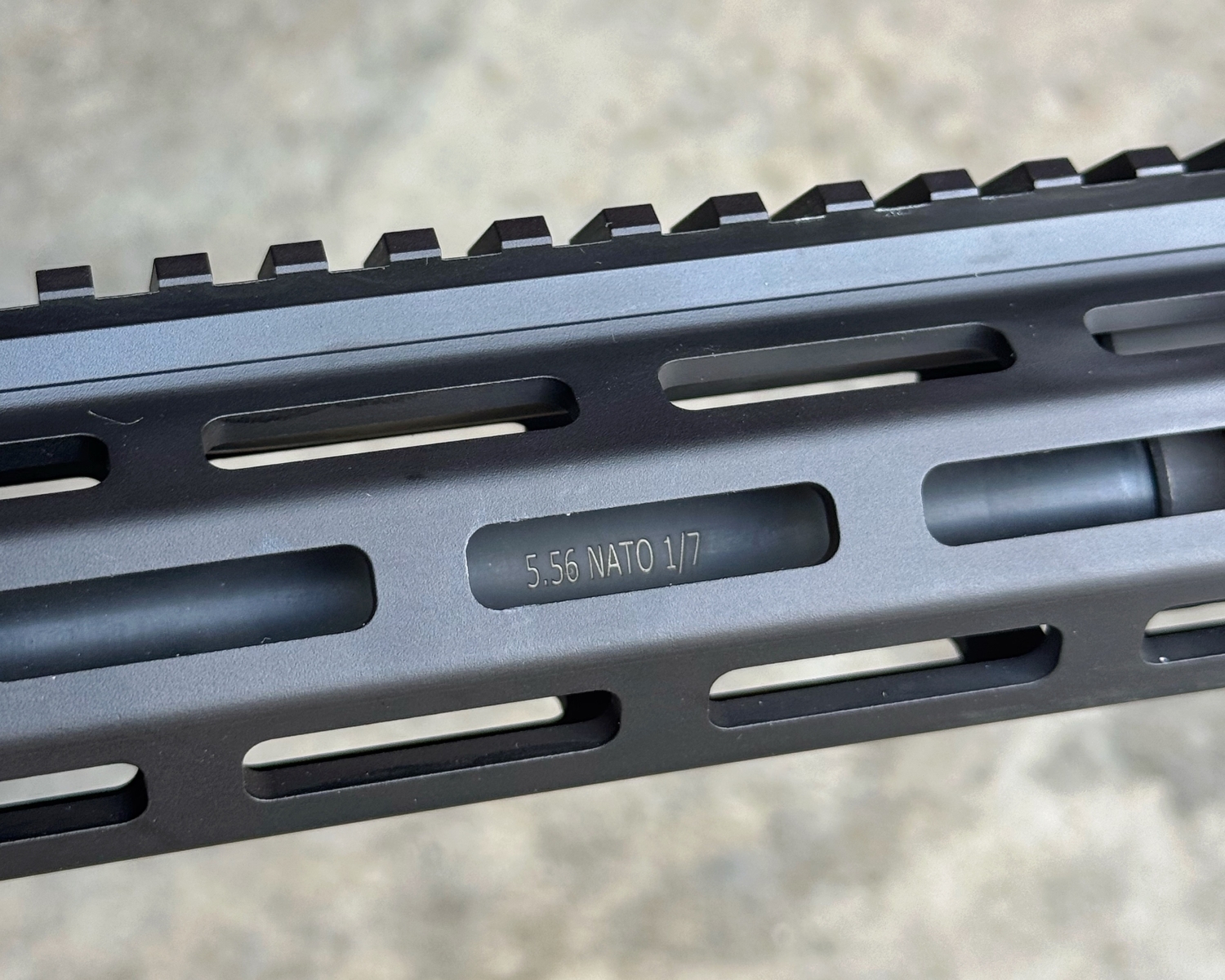
Always check the barrel.
Nearly every reputable manufacturer stamps the chambering directly onto the barrel, usually near the muzzle or just forward of the handguard. It only takes a few seconds to check, and it’s something every AR owner should do before buying ammunition in bulk.
Follow these simple steps:
- Locate the caliber marking on the barrel.
- If it says “.223 REM,” use .223 Remington ammunition only.
- If it says “5.56 NATO,” your rifle can safely fire both .223 Remington and 5.56 NATO.
- If it says “.223 Wylde,” your rifle is designed to safely handle both cartridges while often delivering improved accuracy with quality .223 loads.
- If you can’t find a marking or you’re unsure, consult your owner’s manual or the manufacturer’s website. If the rifle was assembled from aftermarket parts, verify the barrel manufacturer rather than assuming based on the upper receiver.
This is especially important for home-built ARs. Many shooters assemble rifles using components from multiple manufacturers, and not every barrel matches the markings found elsewhere on the firearm.
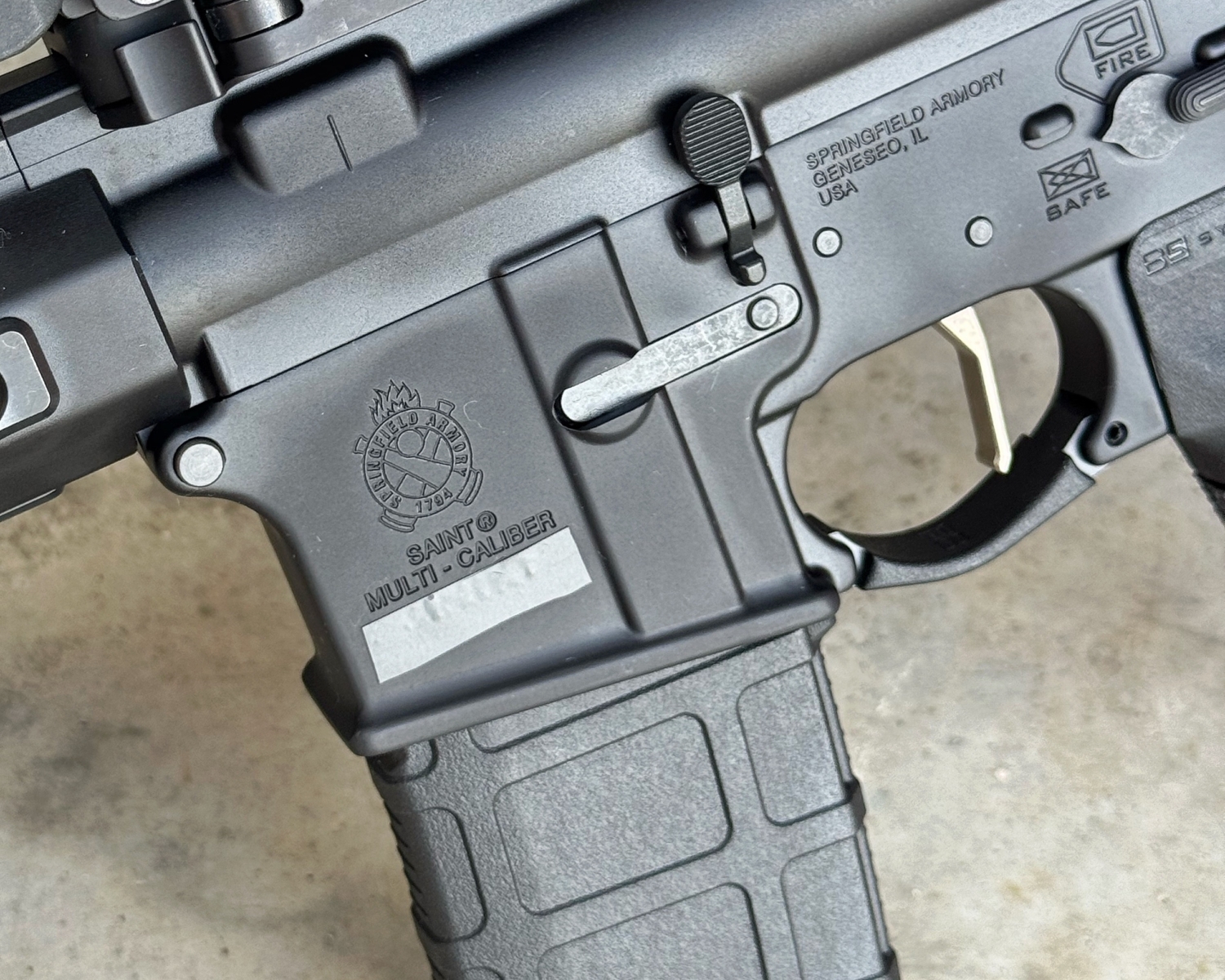
Some receivers may not be explicitly clear, so you’ll always want to check the barrel.
A good practice is to verify the chambering once and make a note of it. That way, whenever you’re buying ammunition at your local gun store or ordering online, you’ll know exactly what your rifle is designed to shoot.
What Is .223 Wylde and Should You Care?
.223 Wylde is a hybrid chamber designed to safely fire both .223 Remington and 5.56 NATO ammunition while offering the potential for better accuracy than a standard 5.56 NATO chamber. For many AR-15 owners, it combines the best qualities of both chamber designs.
The chamber was developed by Bill Wylde, who wanted a solution that allowed shooters to safely use higher pressure 5.56 NATO ammunition without sacrificing the accuracy many precision shooters appreciated from .223 Remington chambers.
Instead of simply choosing one design over the other, the .223 Wylde chamber uses dimensions that fall between the two. The throat is optimized to safely accommodate 5.56 NATO pressures while maintaining tighter tolerances that often benefit quality .223 match ammunition.
For the average shooter, the technical details aren’t nearly as important as the practical benefits.
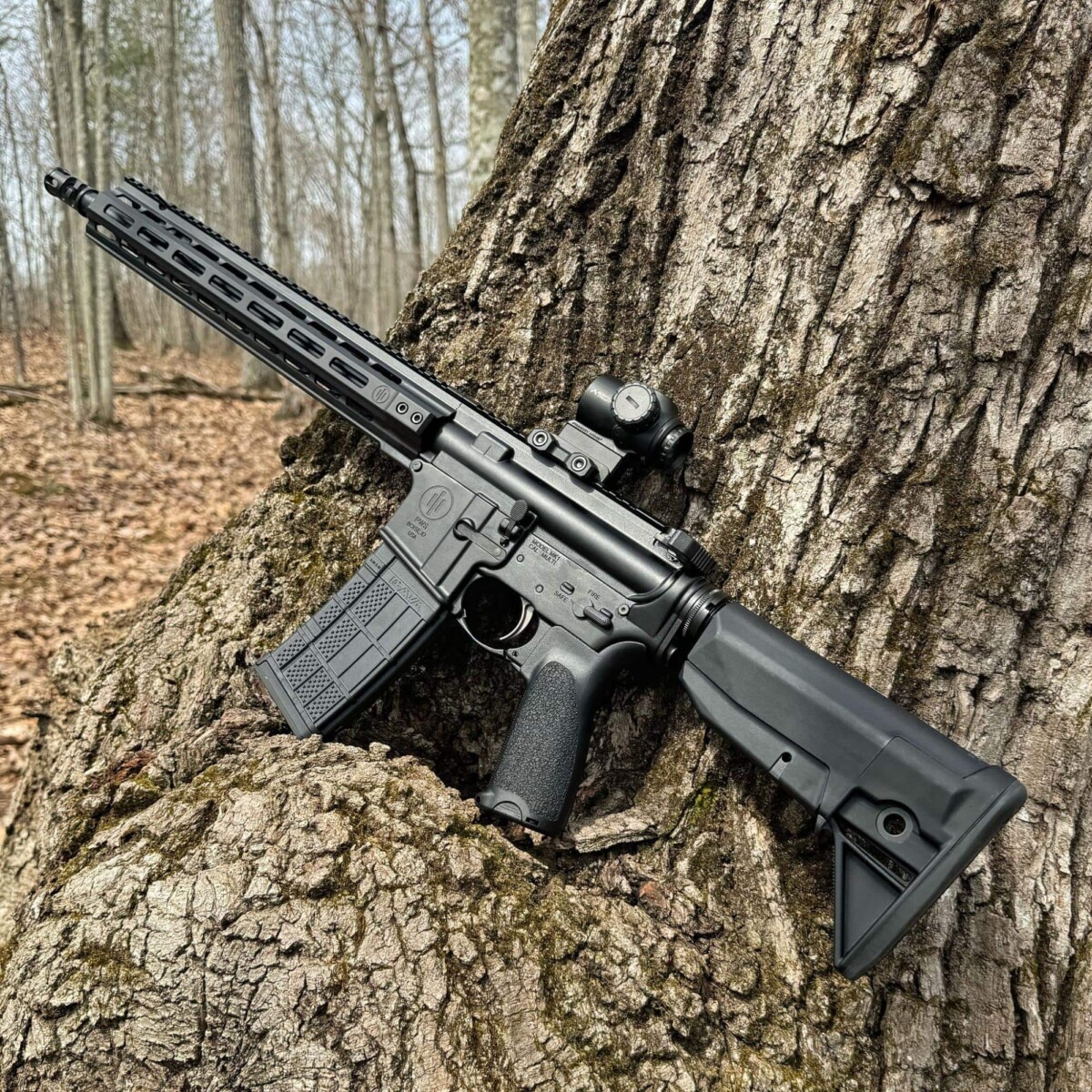
Primary Weapon Systems is well known for using .223 Wylde barrels.
A rifle chambered in .223 Wylde lets you head to the range with affordable bulk 5.56 NATO ammunition one weekend, then switch to premium .223 match ammunition for accuracy testing or competition without worrying about compatibility. That kind of flexibility has made the chamber increasingly popular.
It’s also one of the reasons you’ll see .223 Wylde offered on many higher-end AR-15s today. Now, does everyone need a .223 Wylde chamber? Probably not.
If you already own a quality 5.56 NATO rifle and it shoots well, there’s little reason to replace the barrel solely to gain a Wylde chamber. However, if you’re shopping for a new rifle or building an AR from the ground up, a .223 Wylde barrel is often worth considering because it gives you the freedom to shoot either cartridge without compromise.
For many buyers, it’s simply the most versatile option available.
Which Ammo Should You Buy?
The answer depends on two things: what your rifle is chambered for and how you plan to use it.
If your rifle is chambered for 5.56 NATO or .223 Wylde, you have the luxury of choosing either cartridge. That flexibility allows you to shop based on price, availability, or the type of shooting you’re doing rather than worrying about compatibility.
If your rifle is marked .223 Remington, the decision is much easier. Stick with .223 ammunition. It’s the safest choice and exactly what the rifle was designed to fire.
SALE 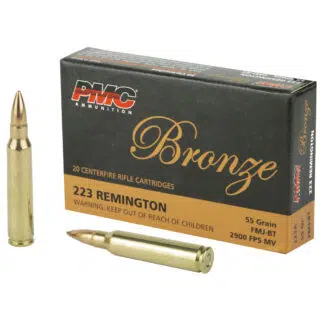 PMC Bronze .223 Remington 55gr FMJ Ammo
10 reviews
Original price was: $11.99.$8.49Current price is: $8.49.
PMC Bronze .223 Remington 55gr FMJ Ammo
10 reviews
Original price was: $11.99.$8.49Current price is: $8.49.

For casual range shooters, bulk 5.56 NATO is often an excellent value if your rifle can safely use it. It’s widely available, reliable, and perfect for training days where you’re sending a few hundred rounds downrange.
SALE 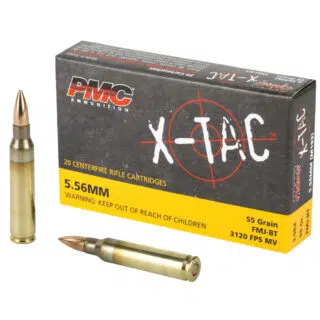 PMC X-TAC 5.56x45mm NATO 55gr FMJ Ammo
16 reviews
Original price was: $12.99.$9.99Current price is: $9.99.
PMC X-TAC 5.56x45mm NATO 55gr FMJ Ammo
16 reviews
Original price was: $12.99.$9.99Current price is: $9.99.
Hunters may lean toward premium .223 Remington loads depending on the game they’re pursuing. Many manufacturers offer excellent soft point and polymer tipped hunting ammunition that delivers outstanding accuracy while minimizing recoil.
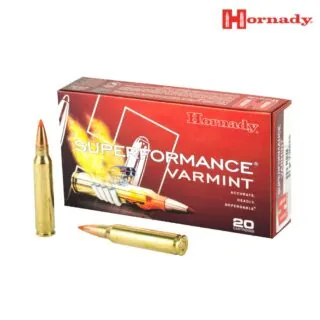
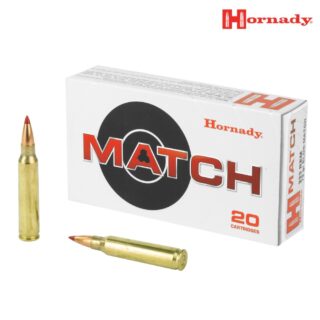
If your focus is precision shooting, don’t assume faster automatically means better. Match grade .223 ammunition has earned a strong reputation because of its consistency, and many precision AR shooters continue to use it for exactly that reason.
Home defense is another area where quality matters more than the headstamp on the cartridge. Whether you choose .223 or 5.56, selecting a proven defensive load designed for reliable expansion is far more important than simply opting for higher velocity.
The nice thing about both cartridges is their availability. Whether you’re shopping online or in stores, you’ll likely find multiple options in both categories. During periods when ammunition becomes harder to find, having a rifle chambered for 5.56 NATO or .223 Wylde can also provide a little more flexibility because you can purchase whichever cartridge is available.
If you’re still unsure which load fits your needs, you can head over to our comprehensive AR-15 ammunition buying guide, which can also help narrow your choices based on your intended use.
Bottom Line
At the end of the day, the most important rule is to match the ammo to the barrel stamp. You must start there, and then decide what type of corresponding ammo is best for your needs.
Shop our wide selection of .223 Remington/5.56 NATO products, and get stocked up today!