0
The Rise, Pros, And Cons Of Closed Emitter Optics
Slide-mounted reflex sights fitted to handguns and used as auxiliary aiming devices on rifles have become a staple in the firearms industry. Used by recreational shooters, everyday carriers, law enforcement, and high-speed operators, the “should we or shouldn’t we” ship sailed quite a while ago in favor of these miniature optics.
Now that is a tough decision!
But there’s a new player in town: the closed emitter mini and micro reflex. They are getting a lot of attention, prompting shooters to ask if an upgrade is in store. Today, we’ll take a closer look at the rise in popularity of closed emitter optics, some of the differences between them and their open-air predecessors,and the pros and cons of strapping one of these mailboxes to your firearm.
History
Pistol optics have been around for a lot longer than one might think, from the large tube-shaped monstrosities bolted to a handgun frame in the early days of USPSA and IPSC competition to the proliferation of modern slide-mounted solutions widely used on duty and concealed carry firearms today. Arguably, this trend began in 2009, when Trijicon released the Ruggedized Miniature Reflex, known simply as the RMR.
By this time, Doctor miniature reflex sights were already being piggybacked onto the Trijicon ACOG by American service members, giving the iconic 4x prism the ability to host a non-magnified aiming solution for close-quarters combat. It wasn’t long before we started seeing the ACOG fitted with the RMR, which led to expanded use as both a 12 o’clock piggyback and an offset solution for rifles running low-power variable optics (LPVOs) and more traditional scopes. To say this began a revolution of miniaturized reflex sights, mounts, and all the products supporting them would be an understatement.
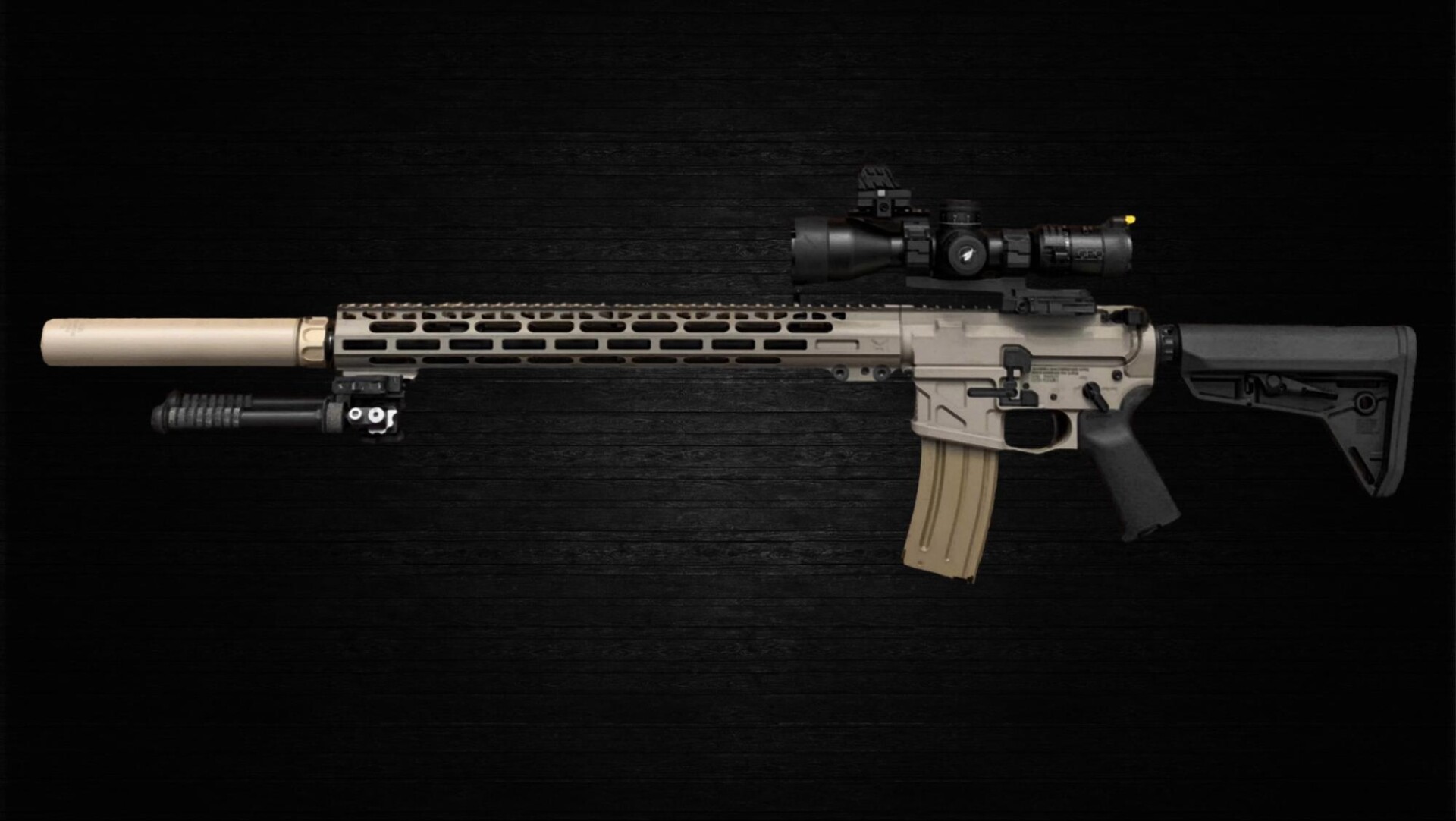
American Defense Manufacturing UIC MOD 2 SPR with German Precision Optics Centuri 4-16 Super Compact Optic and Holosun SCS enclosed emitter (Sig P320 footprint with Picatinny adapter).
In the beginning, however, handguns with factory optics cuts and mounting solutions weren’t a thing, so if you wanted to run an RMR, the only option was to send your slide out to be machined. With this inconvenience and added expense, it would be understandable to see this technology get a slow start from the gate, but when high-speed operators with a government-funded, endless supply of ammunition began to see the benefits of target versus front-sight focus, the industry and the community quickly followed suit.
Fast forward to 2025, and a manufacturer may receive sideways looks and snorts of derision for releasing a handgun without a factory optics cut. In fact, relatively few new handguns are available without this feature. The trend has also permeated the optics-mount side of the industry, as many, like myself, won’t even consider a mount without some provision for piggybacking a reflex sight or red dot. Welcome to the future.
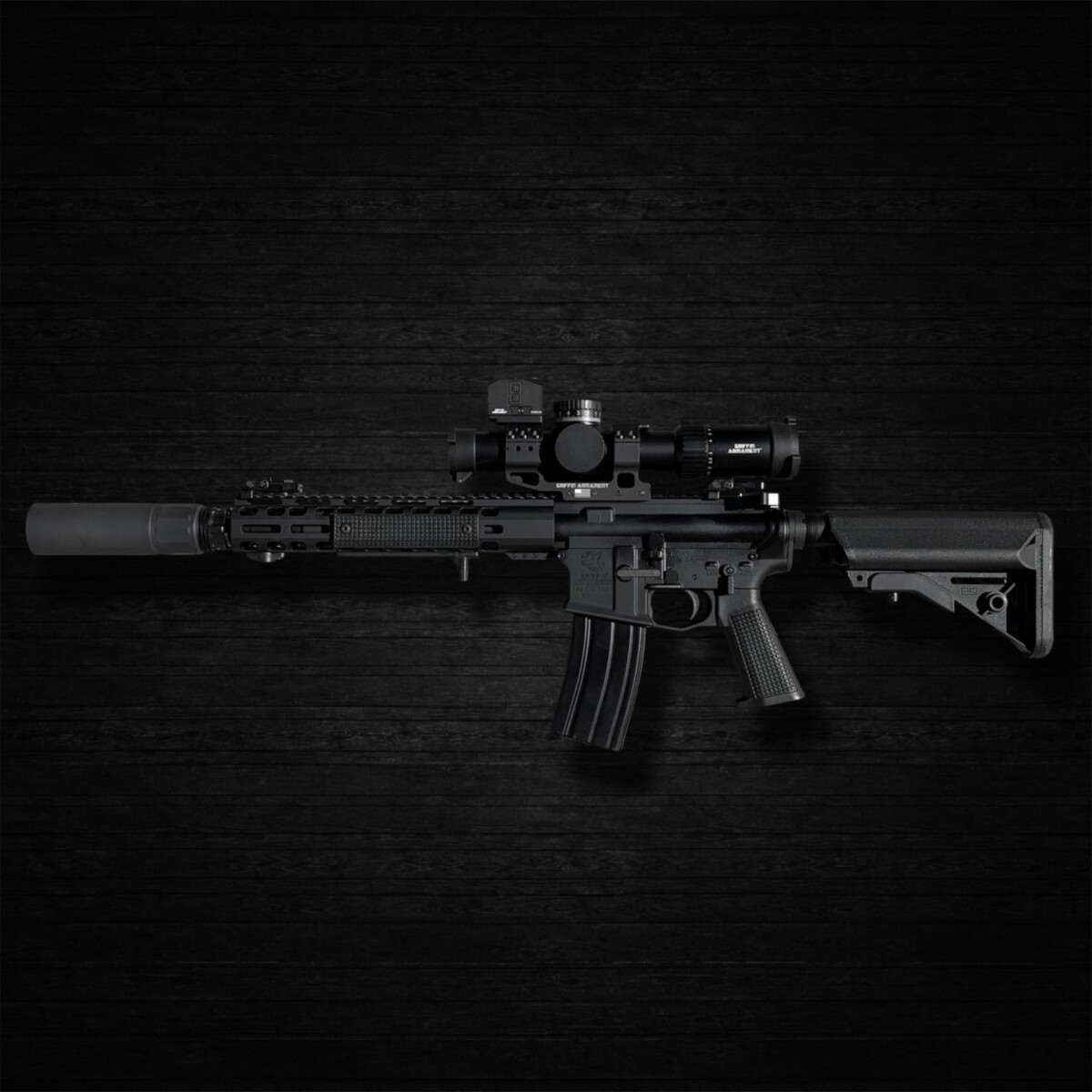
Griffin Armament MKII 11.5” with Optimus 6 Silencer. Griffin Armament lightweight mount, 1-10 LPVO, and green dot enclosed emitter Micro Sight.
The Misnomer
I won’t spend much time on this, out of fear of sounding pedantic. Reflex sights use an LED emitter diode to project collimated light onto and reflect it off an optic’s lens, creating the image of a dot or reticle. This covers both open- and closed-emitter sights. However, a red dot sight is technically a reflex sight that uses an enclosed housing with the emitter sandwiched between a front and rear lens.
Long story short, all red dots are reflex sights, but only closed emitter reflex sights are considered red dots. I’m not sure who this matters to, but if you’re out there, you’re welcome.
Open Emitter Woes
So, when did open emitter optics fail us? The truth is, they haven’t. I’m not necessarily saying that closed emitters are a solution looking for a problem, but I can’t say in good conscience that some of the issues they solve have actually been issues for the vast majority of shooters. I feel like this has to be said up front, just to get it out of the way. The Trijicon RMR is still the most widely used miniature reflex sight today, and you’ll still find original units going hard.
Open emitter reflex sights do have their advantages over closed emitter designs. First, they tend to be more lightweight and have a smaller footprint. If you’ve ever carried for long durations, you’ll appreciate this, as you’ll have less tugging on your belt all day. In the case of concealed carry, not only will this add to general comfort, but it will also factor into concealability, as less is always more when it comes to printing under clothing and giving yourself away.
Another advantage inherent in open emitter reflex sights is the perception of a wider field of view. I say perception because, when using the sight correctly, your field of view is more or less dictated by your eyesight, but obtaining a proper sight picture through a tube takes a little more practice and consistency when drawing and presenting a handgun. This factor alone may make open emitters a better choice for most competition settings where speed, target acquisition, and situational awareness are king. But wait, aren’t they always king?
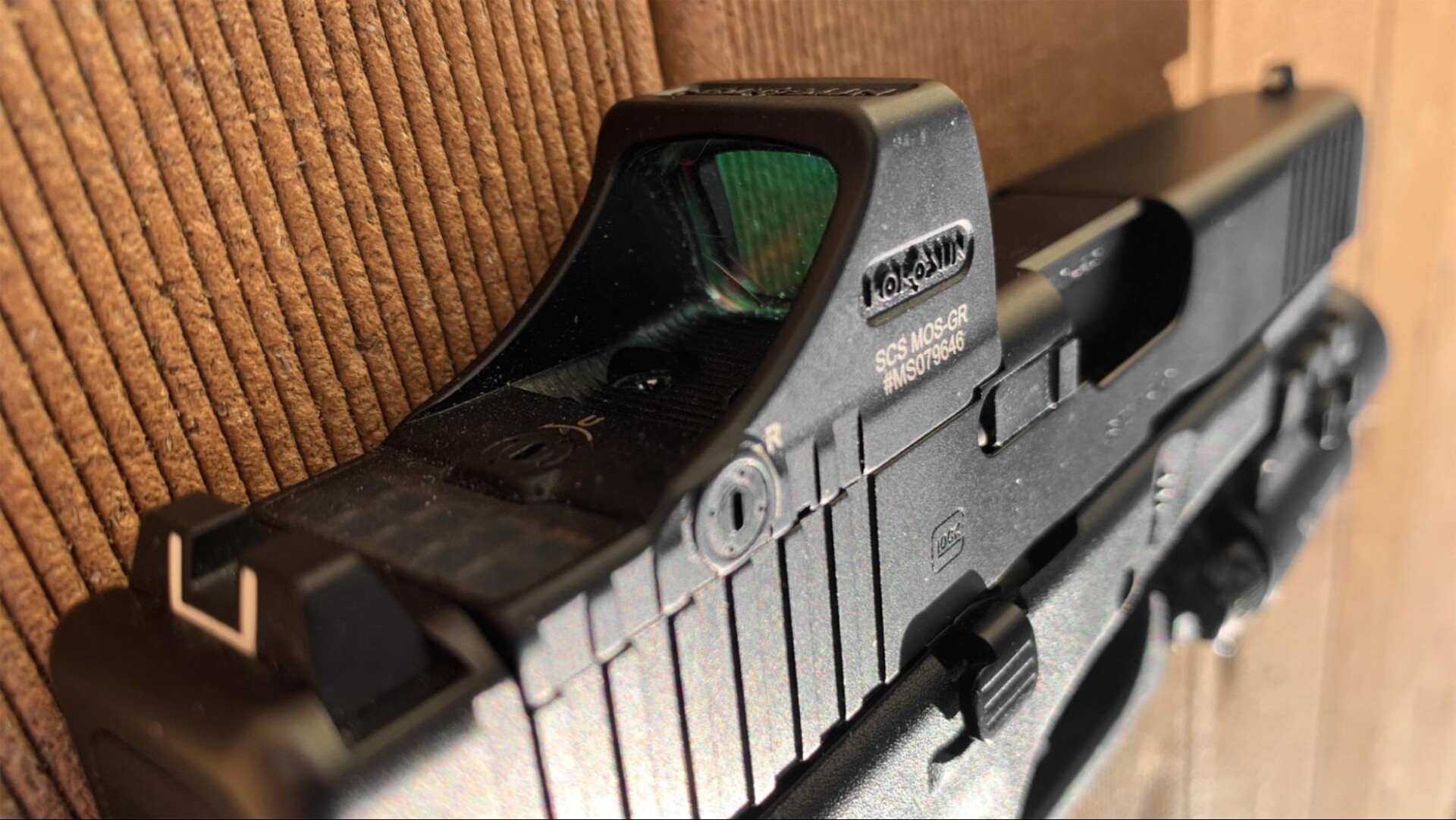
Holosun SCS for the Glock MOS. Notice where you would need to dig debris out of both an obstructed diode and the back side of the lens.
Like anything, practice makes perfect. It took me a while to get used to an RMR back in the day, and then another short stint where my wife had to put up with my dry-firing in the living room while she watched the housewives of whichever city they happened to be in.
Closed Emitter To Save The Day
So, where does the closed emitter miniature reflex get the idea that it is an improvement or evolution in the pistol dot game? Well, now that I have you all thinking that I’m going to poo poo closed emitters, it’s time to pivot, so beware of whiplash.
Arguably, the sight that started it all was the original Aimpoint ACRO P-1 back in 2019, which was replaced in 2021 by the P-2, offering brightness and battery-life improvements. Manufacturers caught on quickly, as demand for the latest and greatest increased exponentially, especially since this level of durability is definitely a necessity for basement LARPing and clearing the house while the wife takes a shower. Not me. I’m talking about a friend.
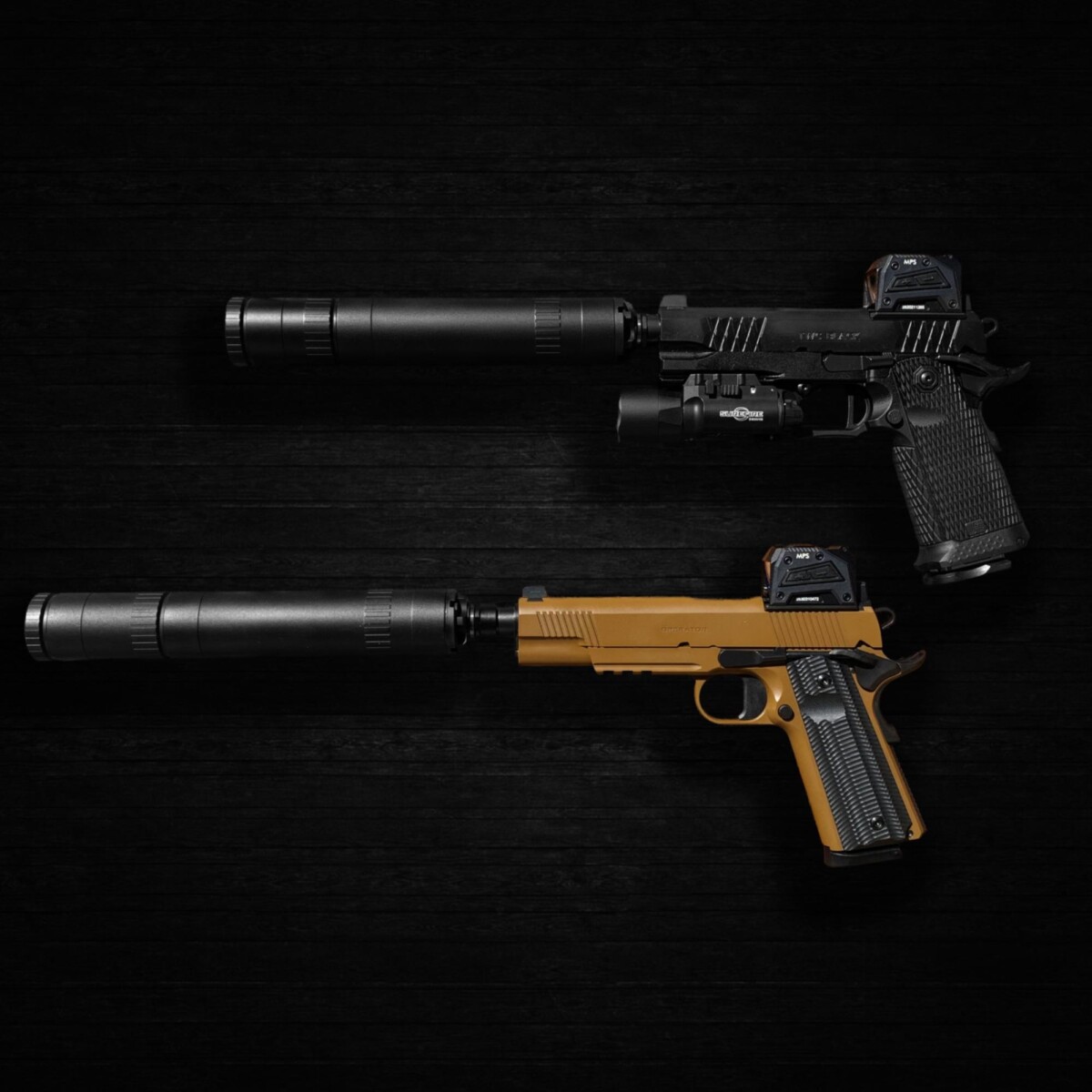
Closed emitter optics and suppressors pair perfectly for home defense.
Joking aside, one area where closed emitter sights are an effective upgrade is in excessively austere environments where the diode of an open emitter may be distorted or obscured by liquids or debris, blocking the ability to acquire a functional sight picture. Another related scenario in which a closed-emitter optic would excel is clearing caked-on debris, such as mud. While the forward lens on both designs is relatively easy to clean, most open emitter sights will require a little digging to clear the backside of that lens, whereas a closed emitter can simply be wiped off on the rear lens.
Another undeniable benefit of a well-made closed emitter reflex is durability. While open reflex sights like the RMR are battle-proven and tested to withstand thousands of rounds in some of the harshest environments known to man, physics tells us that a ruggedized and fully enclosed housing protecting the emitter diode and internal electronic components while demonstrating increased resiliency to shock, fog, water, and debris is going to take home that trophy. If durability in extreme environments is among your top concerns, then the trade-offs in size, weight, and, in many instances, cost are easily justified.
Which Should You Choose?
For duty, I don’t see any reason not to go with an enclosed emitter, and I say this even though I’ve personally never had an issue with an open reflex. Maybe I’m rougher on gear or more paranoid of things breaking under hard use, but I like the added piece of mind. Of course, I still run open reflex sights like the Holosun SCS, one of my favorites for the Glock MOS, because batteries never need to be changed and the SCS has a low-profile direct mount that allows it to co-witness standard-height iron sights.
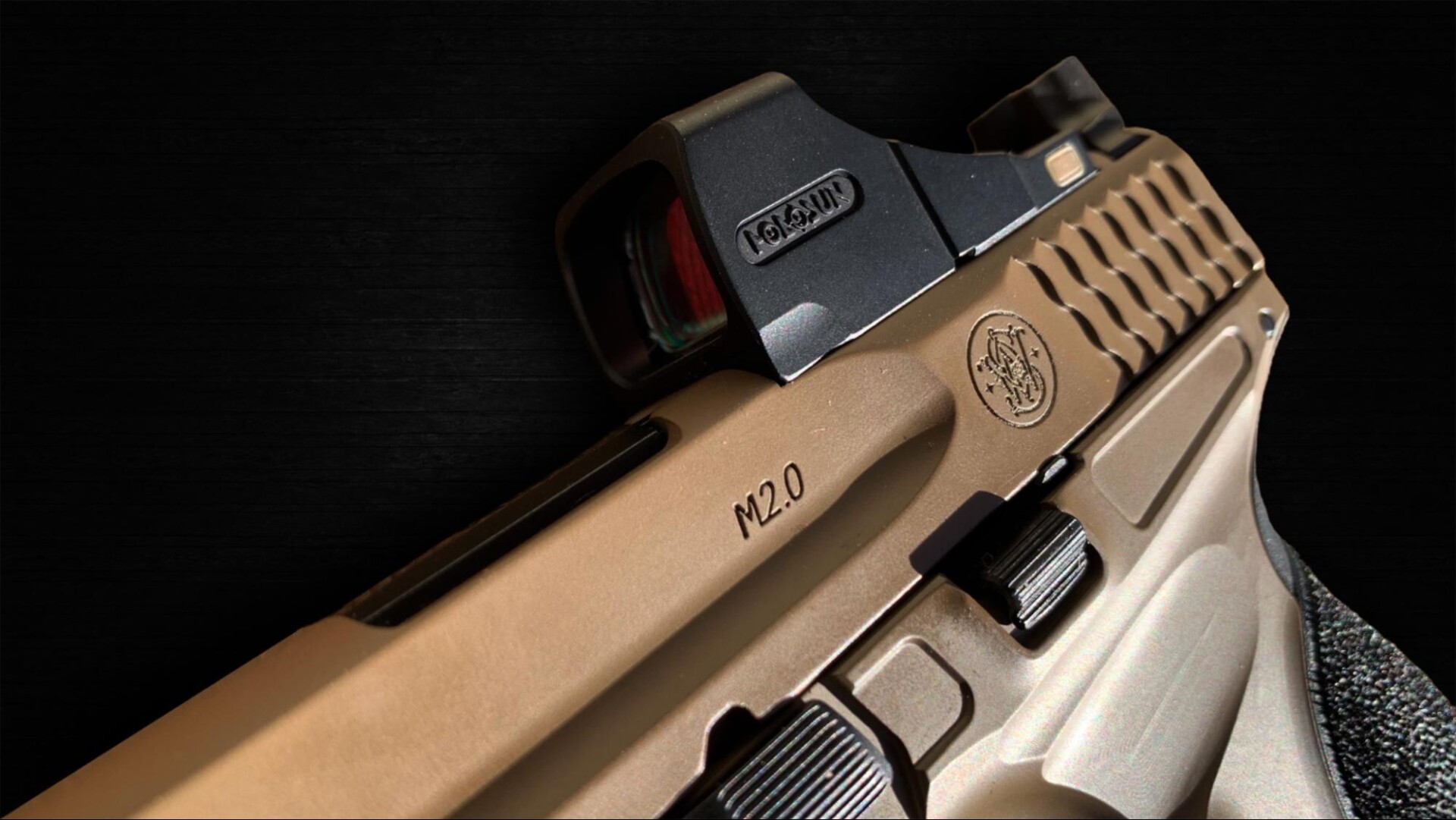
The Holosun SCS for the Smith & Wesson M&P.
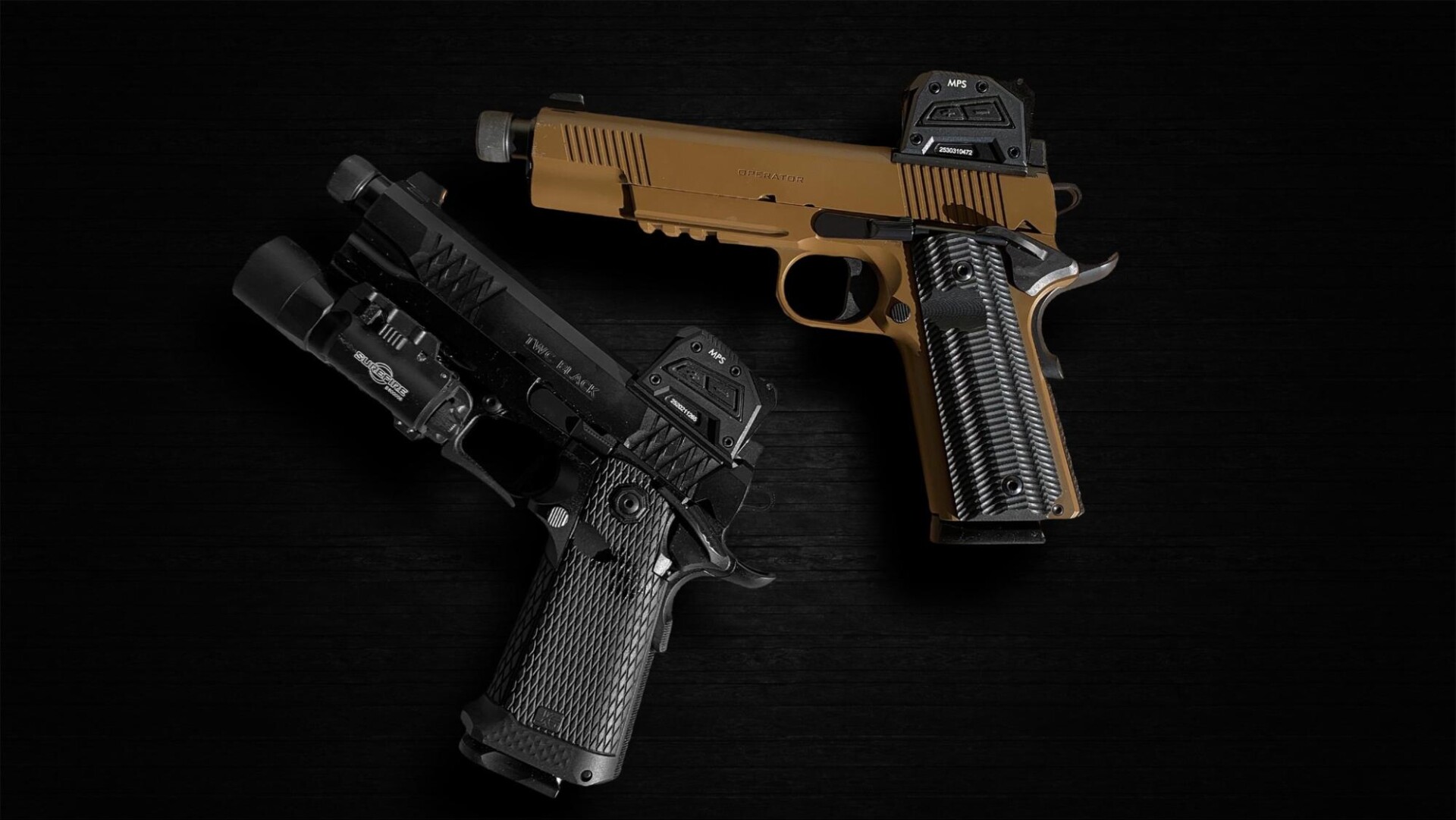
This is really one of those choices that comes down to personal preference and use case. When it comes to cost, you’ll find that enclosed emitter sights typically run more expensive than their open emitter counterparts, but the truth is that there are many options available for shooters of all budgets. While I have spent some time with an Aimpoint ACRO, I’ve been a huge fan of the Stiener MPS, which I run on several handguns, including my Springfield Armory Operator and Jacob Grey TWC Black.
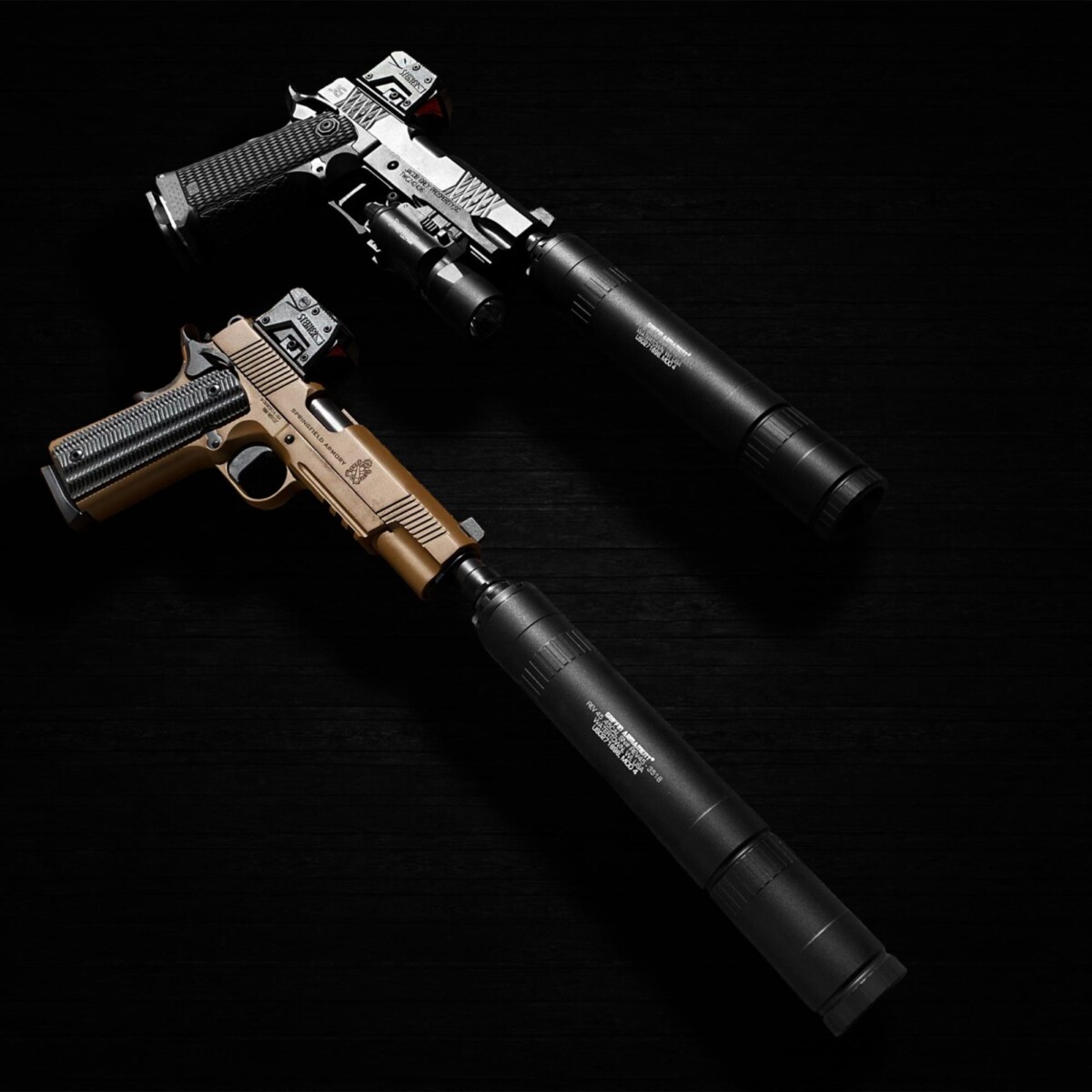
You can’t go wrong with either setup.
Additionally, a budget option that has run like a champ for me is the Griffin Armament Micro Sight, which retails for less than $250, has held up to a bit of shenanigans, and comes in either a red or, my personal favorite, green dot.
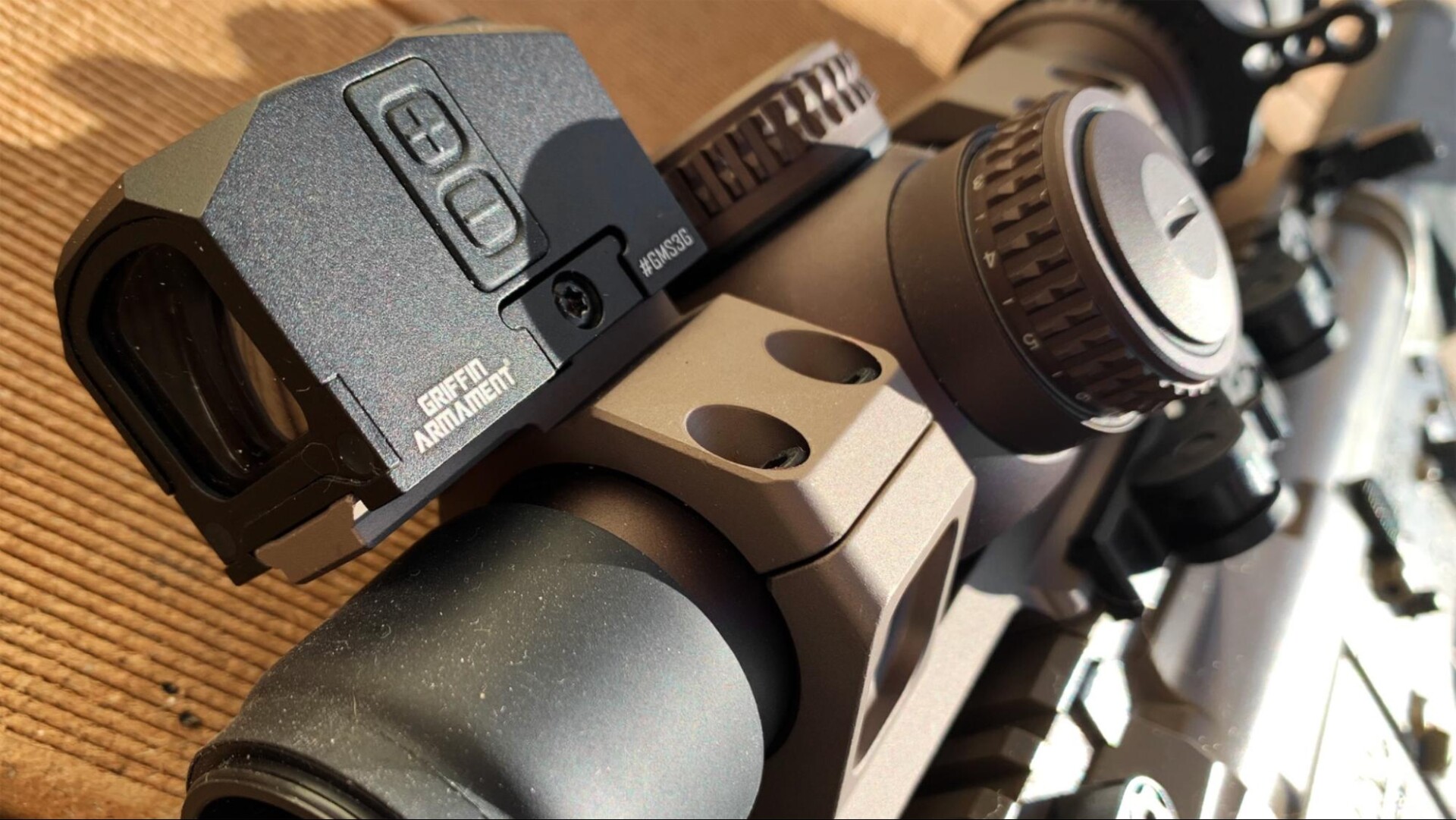
Griffin Armament Micro Sight on American Defense Manufacturing Delta Mount.
Final Thoughts
One of the great things about being an American is that it doesn’t matter if I need one. Wanting is enough, and that’s worked out well for me. The fact that we live in a time where we have so many viable options on the market doesn’t escape me either, so if I don’t own or didn’t mention your favorite mini reflex sight, it isn’t personal. Even a gunwriter can’t own them all. Luckily, both open and enclosed emitter sights have become so popular that anything you want to know about the many models available is just a few keystrokes away.
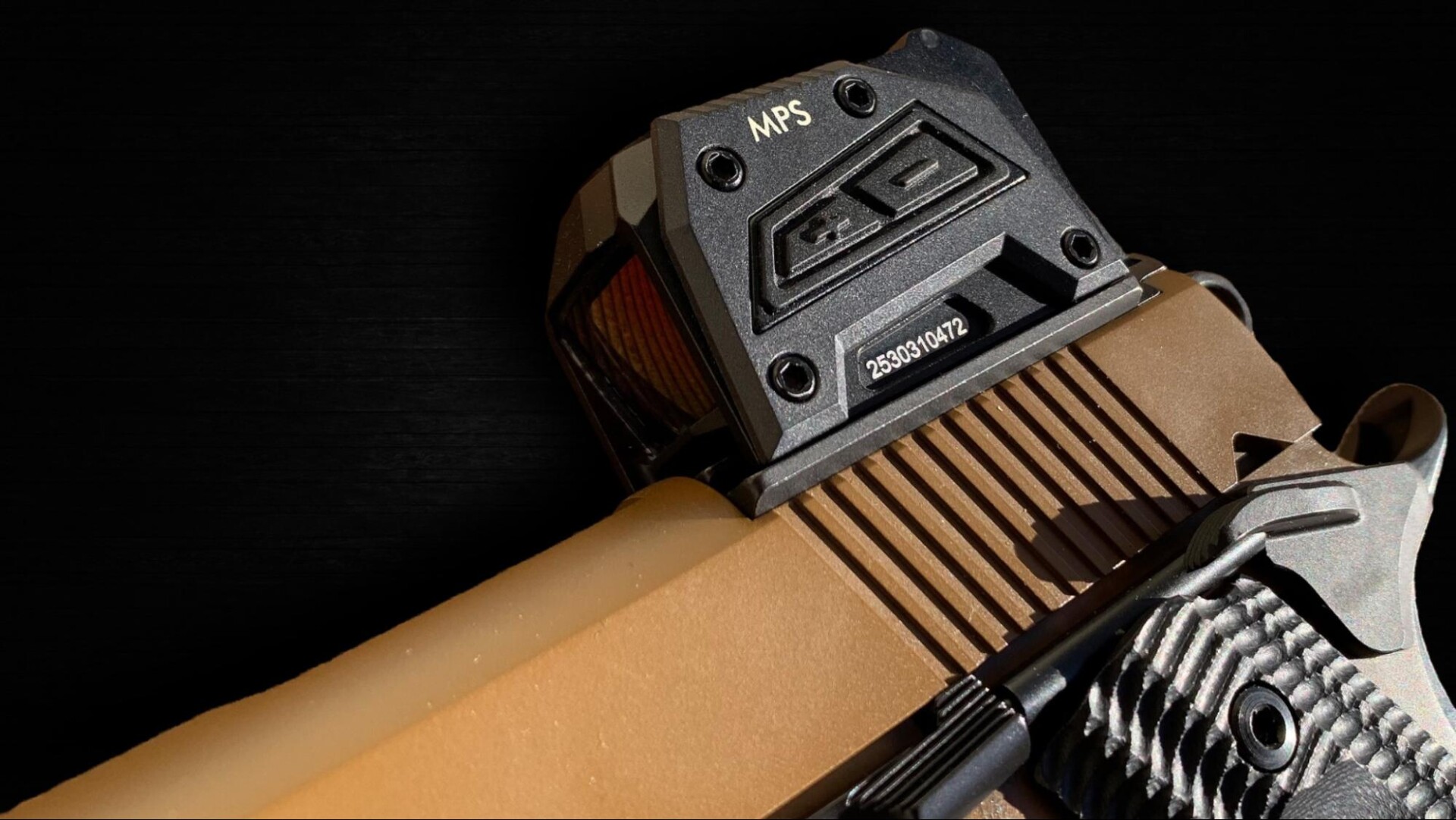
The Steiner MPS adds a level of sophistication to any gun.
Fortunately, all you’ll really need to be prepared for when choosing the optic that’s right for you is a list of criteria that meets your needs, whether you are looking for features like shake-awake technology, better battery life, a brighter or different color dot, or solar power backup. It would also be wise to understand your mounting options, as footprints vary and you’ll want to ensure compatibility with your platform. Window size may be a deciding factor for you as well, and learning curves early on may favor larger options like the Trijicon SRO, which can be faster and easier to acquire until you’ve put the time in at the range and in your living room.
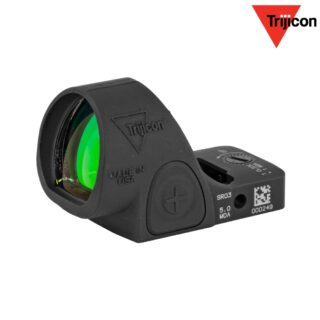

As I rattle off all the factors that one should consider, it occurs to me that whether or not a reflex sight has an open or closed emitter really isn’t high on my priority list. So, unless you see yourself operating in excessively adverse conditions or you know the nature of your work demands every last ounce of durability possible, find the optic you like the most and train with it, because that’s what will make all the difference in the world when it counts the most.