0
Current Trends in Ammunition: New Technology and Developments
Ammunition is an ever-evolving door. Hundreds of millions of rounds are fired to find a round that can excel at every level of shooting – from extreme long-range rounds capable of precision at 2,000 yards to the ones you carry in your pistol.
This innovation and the pursuit of never-ending ballistic excellence has given us rounds like .300 BLK, 6.5 Creedmoor, and my favorite, the legendary .408 Cheytac.
Every round invented has built on the success of another and weeded out the failures.
For instance, the 9mm, which came from Georg Luger, took the 7.65×21 Parabellum and the 7.65×25 Borchardt and mashed them together. What he came up with is still in service 100-plus years after his death, and countless efforts have been made to replace it.
In 2024, we saw Federal experiment with new tips for hunting rounds, and Remington introduce a new hunting round featuring a steel blend.
But we’ll dive into that in a minute.
So, what have these ballisticians been up to? Are there any rounds that look promising? And how do they stack up against the ones we have in our safes? Let’s dive in and see what’s happening with the brass.
We’ll break it down into shotgun, rifle, and pistol categories.
Shotgun
Remington Nitro Steel Duplex
The more birds, the more successful the hunting trip, right? Getting those pellets on target is critical; the more, the merrier.
So Remington has concocted a Frankenstein blend of two different-sized shot pellets along with the Remington four-petal wad, sending those pellets flying at magnum speeds and delivering a good shot grouping no matter the choke.

Remington Nitro Steel Duplex. Source
The Nitro Steel Duplex is intended for use with Waterfowl and is offered in four sizes. Other combinations are coming soon. For now, it is only available in 12 gauge with 3-inch shotshells.
Federal Prairie Storm Bismuth Blend
Lead has been a reliable metal for taking down birds for decades, but the Bismuth blend is for hunters who need an upland, non-toxic load.
With the success that Federal had with its Prairie Storm’s usage of the FLITECONTROL FLEX wad and Premium Steel Shot, it substituted Hevi-bismuth pellets in place of the FS Lead that was used in the standard Prairie Storm, which makes up 30% of the payload.

More velocity, more birds. Source
Hevi-bismuth is said to perform better, retaining its energy over a longer distance than steel. It is also faster when it takes off in the distance, and you only have seconds to get there.
Federal offers the Bismuth Blend for 20 and 12-gauge shotguns.
Rifle
Federal Fusion Tip
Metals are not the only way to enhance a round’s performance. Federal has been experimenting with polymer tips for a while and has seen success in smaller firearms. They are back with a design similar to the Fusion line but with a twist.
While the copper-bonded jacket and pressure-formed core are the same, the polymer tip allows for better aerodynamics, reduced drag, and enhanced ballistic coefficient over the standard Fusion.
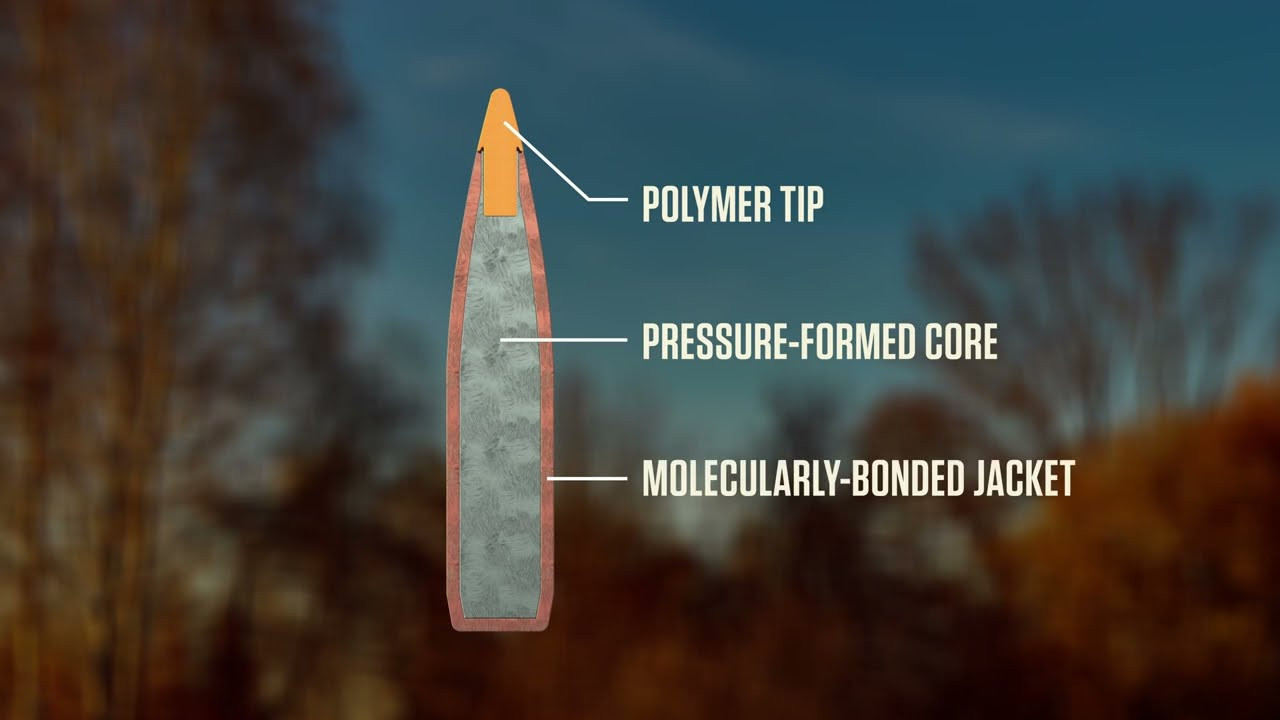
The makeup of the Federal Fusion Tip. Source
The polymer is embedded in a skived tip that helps with the bullet’s expansion on impact, creating a more significant, consistent wound cavity.
The Fusion Tip is available for multiple modern hunting calibers.
Remington Premier CuT
Cu – Copper and T – Tip is where the CuT in the name comes from.
Now that we have that out the way, the Copper Tip is a new round from Remington that features a monolithic copper alloy bullet promising great accuracy and terminal performance from the muzzle to the target.
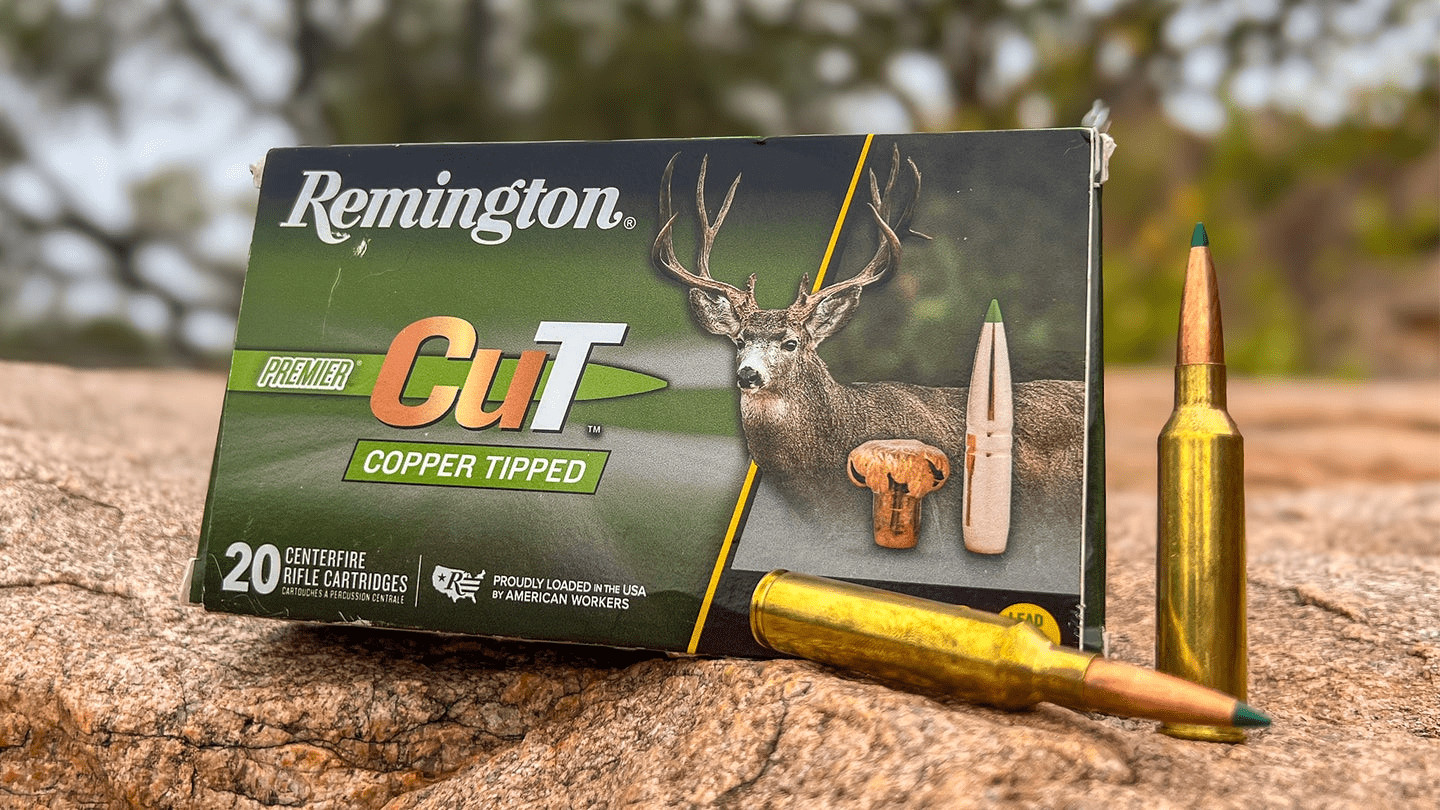
M855 on steroids, anyone? Source
Using this Copper-Alloy blend, Remington states that it gives the round better aerodynamic performance but allows it to retain its weight and achieve better penetration.
The Premier CuT round is available in various big game hunting cartridges.
Hornady V-Match
Hornady is constantly tweaking and experimenting with new ways to enhance its ammo line. The V-Match line is another tribute to the company’s dedication to ballistic excellence, and game worldwide are shaking in fear.

Hornady has some of the shiniest brass on the market. Source
The V-Match uses the ELD-VT (extreme low drag-varmint target) rounds, which result from years of research by Hornady. The low drag gives you the aerodynamics found in match-grade ammunition paired with the lightweight capabilities of a varmint round.
It is a do-it-all round, from home defense to taking out game at longer distances.
The V Match is available in various modern hunting calibers.
Ammo Inc. Hunt Line
The atmosphere of the hunt can change quickly, especially if you’re tracking over distance. In some cases, hunters have traversed many miles to find the perfect rack, and temperatures and weather change.
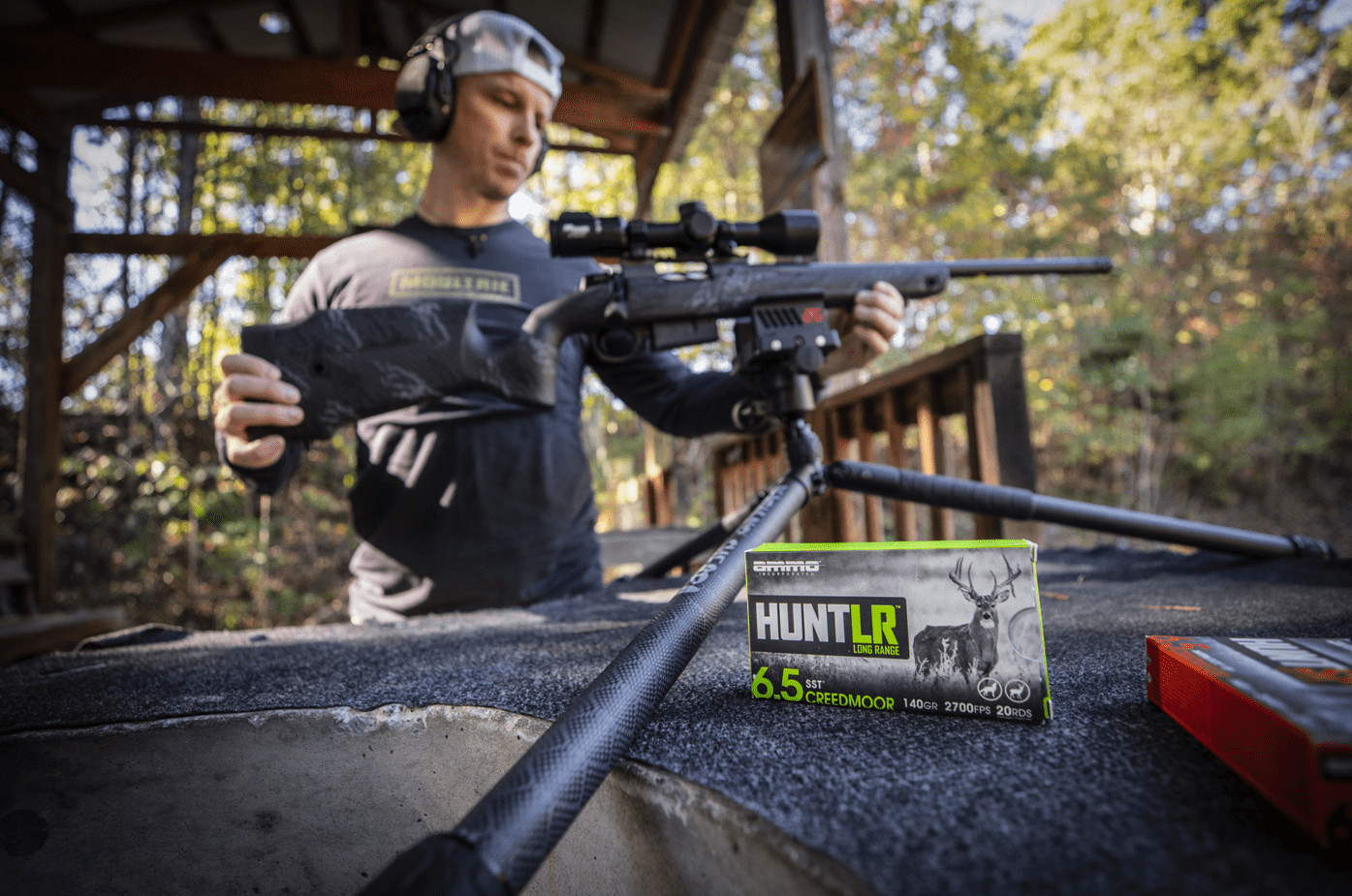
Ammo Inc Hunt in 6.5 Creedmoor. Source
The chance may be lost if the hunter brings the wrong ammo and the round changes its performance.
The Hunt Line from Ammo Inc. ensures that your hunt is always consistent and that your round is never the problem. Ammo Inc. uses the best powders it can source to ensure clean feeding, reliability, and consistency. Brass is made in-house.
Ammo Inc. offers the Hunt line for most modern hunting rounds, so you don’t need to change your rifle.
Pistol
Staccato 2011 Match 9mm
Staccato was at the forefront when the 1911 shapeshifted into a 9mm. When 2011 comes up in conversation, most immediately think of the Texas-based gun brand.
Staccato makes its 2011s duty-driven, but more than enough to thrive in every aspect of shooting, from combat to competition. Like any manufacturer who wants the best out of its pistols, having the right ammo is paramount.
Most of the time, this requires building the round around the pistol.

Staccato Match 9mm with a Staccato C make a perfect pair. Source
Wanting to showcase and maximize its pistols’ features, Staccato created its Match 9mm round to be the go-to when you want the best performance out of your 2011.
Surprisingly, the price is fair. I know, it’s hard to believe.
CCi Uppercut
.22LR is rarely seen as an effective cartridge for self-defense, but CCi has introduced a new round with this intention in mind: the Uppercut. It is a 32-grain round with a hollow tip designed for maximum expansion.

Ballistic testing done with the CCi Uppercut. Source
Everything about the round is meant for self-defense and optimized for use in pistols with a 2.5 to 4-inch barrel. You can use longer barrels, but CCi wanted you to be able to have as small a footprint as possible.
Nose skiving allows the bullet to petal back and expand reliably, and the ballistics show excellent penetration.
All of this gets you thinking: Is .22LR going to make a comeback?
Innovations
Lead-Free Ammo
We focus so much on gun safety, but how about the long-term killer like lead?
As much as some of us shooters hate to admit it, our sport is pretty toxic. Just think about how tired and off you feel after a long day of shooting high volume indoors. I know I, for one, feel sick as a dog.
Lead-free ammo mitigates that by removing cancerous chemicals from the firing process. Lead has been a big focus of the ammunition revolution for a while, and almost every manufacturer is racing to figure out how to make the sport safer.
After feeling sick after the range for many days, I’m excited to have the ability to eat my food without getting the spins. Not to mention the slightly lesser chance of having cancer later on.
While outdoor shooters may not see it as an issue, those who shoot indoors will benefit greatly.
Shell Tech Ammo
One company in particular, Shell Shock Technologies, is spearheading the race to replace brass with Nickel Alloy and is now offering ammo chambered in .380 ACP, 9mm, 5.56×45, and .300 Blackout.
7.62×51 is rumored to be on the way for training, self-defense, and hunting applications, as hunters are going crazy for the new lightweight round.
Most importantly, a 30% reduction in weight is groundbreaking and makes Nickel Alloy a strong contender for military applications, thanks to its ability to reduce troop fatigue.
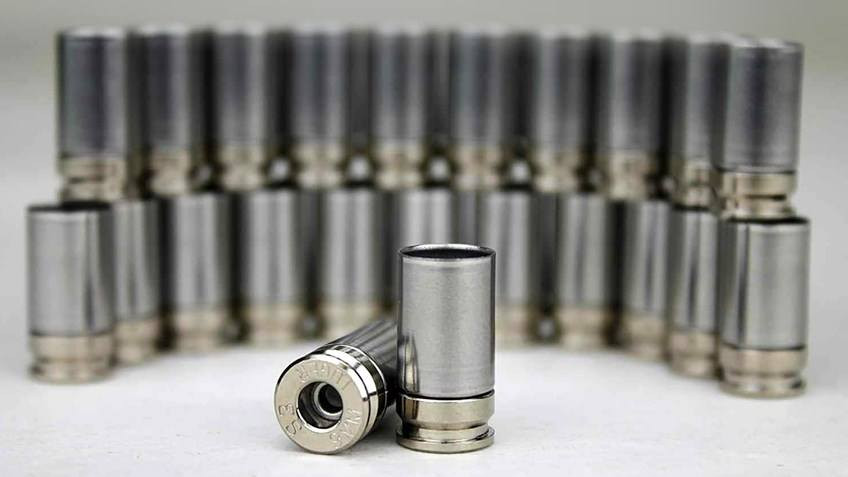
It doesn’t look half bad either! Source
Think about it. The ability to either carry more ammo or reduce weight will allow soldiers to move faster and be more efficient. It can also reduce the injuries soldiers experience in their legs and hips due to the extra weight.
Smart Guns
Technology has been trying to find a way to make firearms safer. One way is to use RFID or a fingerprint to lock and unlock a firearm. Using an intelligent chip, the RFID can render the firearm useless if not in proximity.
This can be seen as good or bad, but it may be one of the many ways firearms evolve. I’ll take my firearms dumb, though.
Smart Ammo
Usually, smart guns are the main topic when discussing how technology is changing firearms.
Now, steps are being taken to make ammunition more intelligent by using self-destructing rounds to limit the chance of collateral damage. Additionally, DARPA is looking for a way to make the .50 Caliber hone in on a particular target, making the average bullet capable of being guided. But shrinking tech to that size is complex and expensive.
So, for now, smart ammunition remains more of an experiment.
Conclusion
Ammunition has come a long way over the years. We’ve gone from muzzle loaders that take minutes to reload one round to firearms that fire 900 rounds per minute and are on the verge of having ammo that guides itself to the target.
What’s going to be the case in 50 years? Will ammo be heat-seeking? Will your pistol be able to recognize your touch and memorize it?
Maybe they’ll have found a replacement for the 9mm by then, but most likely not—it’s been 123 years.
Be good and take care.