0
Extended Pistol and Rifle Magazines: Are They Reliable?
We’ve all been there; wishing we had a few more rounds and didn’t have to stop and reload as often at the range. Nobody wants to take time away from sending rounds down range to load more magazines. At least I don’t.
With the help of extended magazines, you can maximize your time shooting and training. And that’s what we all need to do as responsible gun owners!
For defensive purposes, the extra rounds can be a matter of life and death, so extended magazines offer a ton of value.
However, many people question extended magazines’ reliability, and rightfully so. Today we’ll examine everything from the types of extended magazines to their pros and cons, to help you decide for yourself…should you trust extended magazines?
Types of Extended Mags
First, let’s talk about the types of extended magazines that provide a proper lay of the land.
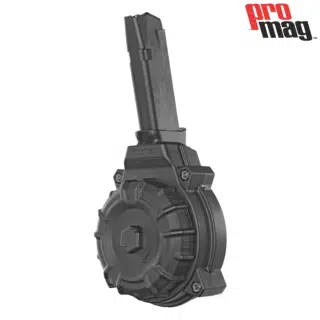
Extended magazines come in all shapes, calibers, and capacities. From standard stick magazines that only offer a handful of extra rounds to drum magazines that can provide up to 100 rounds or more, there are extended options for every purpose.

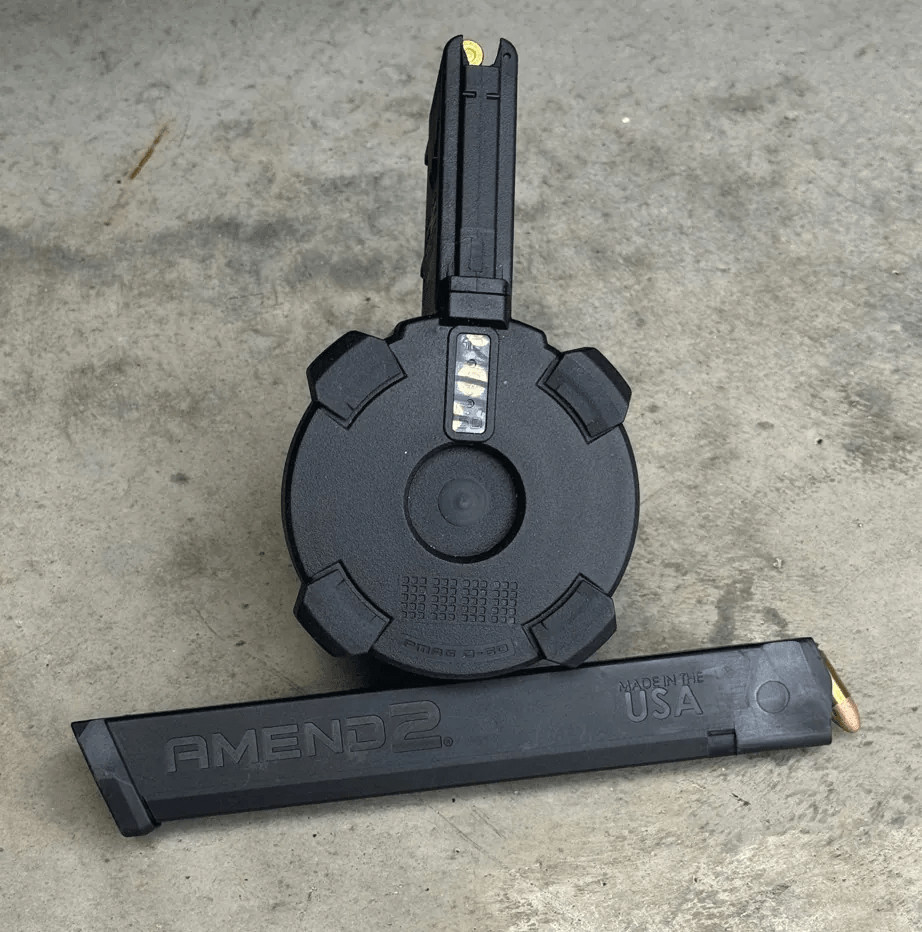
Same goal but different approach.
Any stick magazine that offers additional capacity over the standard one that comes with your gun can be considered an extended magazine. For example, a 17-round Glock magazine can be considered an extended magazine when used with a Glock 26. Or a more typical example would be using a 24 or 33-round Glock magazine.

SALE  Glock 17, 19, 26 9mm 33 Round Gen 5 Extended Magazine
574 reviews
Original price was: $48.00.$39.99Current price is: $39.99.
Glock 17, 19, 26 9mm 33 Round Gen 5 Extended Magazine
574 reviews
Original price was: $48.00.$39.99Current price is: $39.99.
See? Both can be considered extended depending on the host firearm.
Drum magazines are apparent, as they stick out like sore thumbs. You’ll find fewer options available in a drum layout as you will stick, but either style gets the job done of providing additional capacity.

Added capacity with minimal footprint disruption thanks to Tyrant CNC.
Last but certainly not least, you can extend your existing magazine via a magazine extension. You can take your standard magazines, switch out the baseplates and in some instances springs, and instantly increase your capacity. Take notice of the photo above – with the Tyrant CNC +5 magazine extension, I was able to run my OEM 15-round Glock magazine into a 20-round extended magazine!
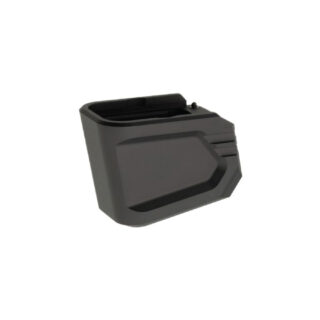

This approach can be more affordable than buying a new magazine and sometimes better suits the aesthetic of your gun.
When & Where To Use Them
I’ve been using all types of extended magazines and extensions for many years and thousands of rounds, so you can say I’ve done my fair share of testing and evaluation. Like any type of magazine, some are more reliable than others.
What I’ve found is that reliability comes down to the same factors you’d judge a standard capacity magazine by. Certain manufacturers are known for less-quality magazines, while others almost never seem to have issues. This has been evident throughout my extended magazine experience as well.

This might be a little hard to conceal carry. Source
For any defensive firearm, I strongly recommend sticking to OEM magazines, and in the case of rifles, sticking with high-quality and proven options like Magpul and Lancer, etc.
I’ve had no more malfunctions with my 24-round Glock magazines than my 15-round ones, and no more malfunctions with my Magpul D60 Drum Mag than my 30-round PMAG GEN M3.
SALE 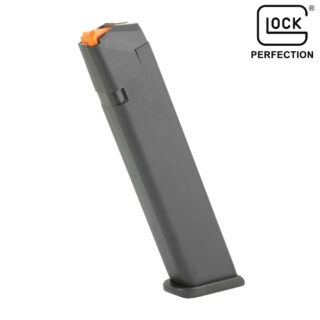 Glock 17, 19, 26 9mm 24 Round Gen 5 Extended Magazine
74 reviews
Original price was: $48.00.$39.99Current price is: $39.99.
Glock 17, 19, 26 9mm 24 Round Gen 5 Extended Magazine
74 reviews
Original price was: $48.00.$39.99Current price is: $39.99.
SALE 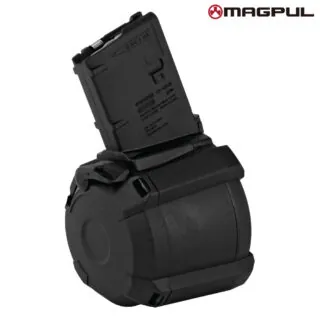 Magpul PMAG D-60 GEN M3 AR-15 .223/5.56 60 Round Drum Magazine
100 reviews
Original price was: $139.99.$124.99Current price is: $124.99.
Magpul PMAG D-60 GEN M3 AR-15 .223/5.56 60 Round Drum Magazine
100 reviews
Original price was: $139.99.$124.99Current price is: $124.99.
SALE 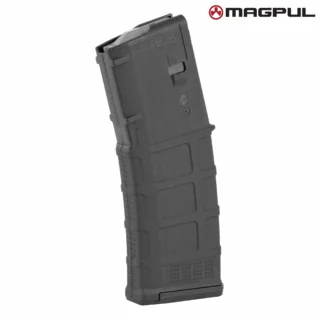 Magpul PMAG GEN M3 AR-15 .223/5.56 30 Round Magazine
652 reviews
Original price was: $14.99.$12.99Current price is: $12.99.
Magpul PMAG GEN M3 AR-15 .223/5.56 30 Round Magazine
652 reviews
Original price was: $14.99.$12.99Current price is: $12.99.
When it comes to range time or competitions where your life isn’t on the line, I would say feel free to go with any extended magazine. You can choose based on aesthetics, cost, or anything you wish. Think along the lines of your ETS, ProMag, or Amend2 magazines.
That was all a long winded way of saying that extended magazines can be just as reliable as your standard capacity.
Pros & Cons
So let’s take a moment to think about all the pros and cons of extended magazines.
Pros:
- More ammo = more security
- Less time spent reloading
- Great for breaking in new guns
- Can be aesthetically pleasing
Cons:
- Often more expensive than standard capacity magazines
- Adds a significant amount of weight
- More challenging to conceal and maneuver with
Final Thoughts
That’s about all you need to know about extended magazines to make up your own mind. At the end of the day, I believe extended magazines have a time and place, just like any other magazine.
The important thing is that you train with your magazines and consider what role(s) you need them for. You don’t want to put your life on the line and rely on a no-name aftermarket magazine.
Lastly, test your magazines extensively to ensure your firearm functions well with them. No amount of online reviews can ensure your gun works well with a specific magazine.
As always, stay safe, train hard, and have fun!