0
Forced Reset Triggers Are Making The Taurus TX22 More Popular Than Ever
The Taurus TX22 has quietly become one of those platform surprises that appeals to everybody, from plinkers to budget competitors. Ergonomics, magazines that hold plenty of rounds, and an optics-ready slide on later models have made it an obvious candidate for aftermarket tuning.
Lately, that interest has focused on something surprising: forced-reset triggers, or FRTs. What is a forced-reset trigger, you ask? Simply put, it is a trigger or an adaptor that allows you to pull the trigger incredibly fast, thereby shooting much faster than all but the most accomplished competition shooters.
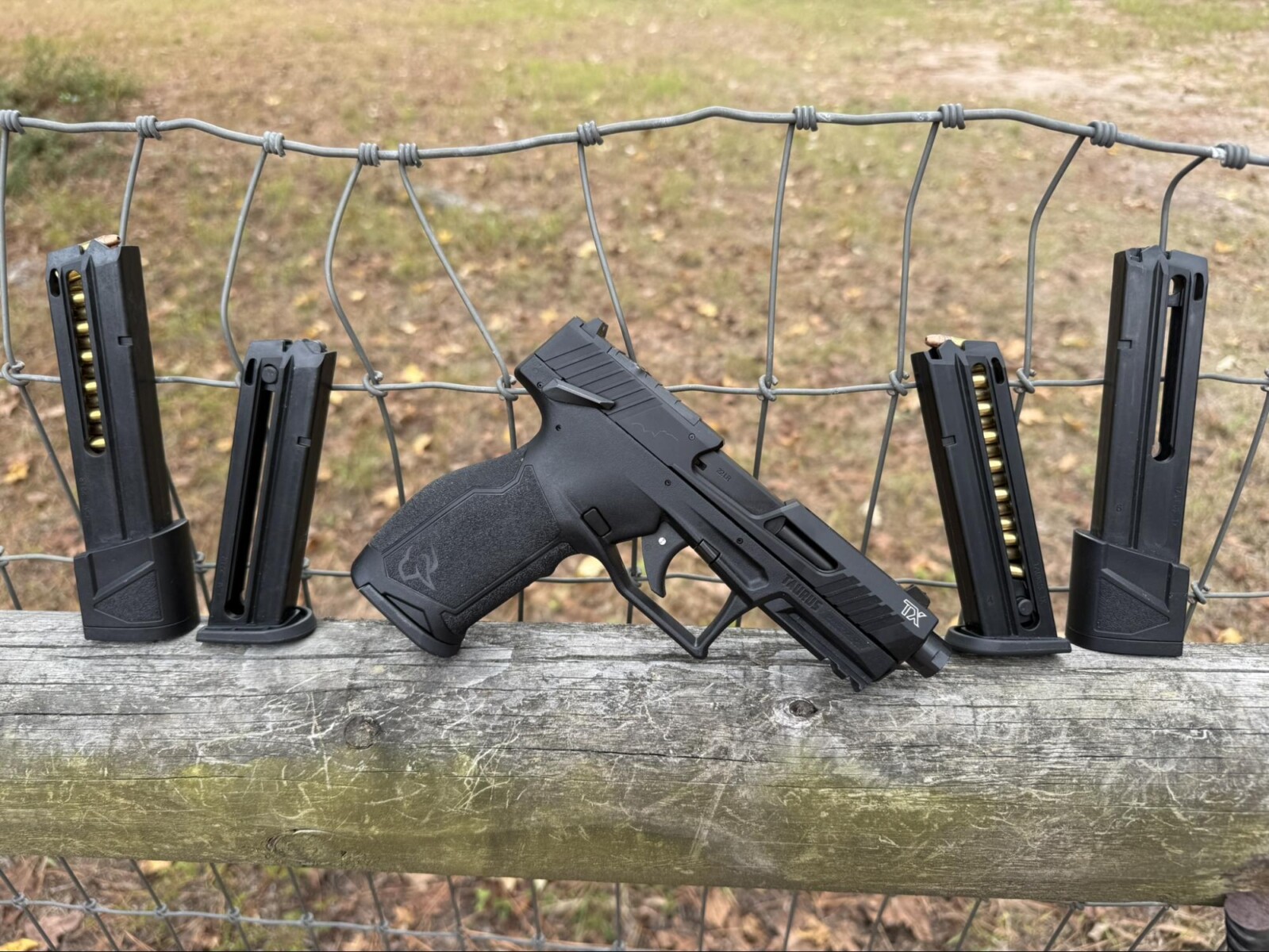
Ready for a fun afternoon.
In 2025, a new wave of manufacturers, led by shops like Freedom Finger Triggers, began offering drop-in FRTs specifically for pistols, and the TX22 has emerged as a front-line platform.
Taurus TX22: Gen 1 vs Gen 2
The TX22 launched as an inexpensive, accurate, and fun rimfire pistol. It also offered larger-capacity magazines than many other .22LR pistols did, which helped it gain market share.
SALE 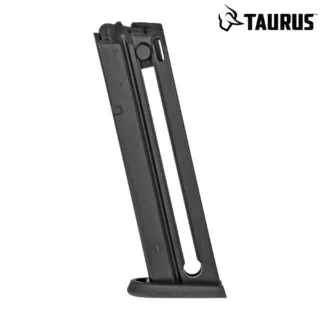 Taurus TX22 .22LR 16 Round Magazine
160 reviews
Original price was: $25.99.$23.49Current price is: $23.49.
Taurus TX22 .22LR 16 Round Magazine
160 reviews
Original price was: $25.99.$23.49Current price is: $23.49.

SALE 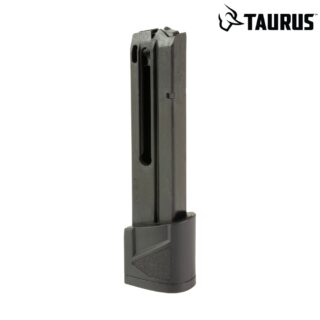 Taurus TX22 .22LR 22 Round Extended Magazine
47 reviews
Original price was: $32.99.$29.99Current price is: $29.99.
Taurus TX22 .22LR 22 Round Extended Magazine
47 reviews
Original price was: $32.99.$29.99Current price is: $29.99.
Taurus’s Gen 2 models brought notable mechanical changes: a stiffer bull/barrel profile, a revised recoil system, and an improved trigger package, plus more optics-ready slides on many SKUs. Those updates made Gen 2 TX22s more durable and better able to handle high-volume use and aftermarket parts.
These advantages were obvious before FRTs became the newest trend in firearms. Now that forced-reset triggers are here, the TX22’s popularity has skyrocketed, which explains why the Gen 2 is the model commonly discussed in many of the viral FRT videos.

With 16-round and 22-round magazines, the TX22 has more capacity than most .22LR pistols do right out of the box.
Gen 1 pistols still make solid range toys, but the Gen 2’s hardware, especially how the slide and disconnector interface, has made it the easier, more reliable baseline for FRT manufacturers to adapt to. Early adopters on social platforms have gravitated to Gen 2s because they tend to be optics-ready and more forgiving of high-cyclic setups.
What an FRT is, and Why It Fits the TX22
In a bit more detail, a forced-reset trigger is a disconnector replacement or modification that forces the trigger to move to its reset position when the slide cycles, effectively encouraging very rapid, successive trigger functions. Crucially, the device is designed so each fired round still corresponds to a discrete “function of the trigger,” a point central to ongoing legal fights. Practically, for rimfire shooters, the result is a very different feel: higher cyclic rates and a “bump-style” cadence without changing the basic semi-auto mechanics of the gun. Freedom Finger and a handful of other shops now offer purpose-built 22-series FRTs that drop into the TX22’s trigger geometry.
Unfortunately, I do not have any experience with the FRTs for the TX22 as of the writing of this article. What I do have is experience with forced-reset triggers for AR-style rifles, and I have spent a significant amount of time exploring TX22 FRTs. I really want one, but just haven’t pulled the trigger, so to speak. There are lots of videos out there from both social media influencers and regular shooters about TX22 FRTs, and they are a hoot.

The Taurus TX22 is my favorite .22LR pistol and it is the gun I usually start new shooters out learning to shoot.
The Broader FRT Scene and Why It Matters to Gun Owners
Forced-reset triggers are no longer simply a small cottage industry. New and existing companies are stepping in to meet the demand for FRTs, and new designs are constantly emerging alongside the earliest types. Social media creators have been a significant reason for the adoption and popularity of FRTs. Range videos that showcase the impressive cyclic rates driving curiosity, sales, and, inevitably, debate.
For TX22 owners, the draw is obvious: inexpensive ammo, low recoil, and inexpensive pistols make the platform ideal for experimenting without risking a high-value carry gun.
On the ownership side, FRTs change how people use their firearms. They allow higher rates of fire than are easily achievable with competition and binary triggers. It’s a fun novelty that drives interest in guns. For content creators, the visual spectacle is irresistible; this accelerates adoption, even among shooters who had never heard of a forced-reset trigger before watching a YouTube video. The net effect is people looking to replicate what they saw online. Sometimes, TX22s are flying off the shelves faster than retailers can keep them in stock, and magazines are going just as fast. More members of the firearms community owning FRTs means more experimentation with designs. New products and parts, more footage appearing on social media, which means more people want to buy FRTs.
FRT Legalities
Understanding the legal basis for FRTs is essential for providing context to the rise of Forced-reset triggers. Before FRTs, there were bump stocks. Bump stocks were a means of increasing the rate of fire of your AR or AK-style rifle. Following the Las Vegas concert shooting, the federal government attempted to ban bump stocks through administrative means. The Supreme Court eventually struck this down, and into that ruling we have seen FRTs rise. The reasoning being that forced-reset triggers cannot be treated as “machine guns” under current federal law. More litigation followed, and, as it stands, FRTs are not “machine guns” because they comply with the law as written by Congress.
From a pro-gun-rights perspective, the ruling reaffirmed a simple legal principle: if Congress intends to classify accessories that alter the rate of fire but leave the trigger-function to be one shot per pull of the trigger per shot as “machine guns”, it must say so explicitly. That outcome matters for owners because it preserves an environment where mechanical innovation can occur without instantly turning a common accessory into a machine gun and, therefore, a felony item.
Practical Takeaways for TX22 Owners
If you’re a TX22 owner considering an FRT, a few practical notes: pick a Gen 2 if you want the widest aftermarket support; expect to spend some time researching FRT manufacturers and be prepared for moderate troubleshooting to get the most reliable functionality from your pistol. Be mindful that suppressed use and low-power rounds can change cycling behavior, and be sure to follow local law, as states differ. Finally, don’t assume influencer footage translates to reliable performance with your exact setup; testing with your mags, ammo, and optic is still essential.

With three 16-round magazines and two 22-round magazines, I have plenty of ammo.
Last Words
The TX22’s rise in popularity has as much to do with accessibility and fun as it does with performance. Forced-reset triggers have added a fun new chapter to that story, one that combines engineering curiosity, social-media spectacle, and a bunch of ammo to create a good time. For shooters who value tinkering and getting the most from their firearms, the TX22+FRT combo is an irresistible experiment. If you try one, test methodically, document results, and enjoy the ride.