0
Gun Magazine Dictionary: Everything You Need To Know
Most modern firearms use removable magazines and depend on them for proper functioning. Firearm magazines are more than simple ammo holders—they are engineered components packed with features to enhance durability, reliability, and function.
Whether talking about a rifle like an AR-15, a pistol, or even a shotgun, magazines have come a long way in the last couple of decades. They incorporate elements to help feed rounds flawlessly and remain functional under harsh conditions.
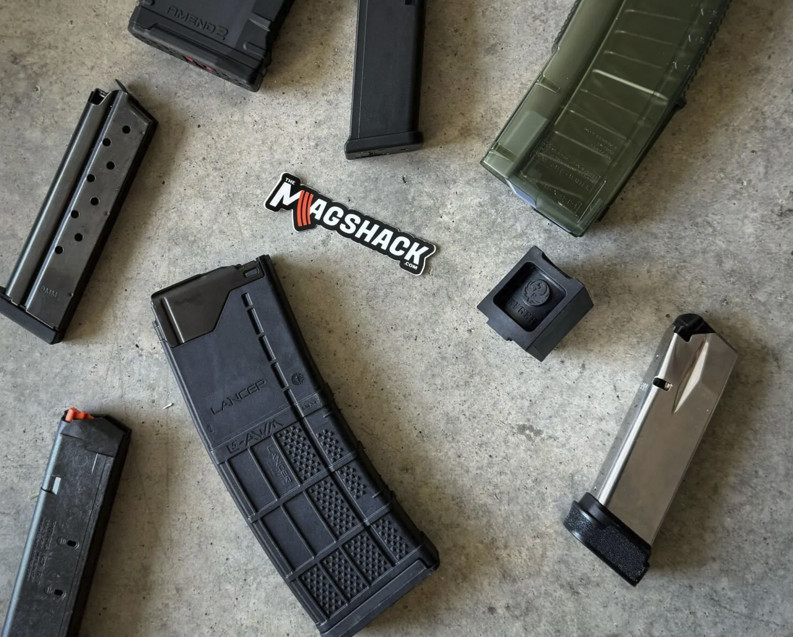
Today, we will break down the key elements and features of the modern firearm magazine and explain each purpose and how it impacts performance. While we might look at specific firearms like AR-15s, AK-style rifles, and Glock pistols, the information applies to all platforms.
Materials and Construction (Polymer vs Metal)
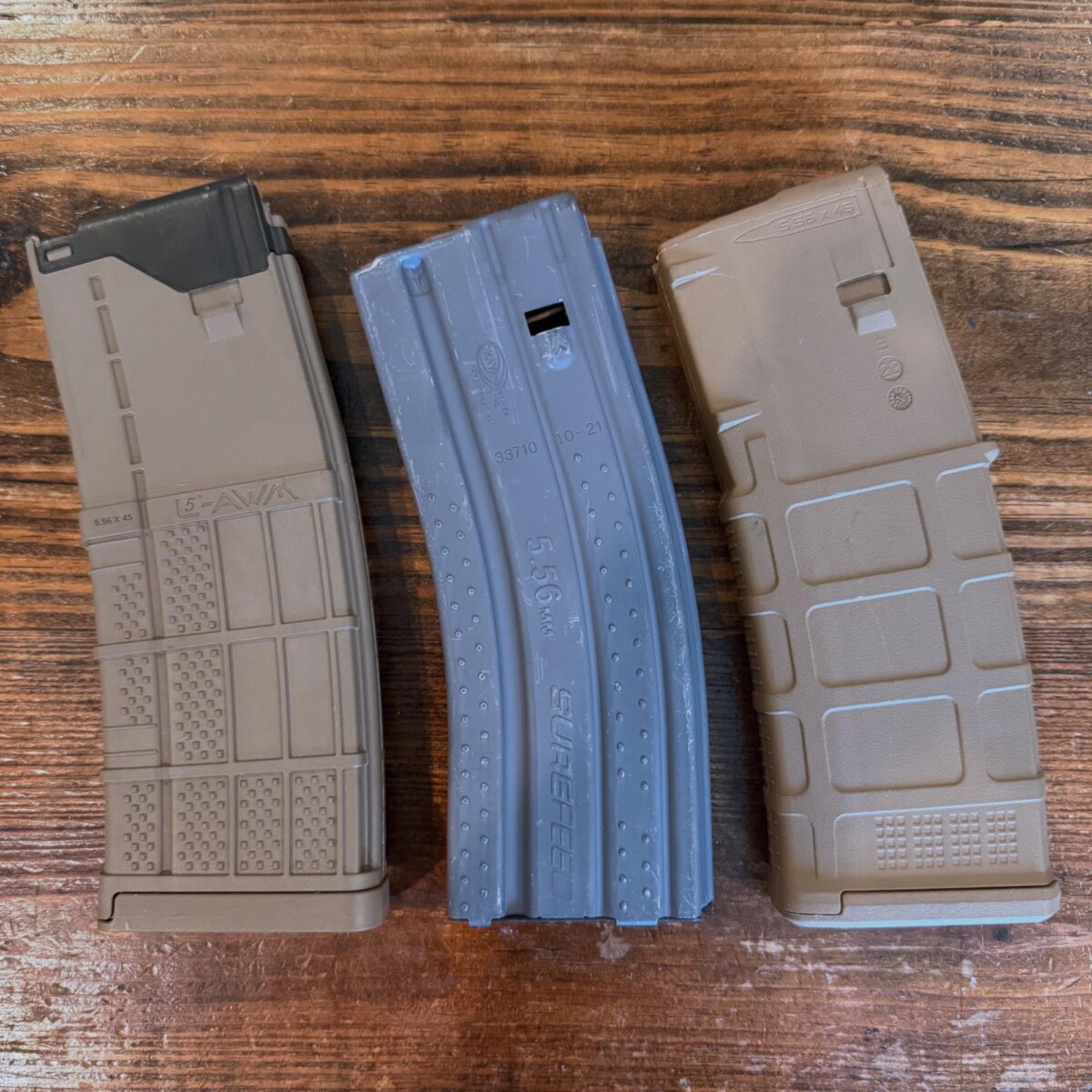
Examples of a hybrid, metal, and polymer magazine: Lancer L5, Okay Industries Surefeed, Magpul PMAG Gen 3.
Polymer Magazines
Polymer magazines have come into their own over the last quarter century. Many modern magazines use high-strength polymer for their bodies instead of traditional steel or aluminum construction.
Polymer magazines are lightweight and impact/corrosion-resistant. Magpul PMAGs, for instance, have become the standard issue for many militaries worldwide due to their durability and impact resistance.
SALE 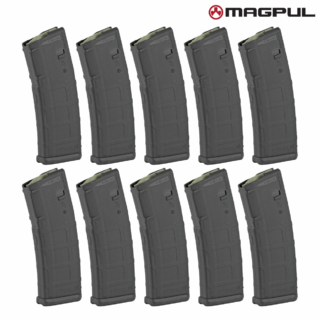 Magpul Ar-15 Gen 2 MOE Pmag 10 Pack
1347 reviews
Original price was: $129.99.$99.99Current price is: $99.99.
Magpul Ar-15 Gen 2 MOE Pmag 10 Pack
1347 reviews
Original price was: $129.99.$99.99Current price is: $99.99.

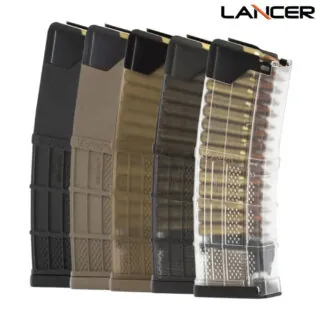
One drawback of polymer construction is wear on feed lips, which can lead to their widening and even cracking. To counter this drawback, many companies added steel-reinforced feed lips. Lancer AR magazines are a great example of this style.
Glock pistol magazines are another example of using metal to reinforce a polymer magazine. This gives the magazine the rigidity of steel but the impact resistance of polymer.
Metal Magazines
Many OEM pistol magazines are metal, as are plenty of the popular AK surplus magazines. The most common metals used in magazines are aluminum and steel.
SALE 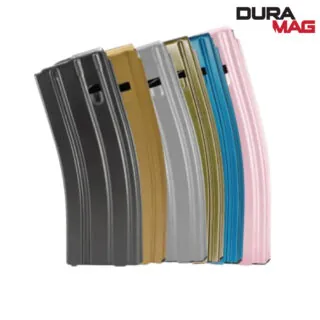 CPD Duramag AR-15 .223/5.56 30 Round Aluminum Magazine
171 reviews
Original price was: $17.99.$13.99Current price is: $13.99.
CPD Duramag AR-15 .223/5.56 30 Round Aluminum Magazine
171 reviews
Original price was: $17.99.$13.99Current price is: $13.99.
AK-47 magazines are known for their legendary reliability and durability due to their steel feed lips and locking lugs. The AK magazine locking system is not kind to polymer, and the most successful polymer AK magazines have metal reinforcement at wear points.
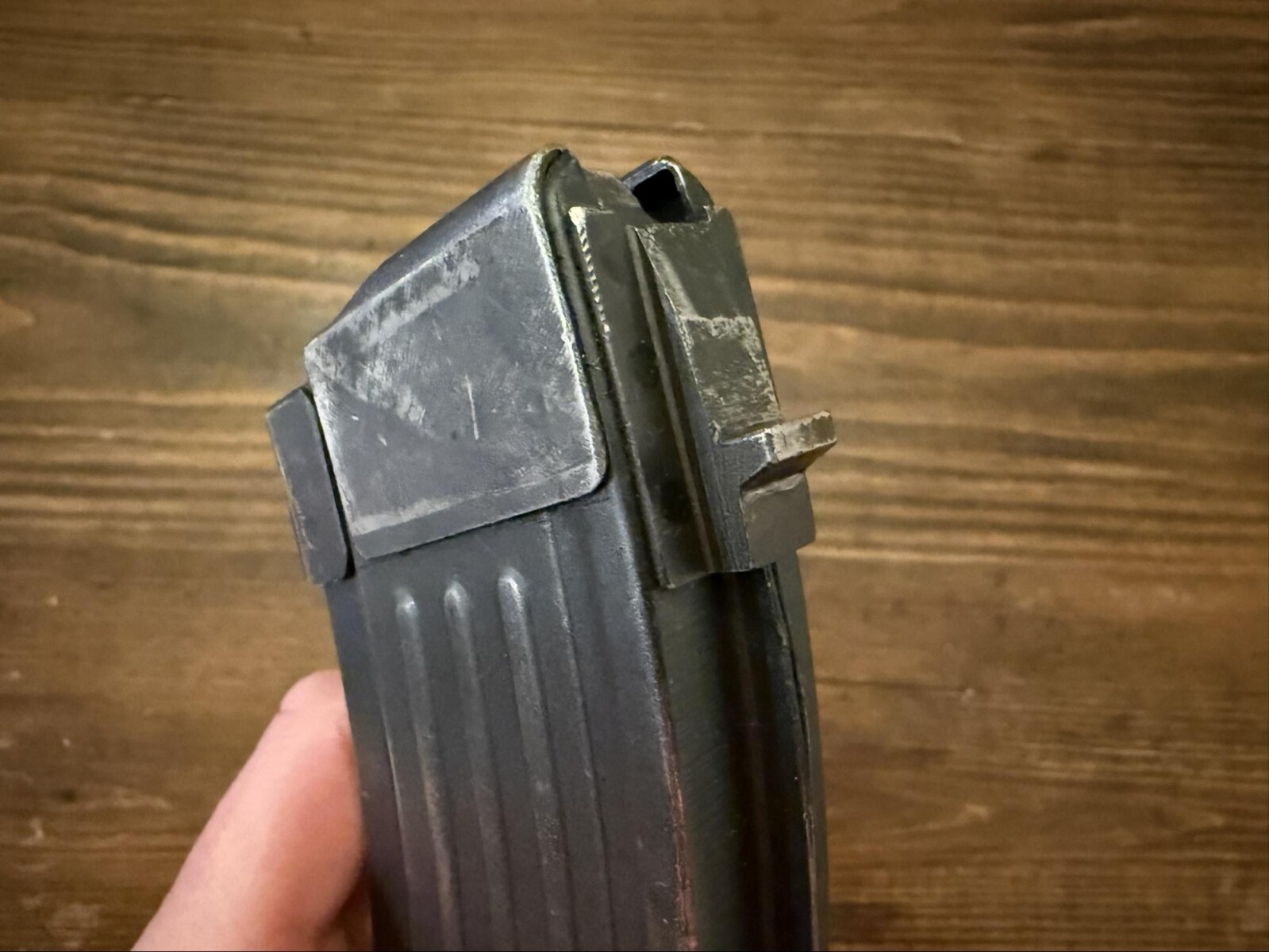
Metal feed lips and locking lug on a surplus Yugo AK Magazine
The trade-off of metal magazines is weight and the potential for dents or dings that cause malfunctions with the firearm. Corrosion and rust are another point of failure for metal magazines. Coatings like nitride, phosphate, and Teflon help prevent these issues.
Hybrid Magazines: Many modern magazines use polymer and metal to leverage their strengths and mitigate each material type’s weaknesses. Again, think of Lancer magazines and Glock magazines.
Capacity and Formats
Standard Box Magazines

Standard 30 round AR magazines: Magpul PMAG, Lancer L5AWM, Okay Industries Surefeed, and C-Products Duramag.
Examples of standard box magazines are those for AR-15s and Glock pistols. Standard capacity AR-15 magazines hold 30 rounds and strike an excellent balance of capacity, size, and weight. Glock’s standard double-stack magazines hold 10, 12, 15, or 17 rounds depending on the model, and provide excellent capacity and ample firepower.
Extended Magazines

An ATI Schmeisser 60-round magazine, a 40-round PMAG, and a 30-round PMAG.
Extended magazines are very popular and offer higher capacity than what arrives from the factory. Examples of popular extended-capacity magazines include 33-round Glock magazines and 40-round AR and AK mags.
SALE 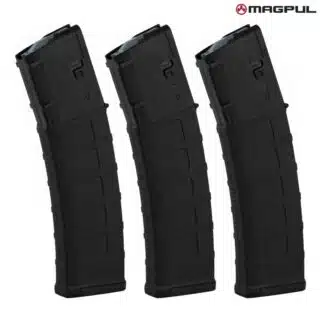 Magpul PMAG GEN M3 AR-15 .223/5.56 40 Round Magazine (3 Pack)
121 reviews
Original price was: $67.99.$56.99Current price is: $56.99.
Magpul PMAG GEN M3 AR-15 .223/5.56 40 Round Magazine (3 Pack)
121 reviews
Original price was: $67.99.$56.99Current price is: $56.99.
Extended mags provide excellent access to more rounds during a shooting session but have drawbacks, including being harder to maneuver with and heavier.
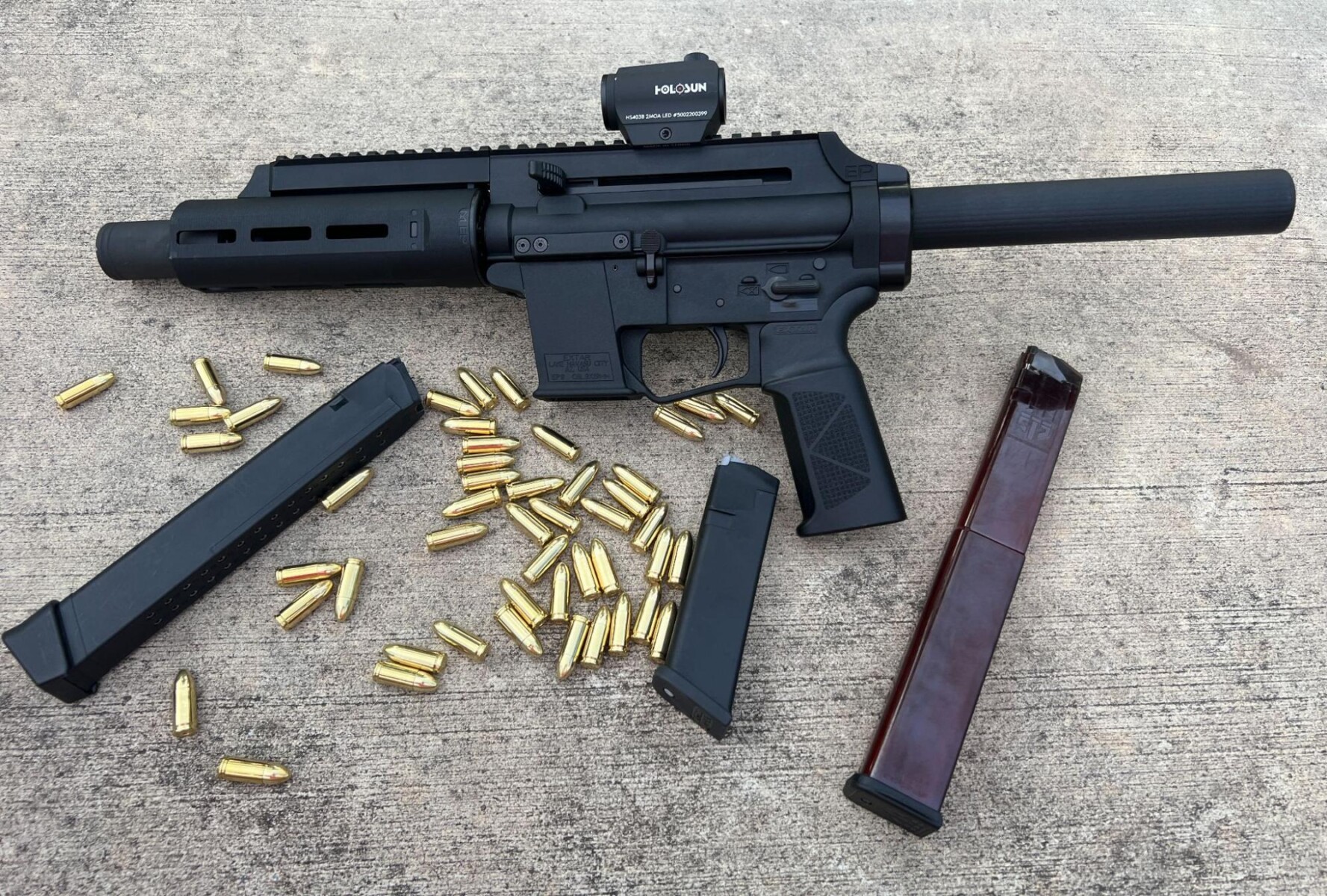
33, 17, and 40-round Glock-style magazines.
Drum Magazines
Drum magazines can hold significantly more rounds than a standard magazine. Most drum magazines hold between 50 and 100 rounds in a cylindrical design.
SALE 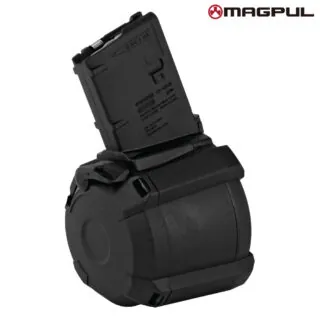 Magpul PMAG D-60 GEN M3 AR-15 .223/5.56 60 Round Drum Magazine
100 reviews
Original price was: $139.99.$124.99Current price is: $124.99.
Magpul PMAG D-60 GEN M3 AR-15 .223/5.56 60 Round Drum Magazine
100 reviews
Original price was: $139.99.$124.99Current price is: $124.99.
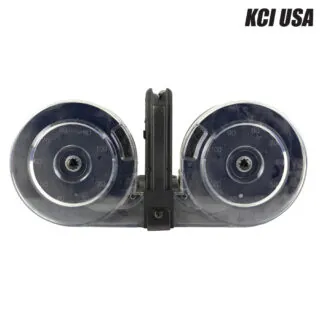
They offer higher capacity at the expense of greater weight, complexity, and potential feeding issues. They are excellent for times where sustained fire is preferred.
For most of us, that is simply having a blast at the range and not in a situation where their potential for reduced reliability could become dangerous.
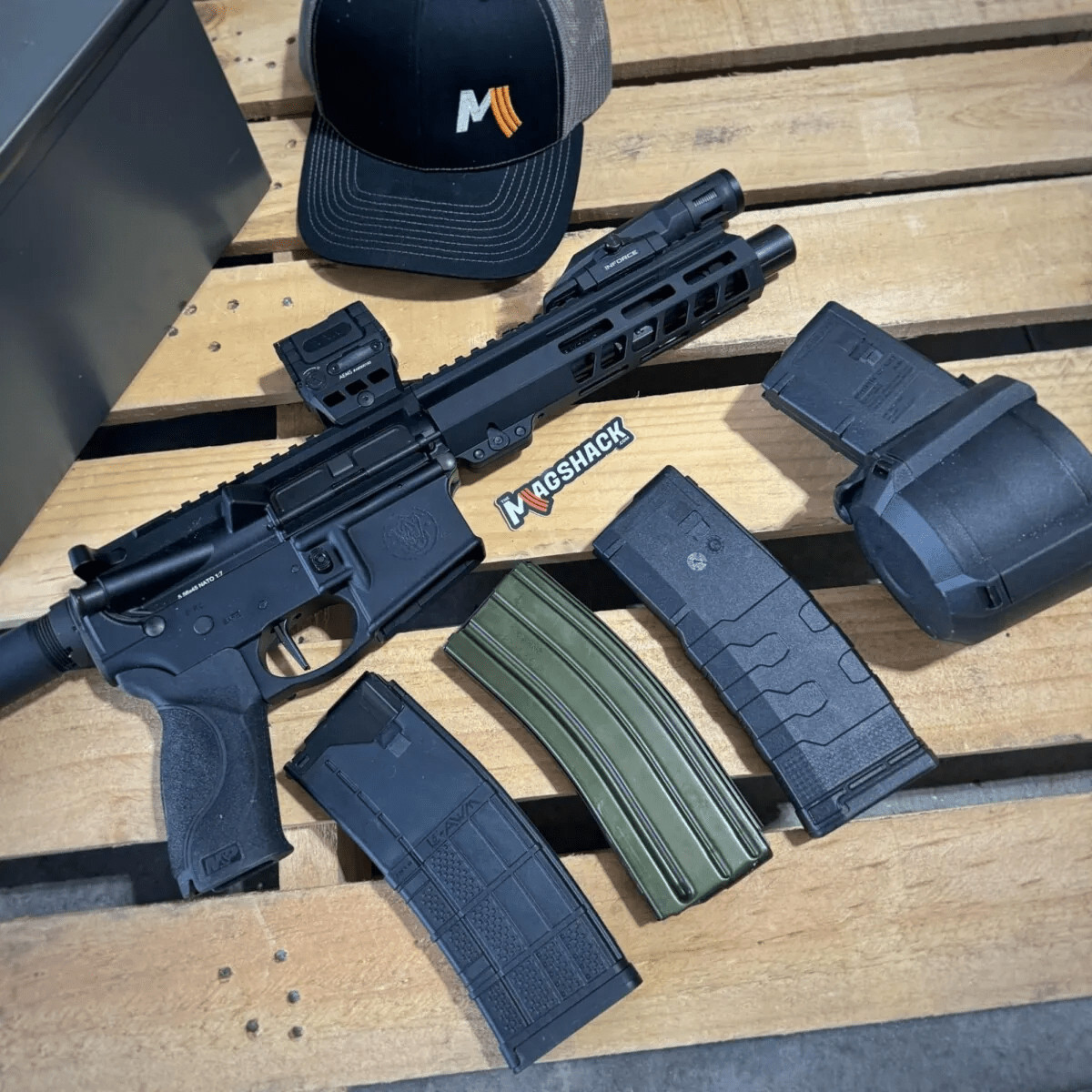
I bet you can spot the drum magazine.
Rotary and Quad-Stack Magazines
You’ve most likely encountered a rotary magazine if you ever looked for Ruger 10/22 rifle magazines. Rotary magazines store their rounds in a circular rotor for compact storage. Rimfire calibers, like .22LR, work well in rotary magazines due to their short case length.
SALE 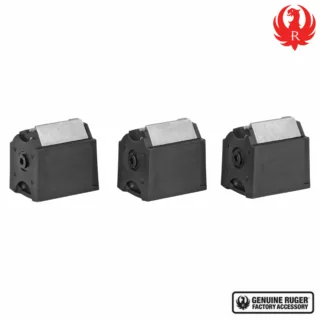 Ruger BX-1 10/22 .22LR 10 Round Magazine (3 Pack)
487 reviews
Original price was: $66.99.$44.99Current price is: $44.99.
Ruger BX-1 10/22 .22LR 10 Round Magazine (3 Pack)
487 reviews
Original price was: $66.99.$44.99Current price is: $44.99.
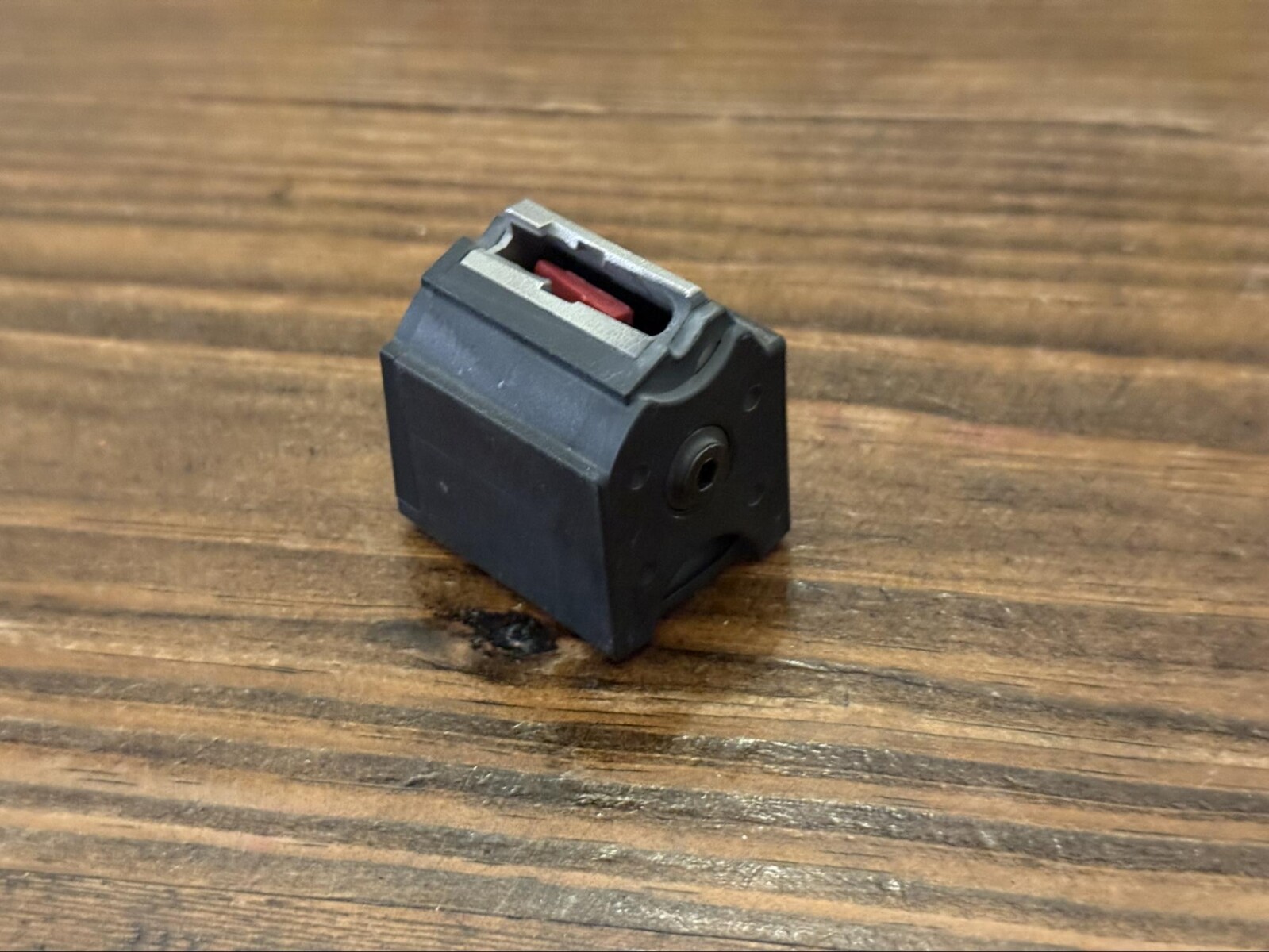
A Ruger 10/22 rotary magazine.
Quad-stack magazines, like the ATI Schmeisser 60-round AR-15 mag, stagger their rounds into four rows to increase capacity without increasing mag length. This type of magazine leaves less room for poor engineering and manufacturing defects.
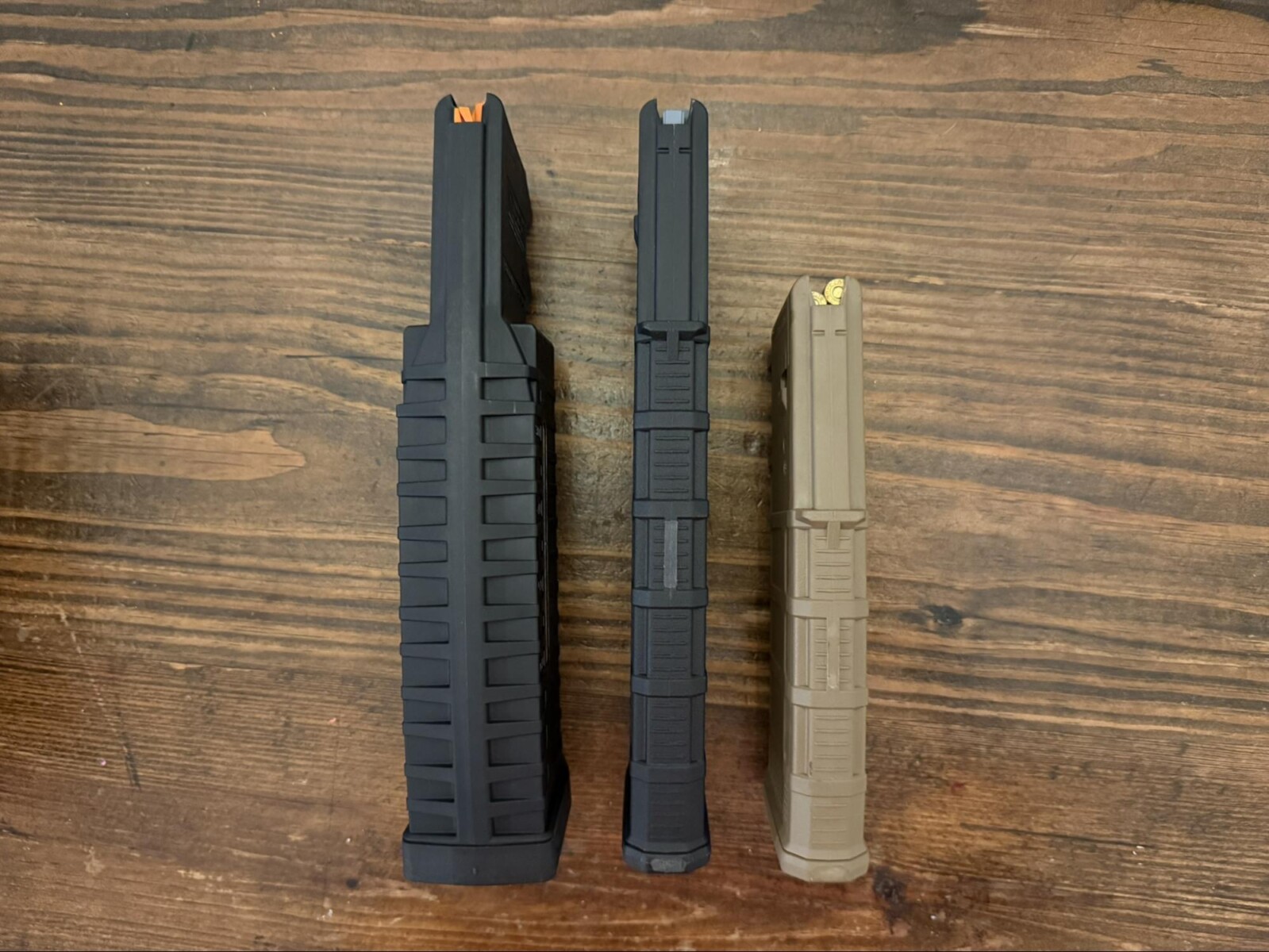
An ATI Scheisser quad-stack magazine with Magpul PMAGs
Follower Design and Function
Anti-Tilt Followers
Older magazines frequently had very basic followers: a piece of stamped metal that could tilt, leading to misfeeds and malfunctions. Modern magazine design has addressed this by using anti-tilt followers, which are nearly universal now and ensure smooth feeding and consistent cartridge position. Magpul PMAGs, for example, feature four-way anti-tilt followers.
Bolt Hold Open (BHO) Followers
Some magazines lock the bolt or slide back(open) after the last round. Most AR-15 and Glock-style magazines have this feature. Alternatively, many surplus AK-47 magazines do not.
High-Visibility Followers
High-visibility followers are designed to provide quick visual confirmation of an empty magazine. They are usually bright orange, yellow, or red. High-visibility followers are most necessary in low-light environments.
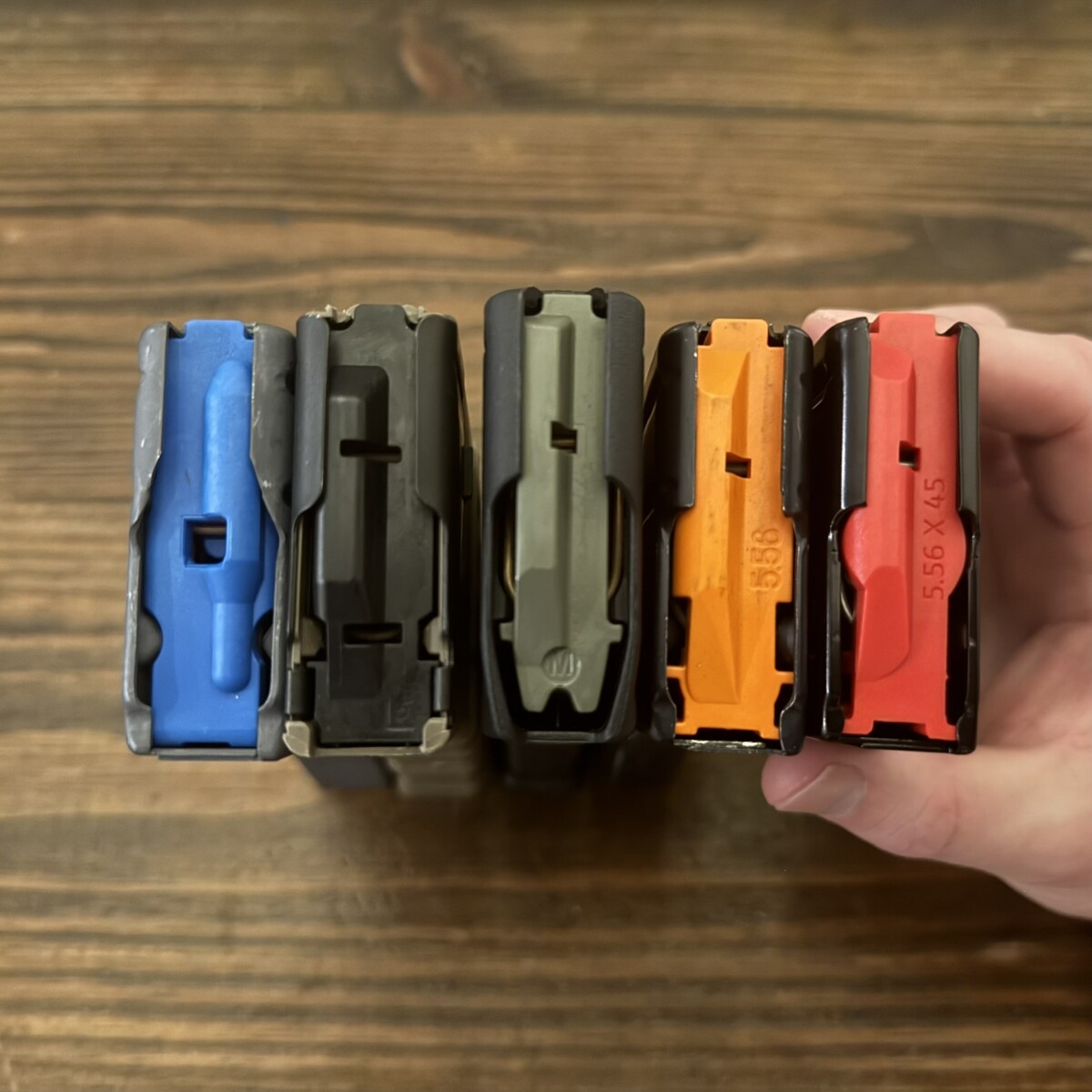
Different followers by manufacturer (left to right): Okay Industries, Lancer, Magpul, C-Products Duramag, and Global Ordnance.
Springs and Feeding Power
Spring Material and Tension
Magazine springs are among the components that experience the most stress, which can lead to magazine failure. Manufacturers focus on corrosion resistance and creating spring fatigue resistance to ensure the springs last. You want springs that will work after thousands of cycles and remain functional if loaded during storage.
Properly tensioned springs are necessary for consistent feeding. Extended and drum magazines require higher spring tension to ensure rounds make it to the chamber and prevent failure-to-feed issues. Springs without enough tension frequently fail to feed the last rounds from a magazine.
Magazine Feed Lips
Magazine feed lips are a common failure point. This is one of the main points of contention in the debate between metal and polymer magazines.
Many guns with proprietary polymer magazines (pistol-caliber carbines especially) battled this issue before finally solving their problems. To avoid polymer feed lip failures, several manufacturers have used hybrid magazines with a polymer body but steel feed lips for durability.
Ergonomic Features and External Enhancements
Texturing and Grip
Magazines, especially those that are external to the firearm like ARs and AKs, often feature grip textures for better handling. Some examples include
- Waffle patterns
- Stippled surfaces
- Ribbed or grooved designs
These textures improve reload speed and help you control your magazines in less-than-ideal conditions or when wearing gloves.
Baseplates and Floorplates
Extended Baseplates
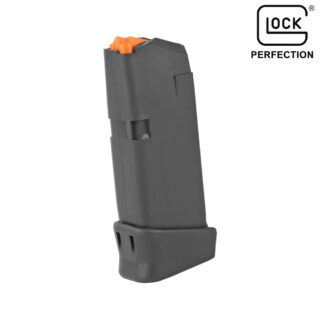
Some magazines include finger extensions or extended baseplates to improve grip surface area. Magazine finger extensions are common with compact pistols like the Smith & Wesson Bodyguard 2.0 and Glock 26.
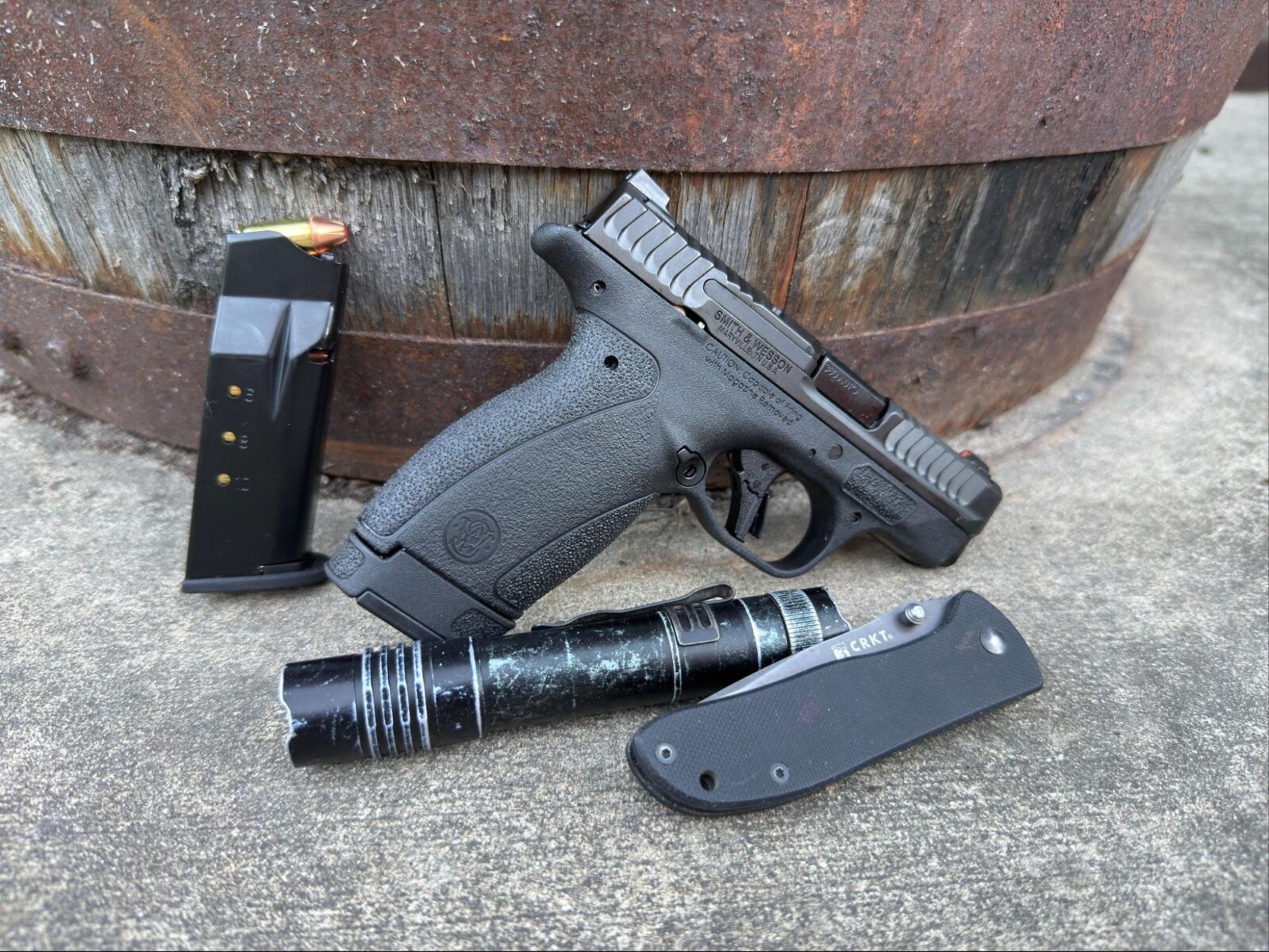
The Smith & Wesson Bodyguard 2.0’s magazine with extended baseplate is inserted while the standard is on the left.
Magazine finger extensions are common with compact pistols like the Smith & Wesson Bodyguard 2.0 and Glock 26.
Removable Floor Plates
Most modern magazines feature removable baseplates/floorplates, which allow for easy maintenance. Many require no tools to be removed, making them very user-friendly.
Round Count Indicators
Witness Holes
Round-count indicators are often referred to as witness holes and are typically located on the magazine’s side or rear. Glock magazines are a great example, with numbered rear-facing witness holes quick and easy round tracking.
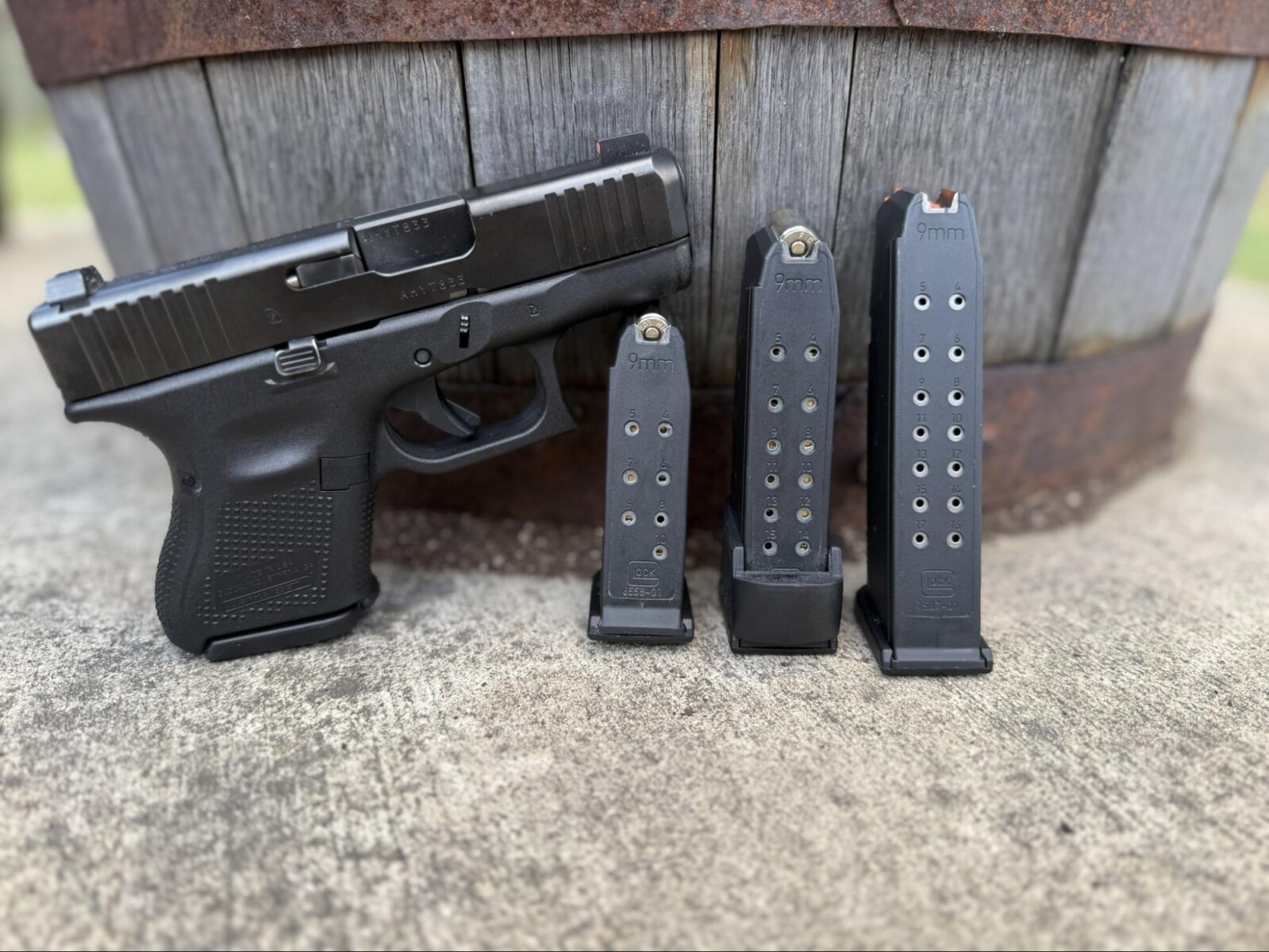
Keeping track of your rounds doesn’t get much easier.
Transparent and Windowed Magazines
Clear/translucent polymer magazines allow users to visually inspect their remaining ammo at all times. ETS is well known for their fully transparent polymer magazines.
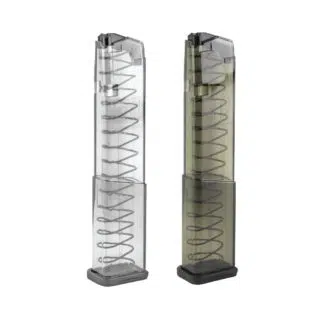 ETS 9mm 19 Round Extended Magazine for Glock 43X, 48 Pistols
118 reviews
Price range: $12.99 through $19.99
ETS 9mm 19 Round Extended Magazine for Glock 43X, 48 Pistols
118 reviews
Price range: $12.99 through $19.99
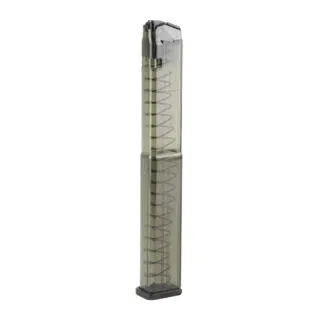 ETS 9mm 40 Round Extended Magazine for Glock 17, 19 Pistols
77 reviews
Price range: $13.99 through $22.99
ETS 9mm 40 Round Extended Magazine for Glock 17, 19 Pistols
77 reviews
Price range: $13.99 through $22.99
Certain manufacturers offer magazines with side windows instead of entirely translucent bodies, which still allow users to identify how much ammo they have left quickly.
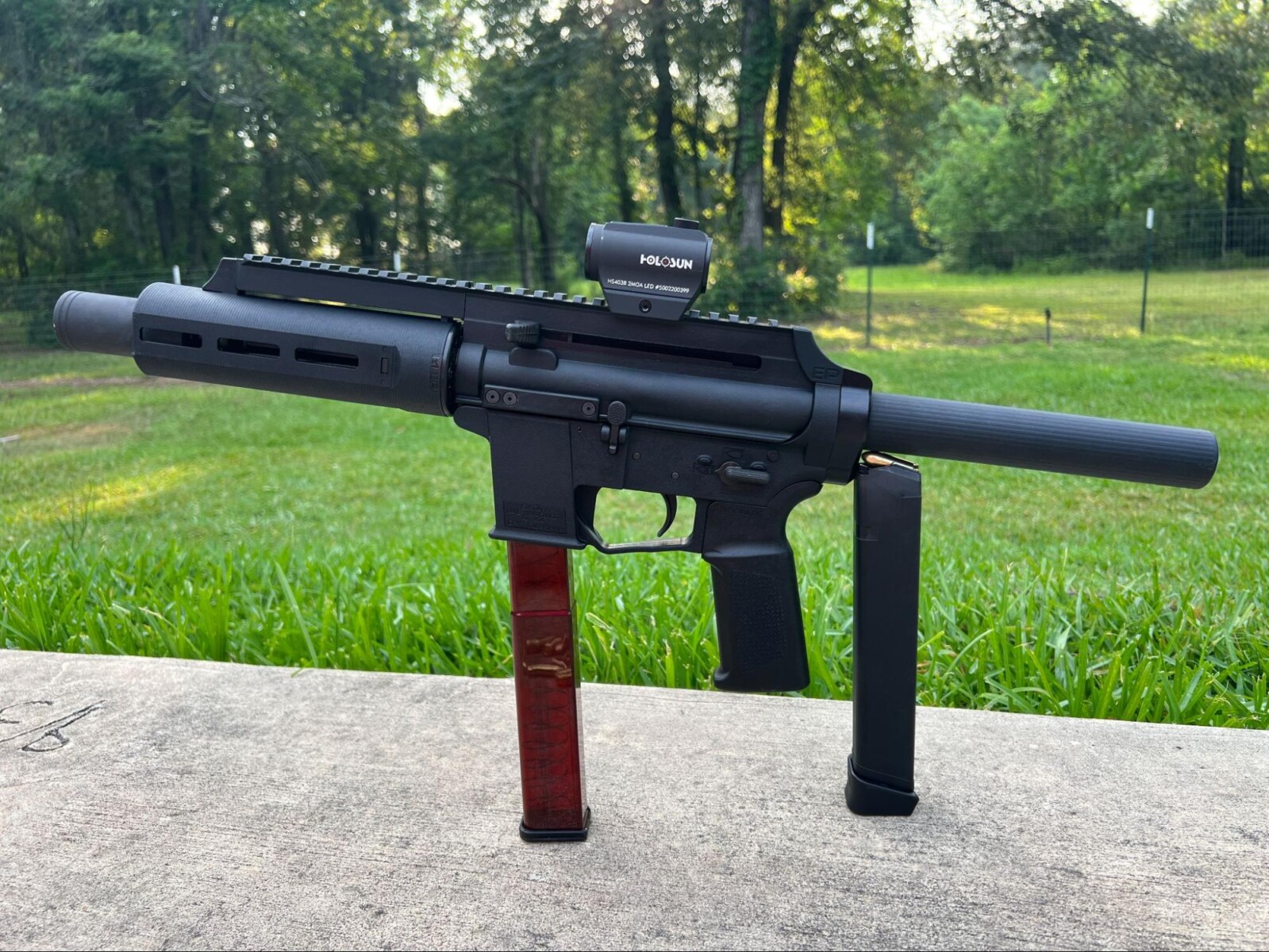
A transparent ETS Glock-style magazine.
Additional Features & Customization
- Mag Couplers: Couplers allow two magazines to be clipped together for faster reloads.
- Dust Covers: Magpul is well-known for its included dust covers, which protect some of its magazines from debris accumulating inside them during storage and help maintain feed lip integrity.
Last Words
Firearm magazines have evolved over time to maximize reliability, durability, and ergonomics. Whether you choose standard capacity, extended, or drum magazines, knowing what features each offers will help you decide which magazine is best for your needs.
As magazine manufacturers continue to innovate, new designs will ultimately be better than what has come before, so we’ll continue to tweak this article as needed! Stay tuned!