0
New Lancer L5AWM Gen 2 AR-15 Magazine: Hands-On Review
The Lancer L5AWM (Advanced Warfighter Magazine) is no newbie to the industry and has become one of the more popular AR-15 magazines over the last several years. Even if you haven’t used them yourself, you’ve probably seen them even without knowing it.

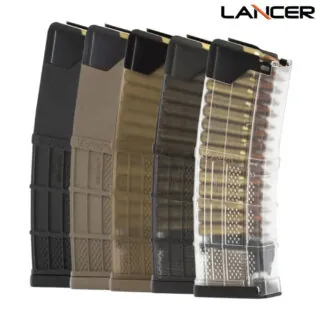
The L5AWM Gen 2s are available in several different colors.
The magazine’s hybrid design utilizes a steel feed lip assembly paired with a lightweight polymer body. Aggressive texturing stands out among other magazines and makes the L5AWMs extremely easy to reload within any conditions.
Not too long ago, we compared the Lancer L5AWM Gen 1 and Gen 2 magazines from a first impression and feature perspective. But now that we’ve spent some trigger time with the L5AWM Gen 2 magazines, we figured it’s time to deliver a hands-on review.
Fancy Features
The Gen 2s have quite a few improvements over their predecessors, but you won’t be able to tell from a quick glance.

The feed lip geometry slightly changed from the prior model.
The steel feed lips are undoubtedly a huge selling feature, and they got even better. The new feed lips are said to require up to 22% less insertion force on a closed bolt. While I didn’t have any issues with the Gen 1s, I’ve heard many others complain about the force they took. I can attest that these new Gen 2s are easier by a small degree.

You’ll find advanced floorplate locks on the Gen 2s.
The floorplate lock design also changed, allowing for more optimized cartridge stacking, which in turn improves round retention and feeding performance. Although not as efficient as Magpul’s paint pen dot matrix, I like that you can also use the floorplate to mark your magazines.

Now that is some aggressive texturing.
Even though it’s not new to Gen 2, one of my favorite features is the aggressive texturing on the sides of the magazine. Whether you’re shooting in the sun, rain, sleet, or snow, you should have no problems securing a firm grip on the magazine.
Performance and Reliability
It would take me a VERY long time to put even close to the number of rounds through these that I have some of my Gen 1s, so I can’t speak to the performance after 1,000s of rounds per magazine. However, I did make sure to put a few hundred through two different Gen 2s without issues.

Full mag; check. Rounds aligned; check.
From steel to brass case and lower to higher grain ammunition, there were no magazine-related hiccups. The mags were easy to load, easy to fully seat, and, of course, easy to dump. Reloads were smooth, and the mags continued to run fine after being dropped during reloads (although I was on grass, not concrete).

First magazine through the PWS MOD 1-M.
Lancer states that these Gen 2s survived over 122% more 5-foot drops on concrete than the nearest competitor in Department of Defense TOP testing, so I figured we needed to try some drops for the sake of the review!
Without knowing the exact specifications of the DOD test, I figured I’d drop the magazine fully loaded, half loaded, and in a couple of different orientations. With a fully loaded magazine, two of the five drops had a single round pop out. With a half-loaded magazine, four of the five drops had a single round pop out.

After ten drops on concrete, there were a lot of chips on the corners but no cracks to be found.
I can’t say how that compares to the rest of the industry-leading AR-15 magazines, but maybe we’ll do a full comparison review one day! I’ll let you decide if those seem like good or bad results.
Pros & Cons
Pros:
- Steel feed lips increase durability
- Lightweight at only 3.8 ounces
- Superior texturing
- Round count markers and translucent body (select models) provide instant capacity visual
- Extensively tested for extreme temperatures and drops
- Made in the USA
Cons:
- Often a couple of dollars more expensive than the competition (PMAGs)
- Limited colors compared to the Gen 1s (for now)
Conclusion
After spending so many rounds with my L5AWM Gen 1 mags and now some time with the Gen 2 mags, I wouldn’t hesitate to run these with any of my rifles. I don’t have as much experience with them as I do Magpul PMAGs, so those will remain my dedicated defensive magazines, but I think these Lancers are great for the range and training.
SALE 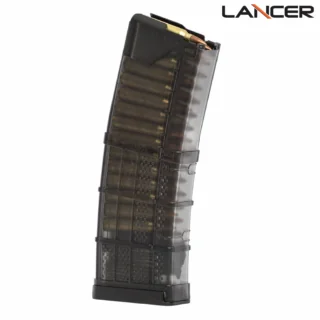 Lancer L5AWM AR-15 .223/5.56 30 Round Translucent Smoke Magazine
443 reviews
Original price was: $17.99.$11.99Current price is: $11.99.
Out of stock
Lancer L5AWM AR-15 .223/5.56 30 Round Translucent Smoke Magazine
443 reviews
Original price was: $17.99.$11.99Current price is: $11.99.
Out of stock

SALE 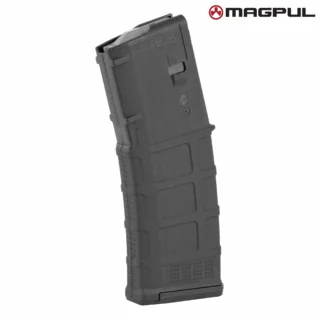 Magpul PMAG GEN M3 AR-15 .223/5.56 30 Round Magazine
652 reviews
Original price was: $14.99.$12.99Current price is: $12.99.
Magpul PMAG GEN M3 AR-15 .223/5.56 30 Round Magazine
652 reviews
Original price was: $14.99.$12.99Current price is: $12.99.

A Gen 1 L5AWM is in the middle for comparison.
Now that the Gen 2s are out, you’ll probably be able to find some deals on the Gen 1s, so keep your eyes peeled!
As always, stay safe, train hard, and have fun.