0
Magpul PMAG Gen M3 vs Gen M2: Which is Right for You?
Magpul’s PMAG has become the go-to AR-15 magazine for the majority of gun owners and the US Military, thanks to its durability, reliability, and affordability. Over the years, we’ve seen upgrades made and new models released, which may leave you confused about which PMAG is best.
The question becomes not whether you should buy PMAGs, but what generation you should purchase. Gen M2 or Gen M3?
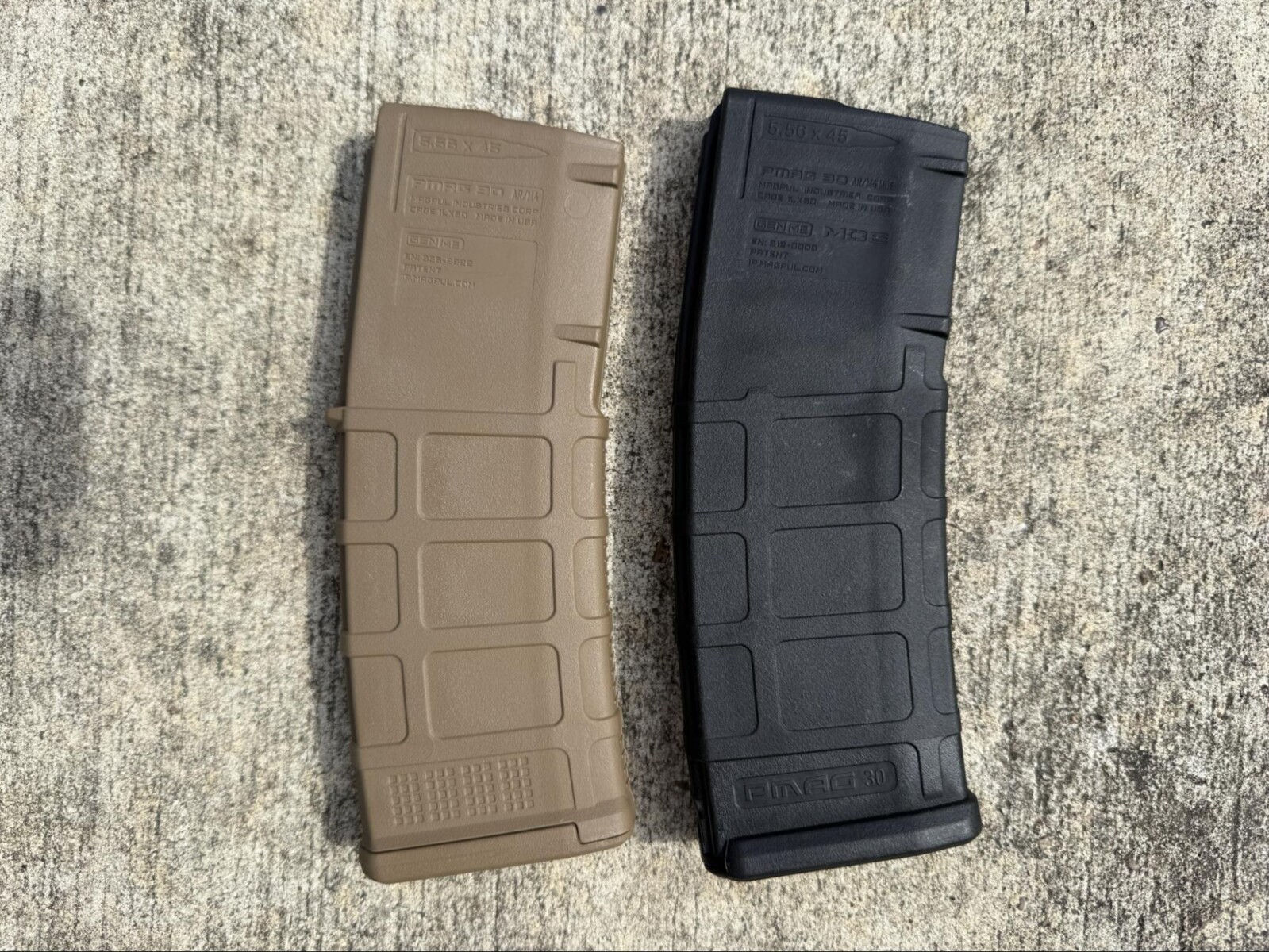
Left: Gen M3 PMAG, Right: Gen M2 PMAG
As the current gold standard for AR-15 magazines, we figured it would be helpful to break down the key differences and pros and cons in this article to help you determine which one best suits your needs.
SALE 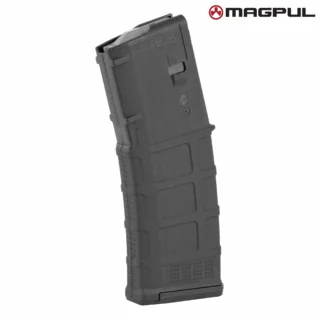 Magpul PMAG GEN M3 AR-15 .223/5.56 30 Round Magazine
652 reviews
Original price was: $14.99.$12.99Current price is: $12.99.
Magpul PMAG GEN M3 AR-15 .223/5.56 30 Round Magazine
652 reviews
Original price was: $14.99.$12.99Current price is: $12.99.

SALE 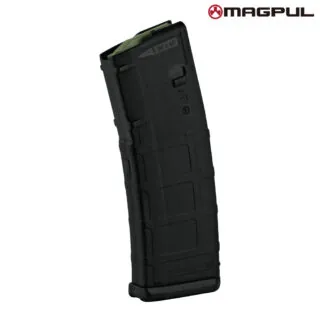 Magpul PMAG GEN 2 MOE AR-15 .223/5.56 30 Round Magazine
1347 reviews
Original price was: $12.99.$10.99Current price is: $10.99.
Magpul PMAG GEN 2 MOE AR-15 .223/5.56 30 Round Magazine
1347 reviews
Original price was: $12.99.$10.99Current price is: $10.99.
Spoiler alert: Both are fantastic, so you can’t go wrong with either generation.
Key Differences
Gen M3 PMAGs are not just Gen M2 mags with a new label and marketing. Magpul took the feedback it received from the community and sought to improve upon the design, particularly in the realms of compatibility and durability.
| Feature | PMAG Gen M2 | PMAG Gen M3 |
| Polymer Material | Strong and durable | Enhanced for increased impact resistance |
| Follower | Reliable anti-tilt | Four-way anti-tilt, lower friction |
| Baseplate | Wider, easier to grip | Slimmer, better for tight pouches |
| Over-insertion Stop | Absent | Present helps with aggressive reloads |
| Compatibility | Standard AR-15 pattern lowers | Broader: SCAR 16S, HK416, M27 IAR, SA80, etc. |
| Texturing | Standard ribbing | More aggressive front and spine grip |
| Dot Matrix Panel | No | Yes, for marking mags |
| Price | Lower | Usually, a few dollars more |
The Features
Follower Design
Gen M3s got an upgrade to a more refined four-way anti-tilt follower compared to Gen M2’s four-way anti-tilt follower. On paper and in practice, the Gen M3 follower outperforms the Gen M2 follower. Will you ever actually notice a difference or get a Gen M2 follower to fail under normal use circumstances? Not likely.

The Gen M3 PMAG has a cool gray, bordering on blue follower. The Gen M2 PMAG is a warmer gray with a greenish tint.
Texture & Grip
Need to rip your magazine out to reload but your hands are covered in mud? Then the Gen M3 has you covered. The texture on the Gen M3 is more aggressive, especially on the front and rear spines. You are probably fine with the Gen M2s, although some users find them more slippery in less-than-ideal conditions.

Notice the difference between the grip on the front of each magazine. The Gen M3 magazine is noticeably grippy.
Polymer Durability
Magpul reinforced the polymer for the Gen M3 PMAG. It is more impact-resistant and performs better than the polymer in Gen M2s when exposed to extreme temperatures. That isn’t to say that Gen M2s are fragile, but some of us do experience extreme conditions and need to know our mags will function regardless.
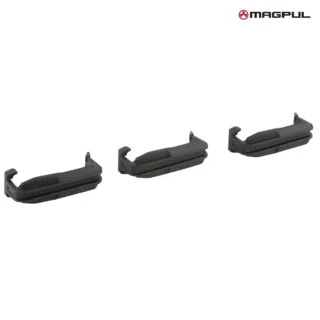
Over-Insertion Tab
This feature, which the Gen M3 has and the Gen M2 does not, primarily relates to non-AR-15 platforms, such as the HK416 and SCAR. If you are using a standard AR-15, then you probably won’t even notice the difference unless you are very aggressive with your reloads.
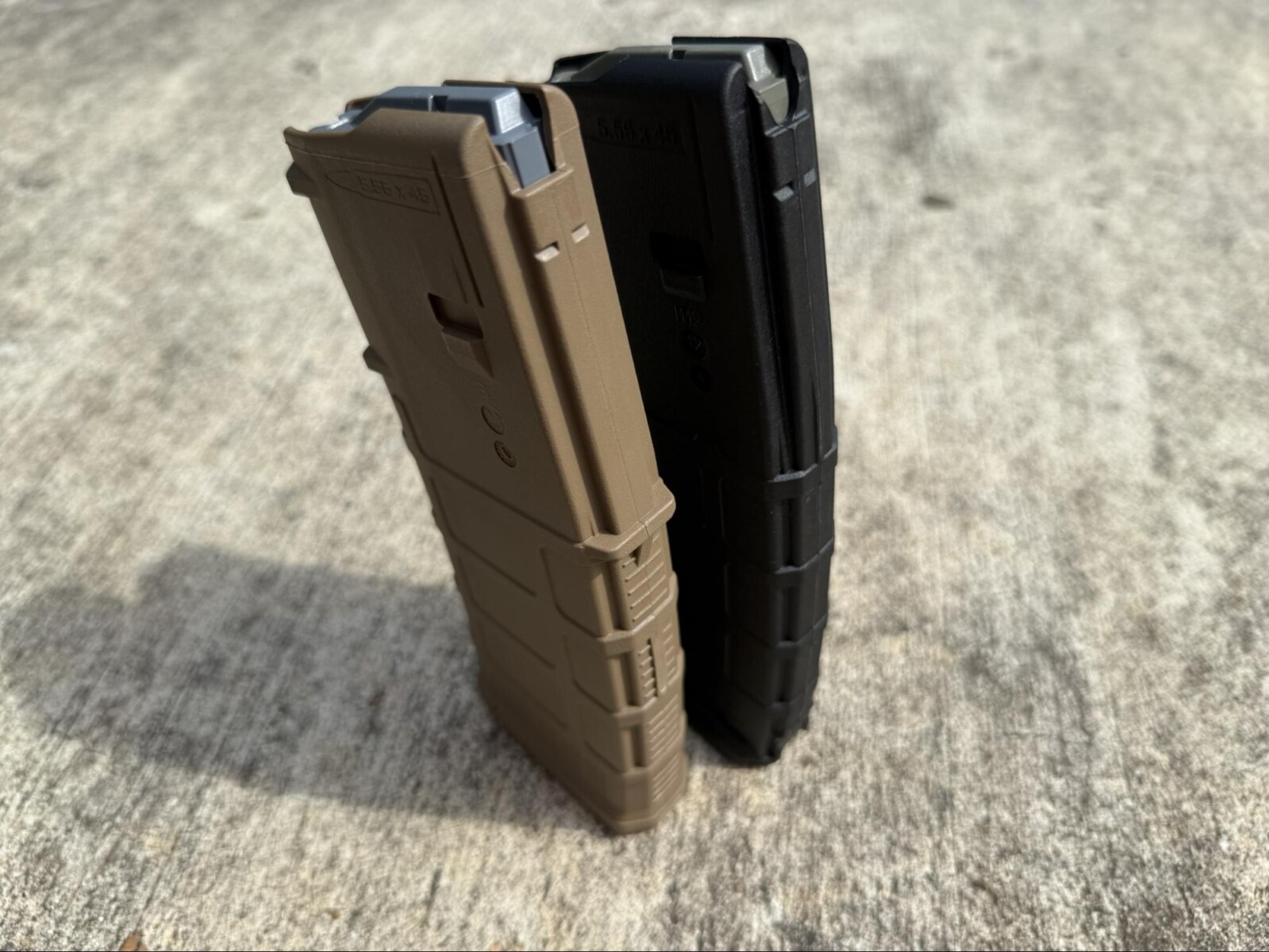
The over-insertion tab on the Gen M3 PMAG is visible, located just above the improved grip.
Baseplate & Pouch Fit
The slimmer baseplate, on Gen M3s, fits mag pouches better than Gen M2s. I can speak to this personally, as I have had issues with some of my mag pouches not closing with the Gen M2s, but they were fine with Gen M3s.

It’s hard to see the differences between the baseplates in photos, but when you hold them both, you can tell.
Dot Matrix Panel
The Gen M3 includes a textured panel for marking ammo type, round count, or magazine number. It’s a minor but appreciated feature for organized shooters.
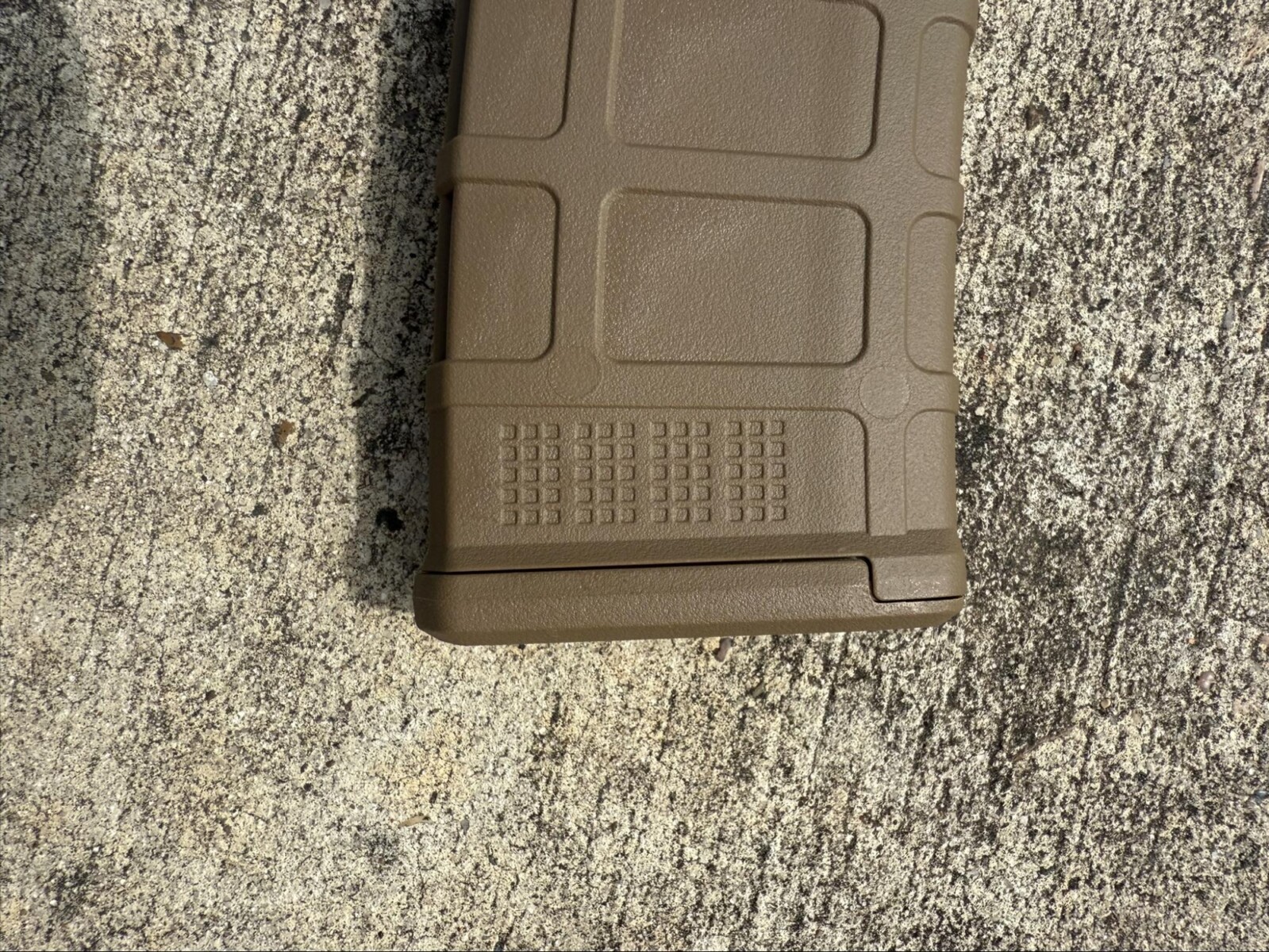
The Dot Matrix Panel.
Pros and Cons
These pros and cons will focus on comparing the two PMAGs, not PMAGs in general, against other brands.
PMAG Gen M2 Pros
- More affordable
- Longer history of service
- Wider baseplate is easier to manipulate
PMAG Gen M2 Cons
- Less aggressive texturing
- No dot matrix panel
- Limit compatibility with non-AR platforms
- Dust cover sold separately
PMAG Gen M3 Pros
- Greater compatibility
- Improved construction (polymer and follower)
- Better grip and a dot matrix panel
PMAG Gen M3 Cons
- More expensive
- Some dislike the slimmer baseplate
- Dust cover sold separately
Community Insights & Use Cases
I am not a first responder, military, or former military. I am an avid shooter and have used my PMAGs in the environments that you can expect from someone who lives on a farm, goes hunting, goes to the range, and does regular civilian stuff with his guns. Here is what I have found, paired with what I have discovered through researching opinions within the firearms community.

Roll mark for the Gen M2 PMAG
For range use and training, Gen M2s are the go-to. They are reliable, most likely compatible with your setup, and, this is the big one, cheaper. You can stack them deep.
For duty use or use in harsh environments, the Gen M3s are preferred. The updates that Magpul made to the Gen M3 make them more suited for these users than the Gen M2s. That being said, Gen M2 PMAGs have been used on battlefields around the world and by law enforcement with excellent results.
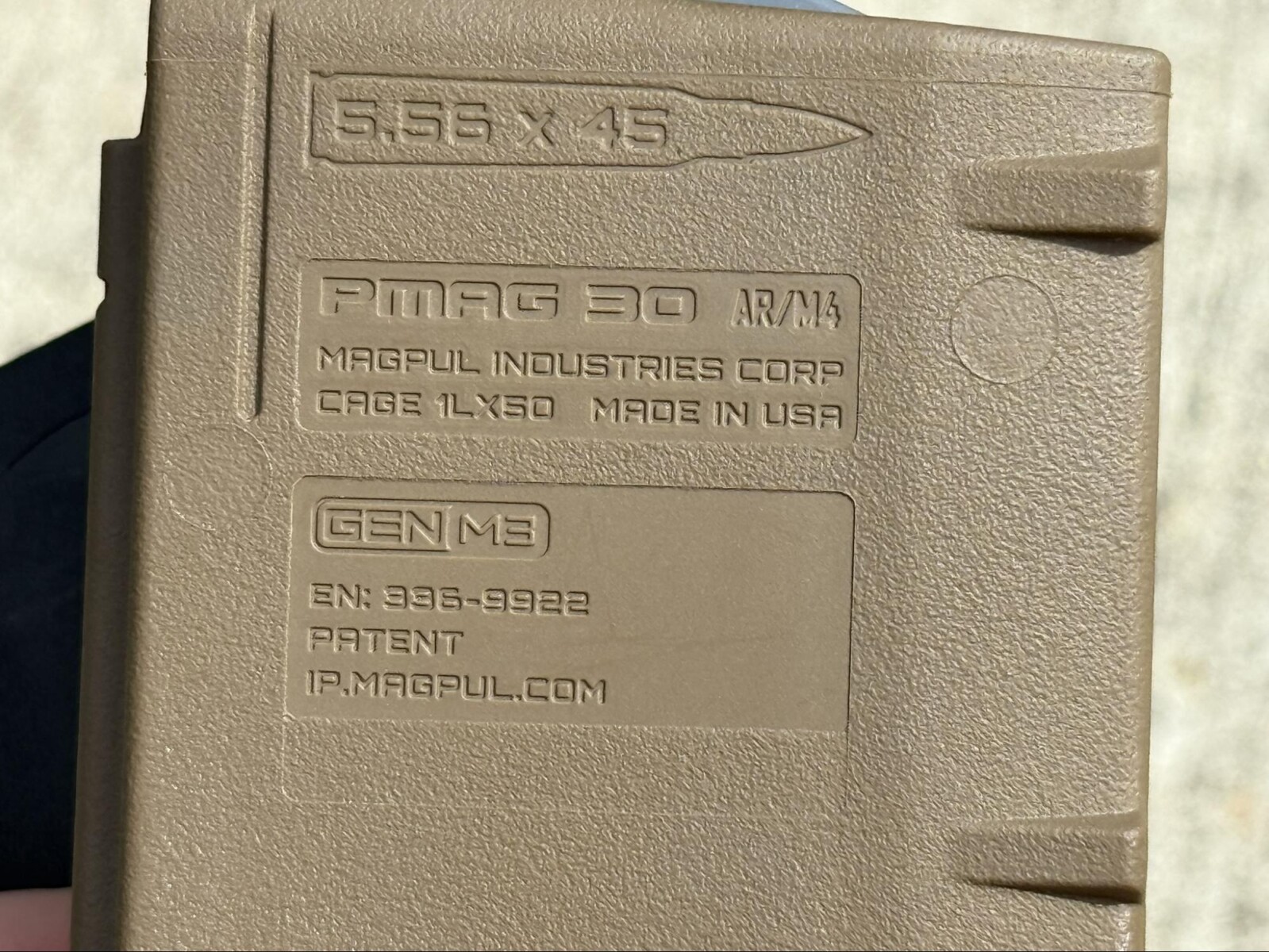
Roll mark for the Gen M3 PMAG
Some online reviews revealed owners of custom lowers have had issues with the over-insertion stop on Gen M3s. Apparently, it did not play nicely with their lowers, but they had no issues with Gen M2s…just something to consider.
Last Words
So, is there a definitive winner between Gen M2 and Gen M3 PMAGs? For the individual user? Sure, we each know what we need. For the community as a whole? Nope. But that’s okay.

Left to Right: 30-round Gen M2 PMAG, 10, 30, 40-round Gen M3 PMAGs
Gen M2 PMAGs are a phenomenal value. One look at the price of the Gen M2 PMAG 10-pack tells you everything you need to know about their value. Magazines, while durable, are also disposable. They won’t last forever, and being able to replace your worn-out AR mags so affordably is wonderful.
SALE  Magpul Ar-15 Gen 2 MOE Pmag 10 Pack
1347 reviews
Original price was: $129.99.$99.99Current price is: $99.99.
Magpul Ar-15 Gen 2 MOE Pmag 10 Pack
1347 reviews
Original price was: $129.99.$99.99Current price is: $99.99.
Gen M3 PMAGs bring enhancements that are worth the premium if you need them. Regardless of which one you lean towards, both types of PMAGs are reliable tools and have a place in your kit.
My advice is to try out some of both. Run them and see how they fit your setup, gear, and use cases. Once you know what you need, you can then stock up.