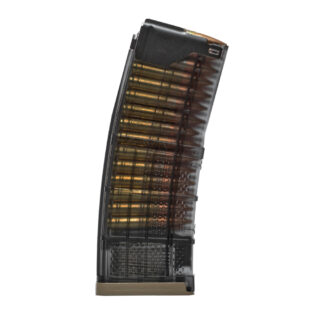
A reliable AR-15 magazine is the foundation of every dependable rifle build. It should lock firmly into place, feed reliably, and match both the rifle and the cartridge it was designed for. The Mag Shack offers an extensive collection of AR-15 magazines for rifles chambered in .223 Remington / 5.56x45mm NATO, .300 Blackout, 6.5 Grendel, 7.62x39mm, and many others.
The collection offers polymer and metal magazines from trusted manufacturers, including Magpul, Lancer, Duramag, Amend2, Hexmag, C Products Defense, ProMag, and Ruger. Buyers can compare common capacity options from 30-round mags, to smaller 20-round mags, down to reduced-capacity models 10-round magazines. Regardless of the capacity or caliber, you must ensure your magazine is compatible with your specific rifle and ammo.
What Are the Best Magazines for an AR-15?
The best AR-15 magazine is the one that feeds flawlessly in your specific rifle, supports your preferred caliber, and keeps running smoothly. Reliability is what really matters here, as a magazine is a core part of the rifle. Here are the most common AR-15 magazines to consider.
Magpul PMAG
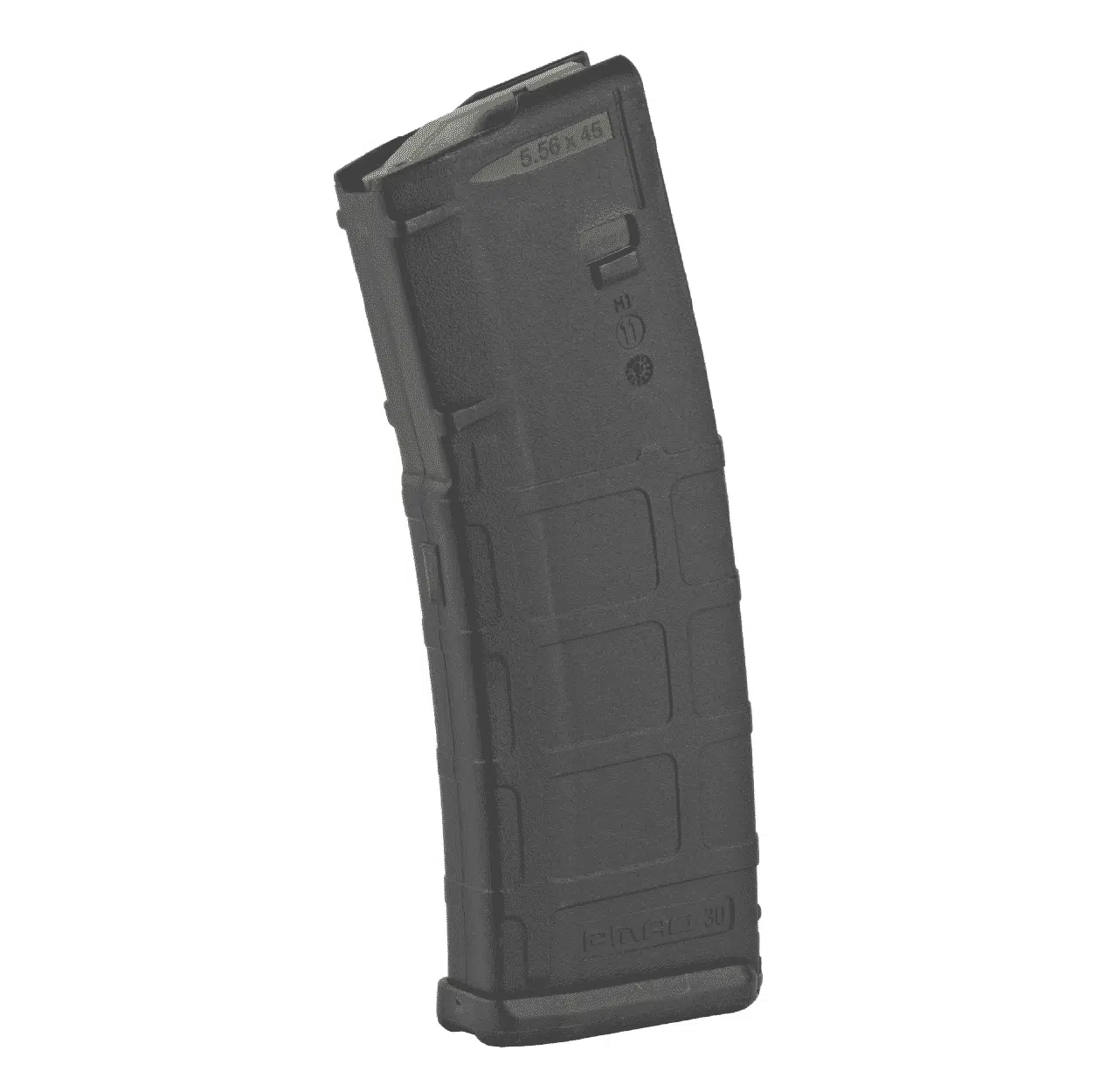
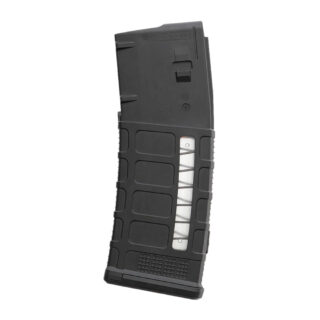
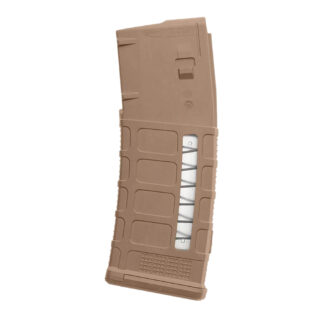
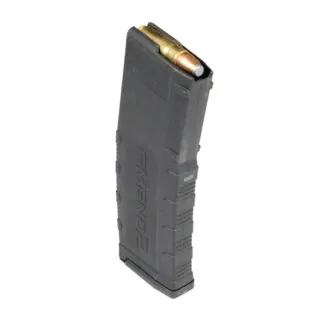
The Magpul PMAG (especially the Gen M2 MOE and Gen M3 Window) is the most widely used AR-15 magazine in the world. Its reinforced polymer body resists impact and UV degradation, the anti-tilt follower mitigates malfunctions, and the stainless-steel spring is rated for long-term loaded storage without losing tension. Gen M3 PMAGs fit mil-spec AR-15 lowers, M4-pattern mag wells, and a growing number of NATO-compatible platforms, including HK416 variants. If you are building your first AR-15 and need a reliable default magazine, the PMAG is the safest starting point.
Lancer L5 Advanced Warfighter
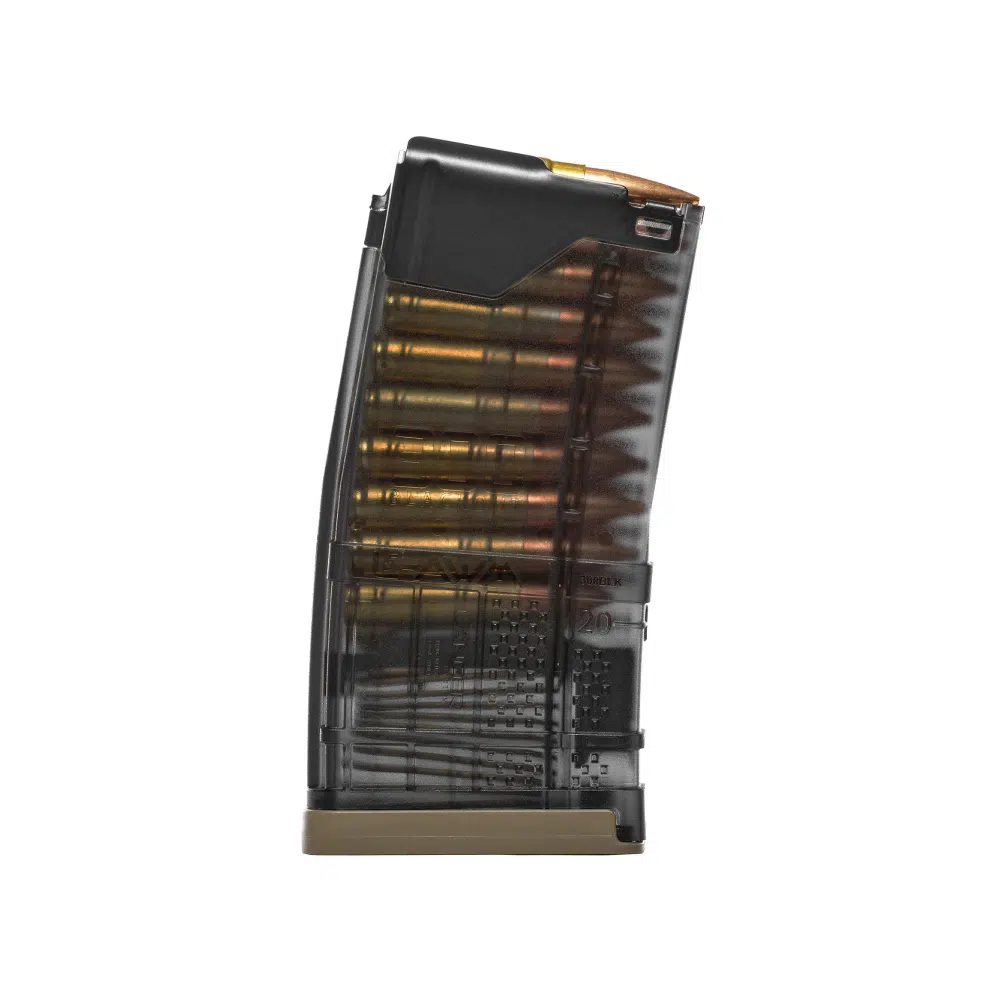
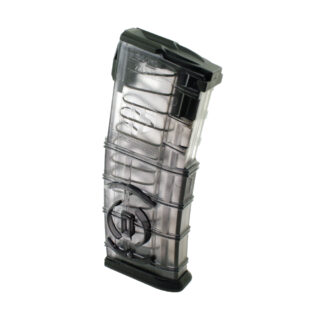
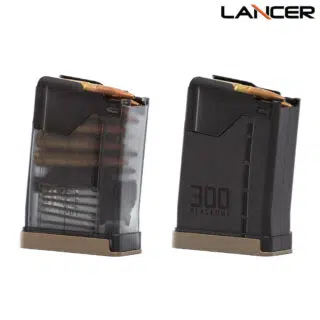
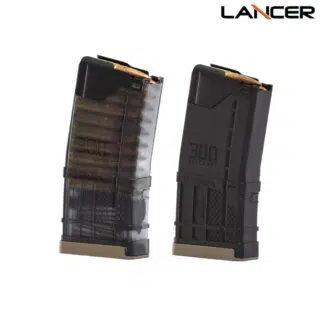
Lancer’s L5 AWM pairs a translucent polymer body with hardened steel feed lips. This hybrid design gives you the impact resistance of polymer and the long-term dimensional stability of steel at the critical feeding interface. The translucent body also lets you confirm round count at a glance, which is practical for home-defense setups and competition stages where a quick visual check saves time.
Aluminum and Steel USGI-Style Magazines
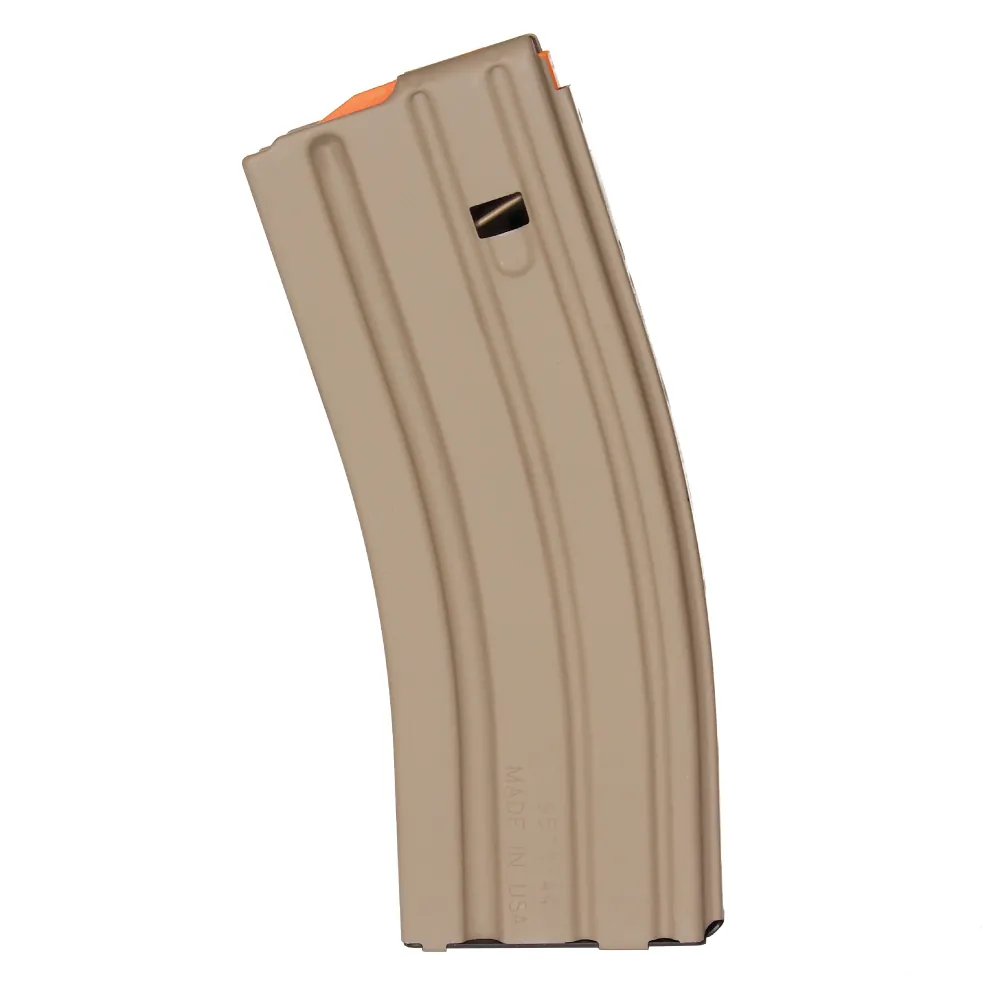
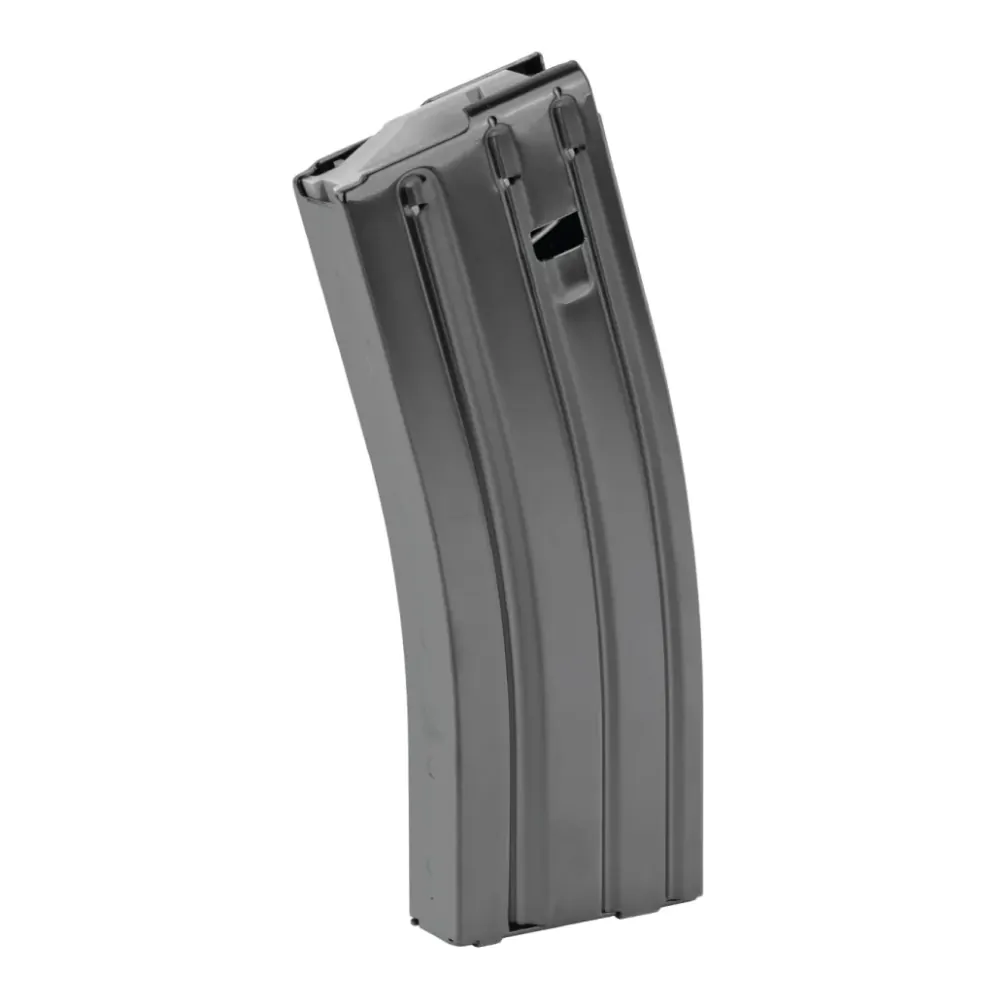
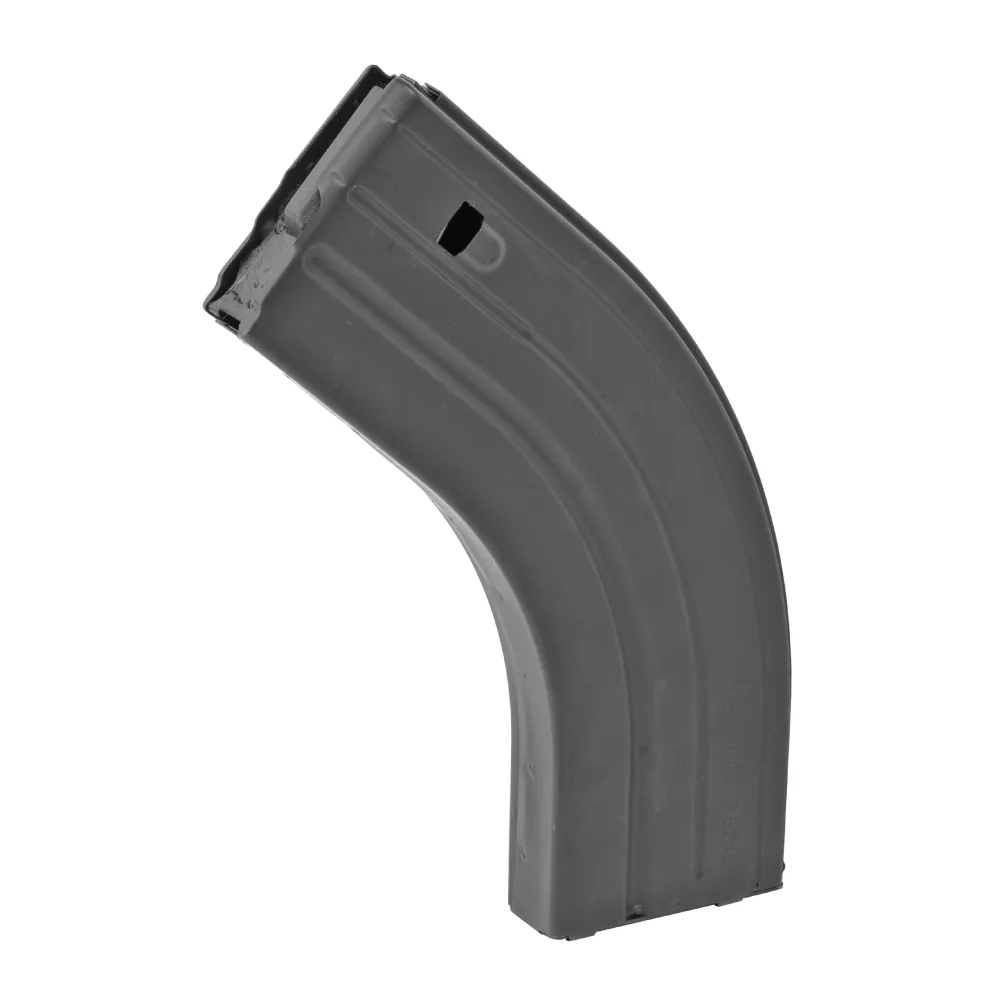
Metal magazines remain the mil-spec standard. OKAY Industries (the original GI contractor) and Duramag both produce aluminum-bodied mags with Teflon-coated or hard-anodized finishes that resist corrosion. Their thinner profile makes them easier to seat in tight chest rigs and plate carriers compared to some wider polymer designs. Steel-bodied mags from Duramag offer the most durable feed lips of any AR magazine type, which is an advantage in hard-use and duty environments where feed-lip spread is a concern over very high round counts.
Bottom line: start with caliber compatibility, then choose your material based on how you use the rifle. Opt for polymer for lightweight range and field use, aluminum for a slim GI-spec profile, steel for maximum feed-lip durability, and hybrid steel-lip designs like the Lancer for the best of both worlds.
AR-15 Magazine Types, Capacities, and Calibers
Capacity is usually the first filter shooters apply when choosing an AR-15 mag, and for good reason. It affects handling, weight, clearance, storage, and legal compliance.
30-Round Magazines
The 30-round magazine is the standard-capacity format for AR-15 rifles chambered in .223/5.56. It offers the best balance of round count and handling for range training, competition, and general use. Most aftermarket mag pouches, chest rigs, and range bags are dimensioned around the 30-round form factor, making it the most practical default choice.
20-Round AR-15 Magazines
The 20-round AR mag sits lower in the rifle, which reduces the overall profile and gives you more clearance when shooting from a bench, bipod, or prone position. Many precision-oriented shooters prefer the 20-round format because the shorter body doesn’t contact the ground or bench rest during supported fire. It is also a popular choice for compact builds and truck guns where magazine length matters.
10-Round AR-15 Magazines
The AR-15 10-round magazine is the go-to for shooters in states with capacity restrictions (such as California, New York, Connecticut, and others). Beyond legal compliance, 10-round mags are also favored by some hunters who want a compact, lightweight setup, and by benchrest shooters who have no need for higher capacity.
Caliber-Specific Magazines
Not all AR-15 magazines work across different calibers, even though standard .223/5.56 magazines will fit most AR-15 lowers; differences in case size, cartridge length, and bullet shape often require caliber-specific magazine designs for reliable feeding.
Cartridges like .300 Blackout, especially with heavier subsonic loads, benefit from dedicated magazines such as Magpul PMAG 300 BLK or Lancer models, which use adjusted internal geometry to prevent feeding issues, while 6.5 Grendel and 6mm ARC require wider internal dimensions and are not compatible with standard .223 magazines.
Large-bore options like .458 SOCOM, .450 Bushmaster, and .350 Legend use modified followers or single-stack designs within standard magazine bodies, which reduces capacity and makes it essential to use magazines built specifically for those calibers to avoid malfunctions.
Polymer vs. Metal AR-15 Magazines: Which Is Better?
This is one of the most common questions in the AR-15 world, and the honest answer is that both work well when matched to the right application. Polymer mags (like the PMAG) weigh roughly 20-25% less than their steel equivalents. Quality polymer mags flex on impact and typically survive drops onto concrete that would dent aluminum feed lips. Aluminum mags are more prone to feed-lip spread with repeated hard use, though anti-tilt followers and improved alloys have narrowed this gap.
Aluminum GI-style mags have the thinnest profile and seat most easily in tight mag pouches and plate-carrier inserts. Some polymer mags have slightly wider bodies that can be snug in certain carriers.
The polymer is inherently corrosion-proof. Aluminum requires anodizing or coating for protection, and steel needs a special finish to resist rust.
AR-15 Magazine Maintenance and Spring Life
Magazines are consumable parts. Even the best AR-15 magazine has a service life, and the spring is usually the first component to show fatigue. Here are practical guidelines to follow.
Quality magazine springs (such as the stainless-steel springs in Magpul PMAGs) can remain loaded for extended periods without a meaningful loss of tension. Magpul has publicly tested PMAGs loaded to full capacity for years with no measurable degradation in spring force. What wears out faster is repeated compression and decompression, so high-volume shooters who load and unload frequently should plan to rotate or replace springs sooner.
Inspect your magazines periodically for cracked feed lips, dented bodies, worn followers, and weak springs. If a magazine causes a malfunction more than once, mark it and retire it. Cheap magazines are not worth a reliability problem. For shooters who train heavily, keeping a rotation of magazines and replacing any that show wear is the simplest path to consistent performance.
How to Buy AR-15 Magazines Online
When shopping for AR-15 magazines online, having a wide selection in one place saves time and lets you compare options conveniently. The Mag Shack’s catalog lets you filter by caliber, capacity, brand, material, and pack size so you can narrow your search quickly instead of bouncing between retailers.
We carry single magazines as well as bulk cases for shooters who want to stock up for training rotations or outfit multiple rifles at once. Our collection offers PMAGs, aluminum GI mags, steel mags, Lancer hybrids, and caliber-specific designs for .300 Blackout, 6.5 Grendel, .458 SOCOM, and more.
The Mag Shack has been serving the shooting community for over 10 years, and our catalog is built around the brands and products that real shooters depend on: Magpul, Lancer, Duramag, Amend2, and others. If you are not sure which magazine fits your rifle or caliber, our team can help you find the right match before you order.