0
Set Up Your Nightstand For Home Defense
Waking up to an unexpected noise in the middle of the night is one of the most unsettling experiences. When my now wife and I first moved in together, it wasn’t more than a few months before we had what we thought was an attempted “break-in”.
We lived in a quiet apartment on the third floor and had very little foot traffic down our hallway. One night, around 11:00 p.m., we were lying in bed and heard the door handle start to jiggle. At first, it was very quiet, but eventually it got more aggressive, and you could tell someone was genuinely trying to get it open. Thankfully, it turned out to be only an elderly resident who was at the wrong door, but the event opened my eyes to the importance of setting up your nightstand properly.
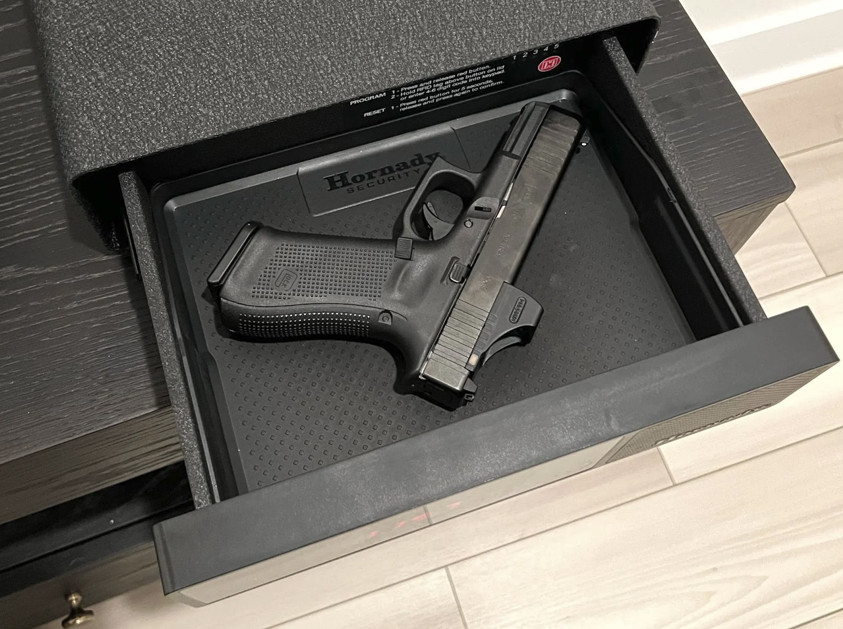
Select a safe that has room for things such as a spare magazine and flashlight.
At the time, I didn’t have a dedicated plan in place or a well-thought-out nightstand setup, but at least I had my Glock 19 in a quick-access pistol safe. From that point on, I began putting more thought into my bedside preparedness.
That’s why I built a simple, repeatable system in my nightstand. Hopefully, you or I never have to experience another reason to feel as if we “need” to use what’s next to our bed, but it’s better to have it ready and not need it than the opposite.
Building a Predictable Setup
It’s much more than simply having a gun nearby. It’s about reducing chaos and the potential to fumble when seconds count. If you’re awakened from a deep sleep, it’s likely dark in the room, your adrenaline will be pumping, and your nerves will be at an all-time high.
That’s why you should always ensure your gear stays in the same place and in the same order, so you can grab it confidently without needing to visually locate it. This takes practice as well, so you’ll want to run through scenarios often to build muscle memory.
Quick-access Safe or Retention Device
Safety is not negotiable. Whether you live alone or not, you should never have your firearms out where prying hands can gain access. There are plenty of quick-access options available where you can get to your gun in seconds, and can rest easy knowing that nobody else can access it.
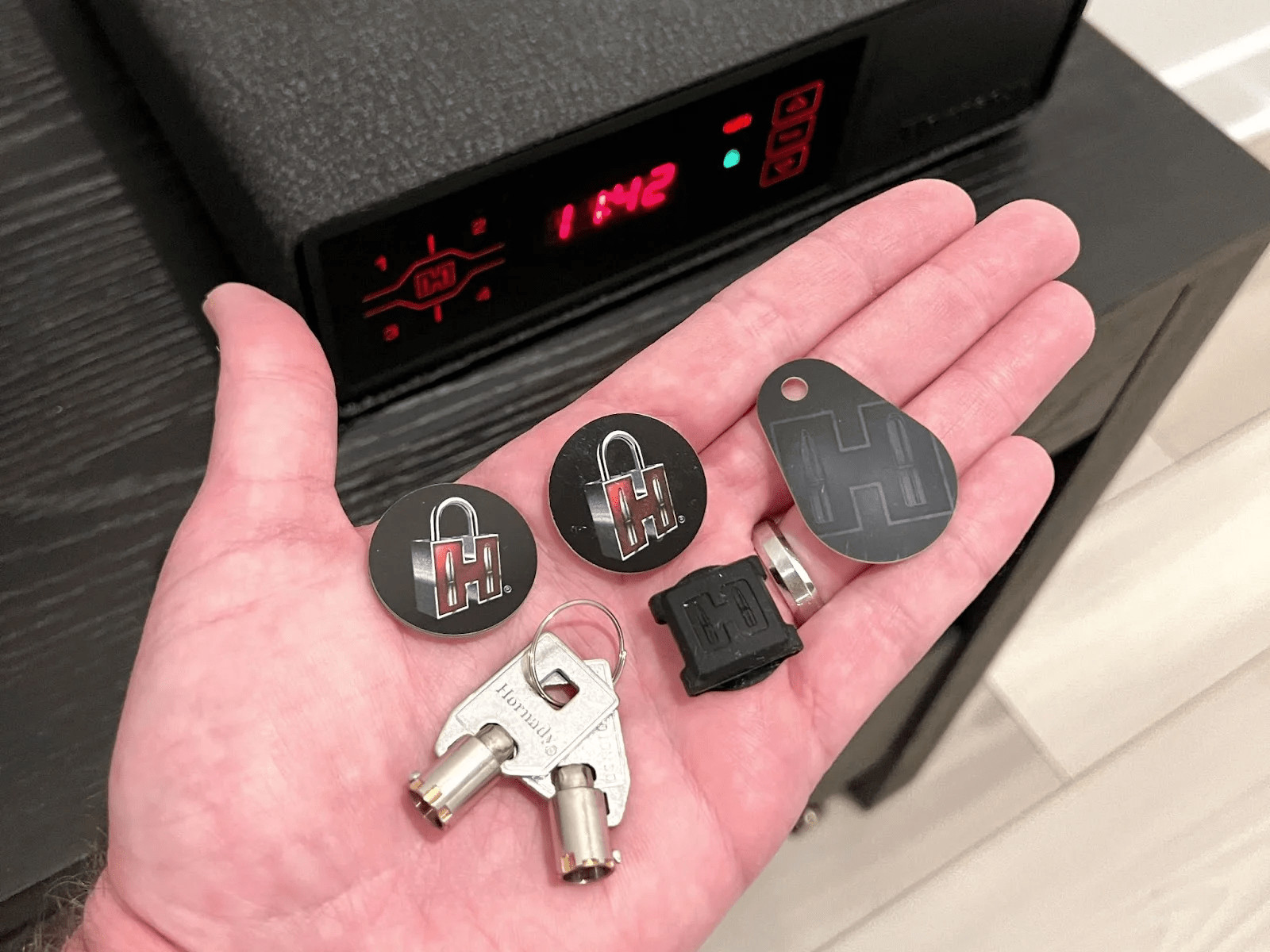
Quick access is a must.
Whether it’s a biometric metal safe or a polymer retention device like the StopBox, do not skimp on the product that keeps your gear safe and ready to go.
Firearm
Choose a firearm that you are confident and proficient with. A larger caliber is not always better “just because”. If you train regularly with your Glock 19 (9mm) and know it like the back of your hand, you’re better off keeping it in your nightstand over a Glock 20 (10mm).
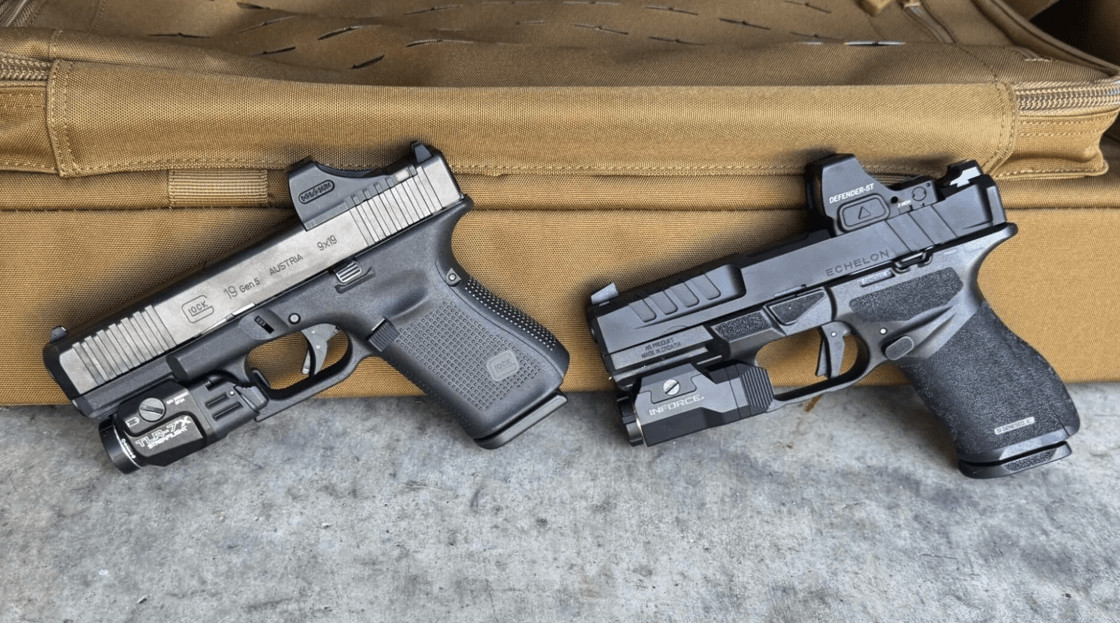
Both the Glock 19 and Springfield Echelon are great home defense options.
You also want your chosen firearm to be compact enough to maneuver easily. Keeping a full-size AR-15 next to your bed may sound like a great idea, but when you need to turn through tight corners in your home, you may regret having such a long barrel.
Last but certainly not least, consider a gun with ample capacity. It’s always better to have more rounds and not need them than the opposite. To help achieve this, see the spare magazines section below.
Spare Magazine(s)
Having a spare magazine next to the gun is a small, yet often overlooked, redundancy. It isn’t about assuming a firefight; it’s about not letting a single failure put you or your family in danger.
You’ll want to ensure you store and orient the magazine in the same way every night so you never have to look to know which end is “right” to reload quickly. Of course, you’ll want even your spare magazine loaded with defensive ammo. If you ever need to use your weapon, the fewer rounds you have to use, the better.
Flashlight (Handheld and Weapon Mounted)
Light is the underrated piece of the puzzle. A reliable flashlight, both on your weapon and in your hand, is ideal. Identifying a threat and avoiding tragic mistakes is critical.
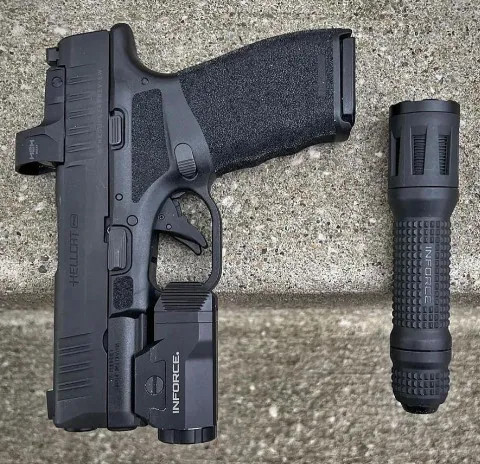
Having both lights will ensure you’re well prepared.
I prefer lights with a strobe and momentary-on feature, so I can illuminate a hallway or doorway briefly without broadcasting my position the entire time I check the house. The strobe feature is often overlooked, but it can completely disorient an attacker and potentially prevent you from even needing to fire your weapon. Be careful, though; if it’s used in tight spaces and especially against light-colored walls, it can also disorient you. Use with caution and train regularly.
As you should already be doing with any optics you own, change or recharge the batteries on a regular schedule to prevent forgetting. The last thing you want is to reach for your light and it be dead.
Importance of Maintenance
Maintenance matters in ways I didn’t expect at first. As I just mentioned, flashlight batteries die quietly, safes can have sticky mechanisms, and magazines can get dirty and jam. You should inspect your gear regularly, with thorough inspections at least twice a year.
Returning to the placement and orientation of your items, these are also factors you should constantly be checking as well. Building muscle memory and being able to “do it in the dark” is extremely important.
Final Thoughts
At the end of the day, the goal of my nightstand setup isn’t to turn my bedroom into a battle station. It’s to give me options and to reduce the chance of panic-driven mistakes. It can also be a tool to help you get to other resources, such as those that may be in a full-size safe if need be.

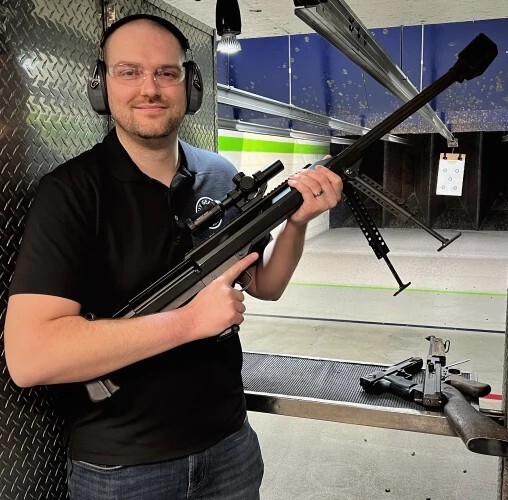
Not my style, but it sure gets the point across! Source
With thoughtful choices about equipment and consistent training, you’ll likely sleep a little easier knowing you have a plan.
As always, stay safe, train hard, and have fun.