0
Pistol Safeties: A Hindrance or Necessity?
Many debates circle the firearms community like a revolving door. One of those is whether or not manual safeties are worth having on pistols.
Depending on who you talk to, you may receive a very passionate response. Looking at it from an unbiased perspective (or at least trying to!), I really can see both sides of the argument.
Firearm safety as a whole is extremely important, so it’s hard to deny the benefit of adding layers of protection. However, those layers of protection can reduce your response time, cause the pistol to fail, and ultimately make it more difficult to stop a threat when your adrenaline is pumping.

Do you know how many safeties a Glock has?
You may have an idea now of which side of the debate I lean towards, but let’s talk about the types of safeties and their respective pros and cons, then reconvene to see how you feel about the topic at hand.
Types of Safeties
Manual/Thumb Safety
These are the types of safeties that probably come to mind first for most people. Sometimes called manual or thumb safeties, these are just as they sound. Until the safety is manually switched to the “off” position, the gun will not fire.

Oversized thumb safeties can be a blessing and a curse.
They range in size, with some being close to flush with the frame, while others, like the above, stick out like a sore thumb (get it?!). While they add to the overall safety of the pistol, they can accidentally be switched on/off at the wrong time, which can be less than ideal. It’s also one more task you have to remember to complete if something goes bump in the night and wakes you. Thankfully, many models these days are available with or without thumb safeties.
Trigger Safety
Have you ever noticed some triggers have a little lever sticking out the front? That little lever is actually a safety. Until that lever is depressed, signaling you are directly pulling back on the trigger, the gun will not fire.
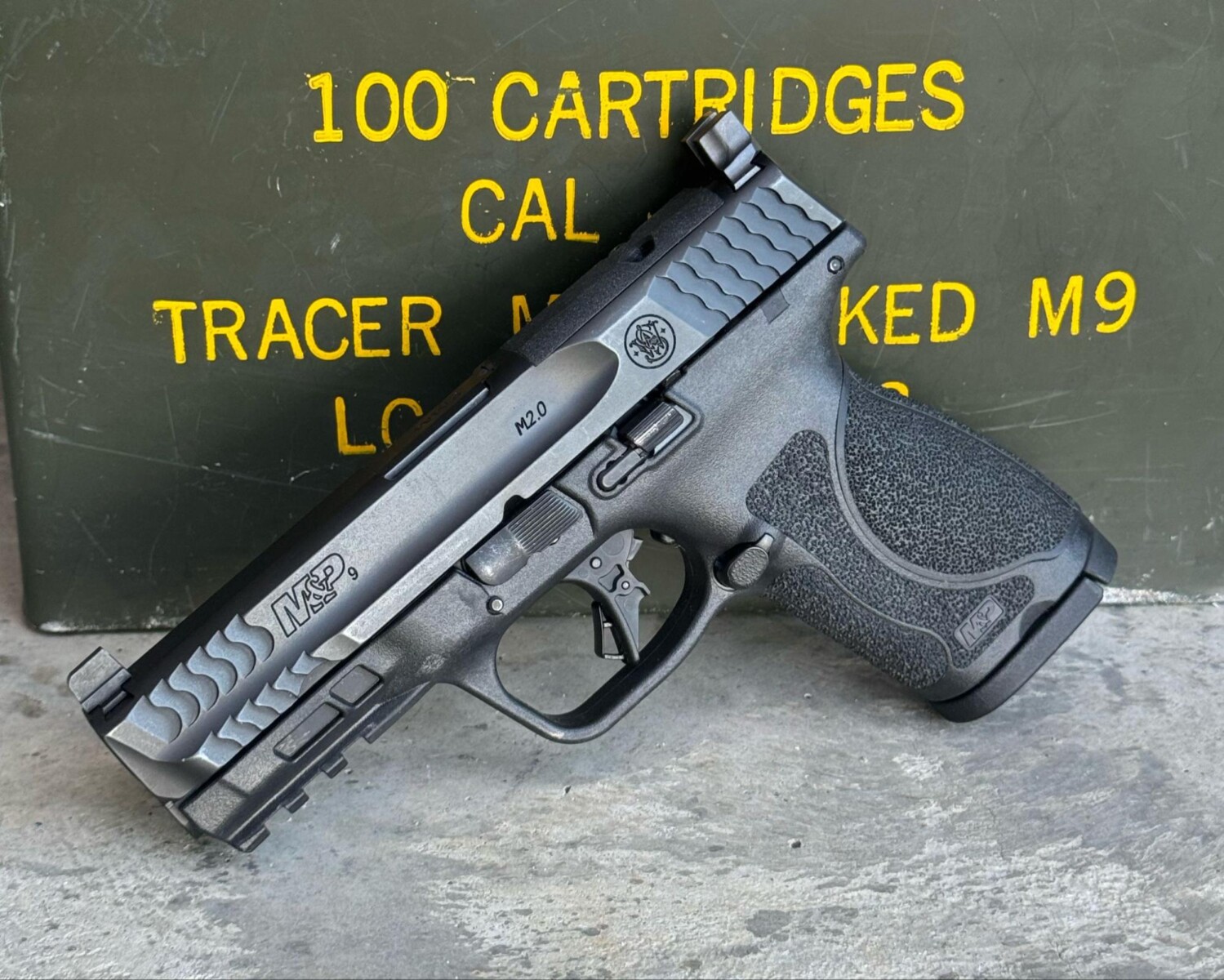
Smith & Wesson’s M&P M2.0 utilizes a trigger safety that you barely notice when shooting.
It may seem silly to have a “safety” on the trigger because your finger pulling it will likely deactivate it, but if you drop your pistol on accident, you’ll be glad to have the additional safety measure in place. Since a drop typically wouldn’t involve a “finger-like” object coming in contact with and pulling back on the trigger, it can stop it from going off after hitting the ground.
Grip Safety
We don’t see grip safeties on many of the most popular pistols these days, but you can find them on pistols such as the new Springfield XD Mod.3 and the Smith & Wesson Shield EZ. They look a bit silly, in my opinion, but for the sake of safety, I can see their usefulness.

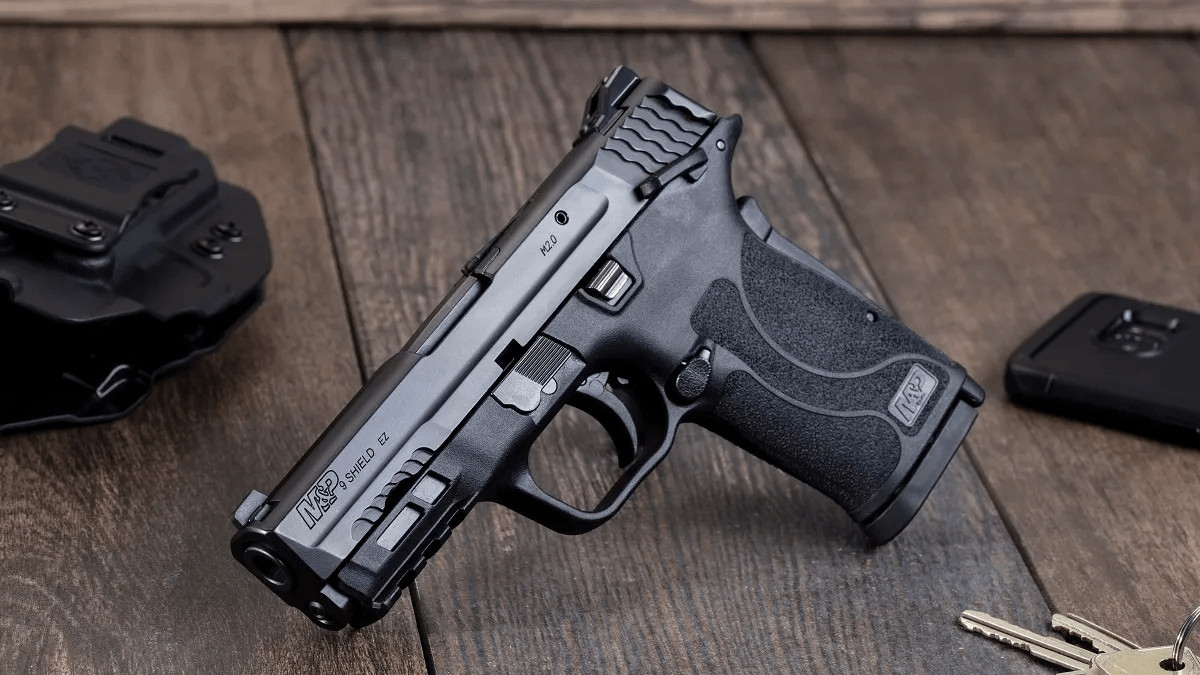
If only it didn’t have that unattractive grip safety! Source
Until you obtain a proper grip on the pistol, thus depressing the safety, it will not fire. It’s a good idea in theory, but what if you’re injured and can’t grasp the pistol as you usually would? And while unlikely, what if something gets lodged behind the safety and you cannot depress it?
Other “Safeties”
There are also safeties you can’t see but are there to have your back. Take, for instance, a Glock pistol. In addition to the trigger safety, there is a firing pin safety and drop safety, all of which come together to create what Glock calls the “Glock Safe Action System.”
Three independent safeties working together result in the pistol being inherently safe.
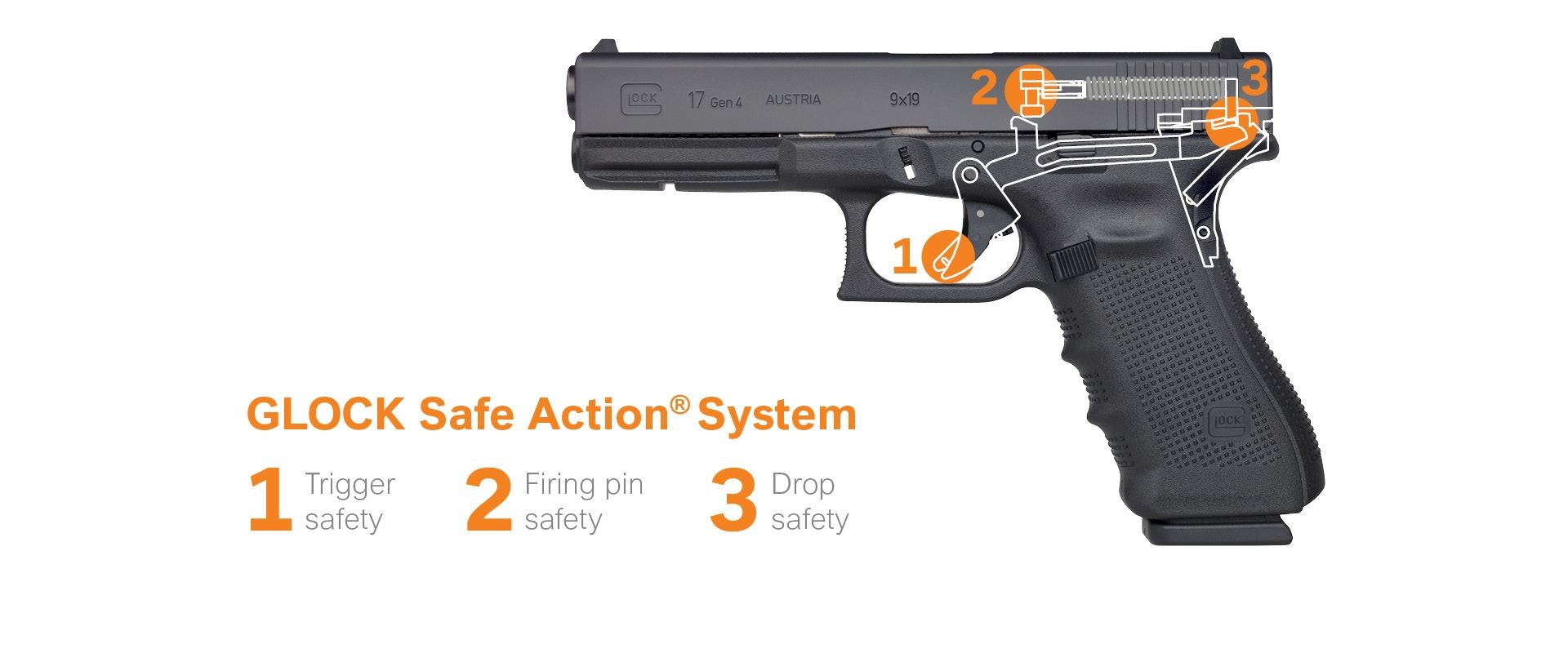
Glocks are extremely safe despite not having a manual thumb safety. Source
The Ultimate Safety
Now that we’ve discussed several of the most common safeties that you’ll encounter in or on a pistol, there is still one left that we’ve saved for last. It’s the most important, and there is no debate about it.
Your trigger finger is the ultimate safety. Trigger discipline should be practiced from the first time you pick up a firearm. In a nutshell, trigger discipline is keeping your finger outside the trigger guard and off the trigger until you are ready to shoot.
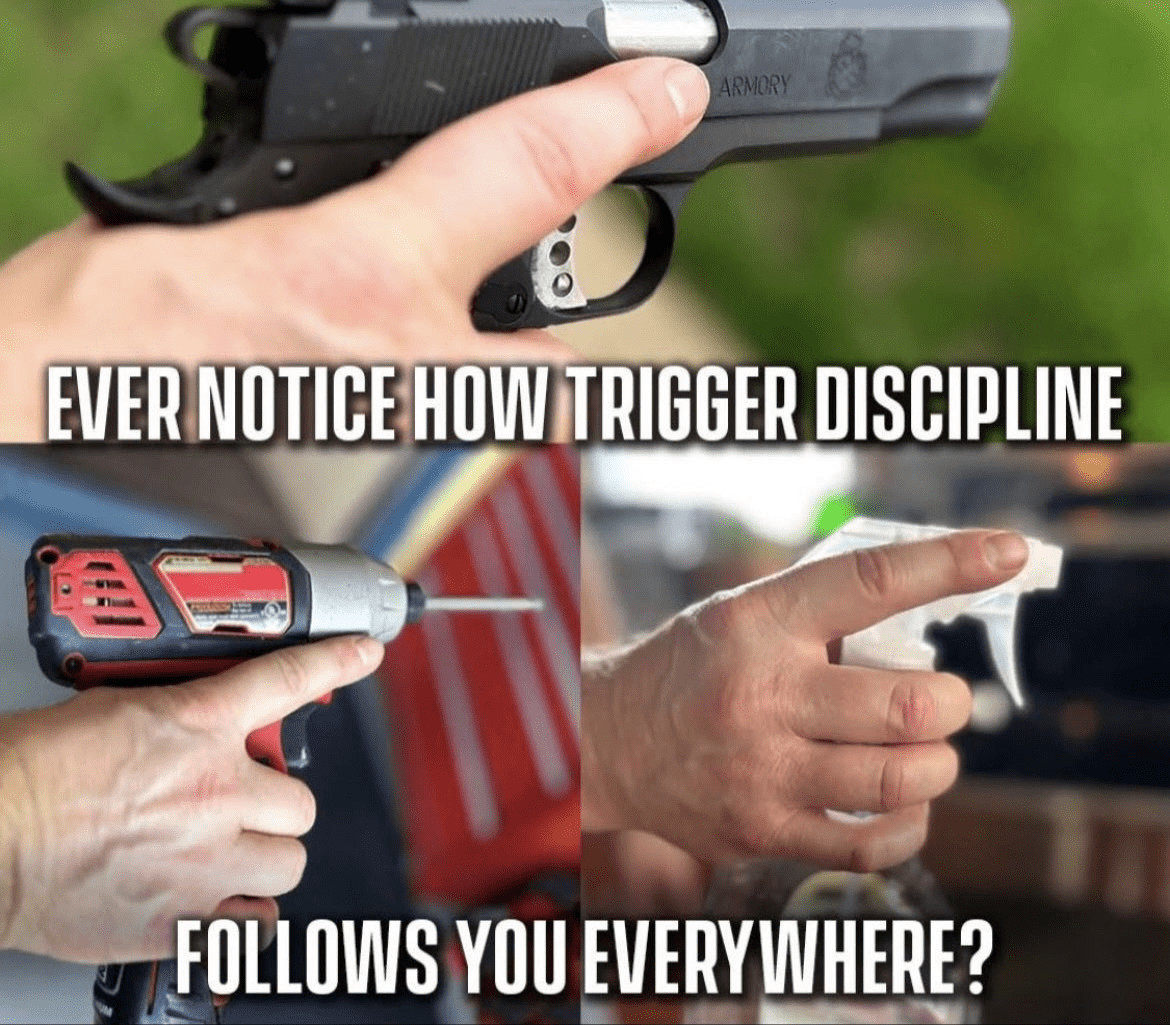
Once you practice it long enough, it becomes second nature and even follows you with non-firearm-related items. Source
Final Thoughts
So here we are. We discussed the types of safeties and their pros and cons and stressed the importance of the “ultimate safety,” which is you and your training.
Again, firearm safety is crucial, so I am not stating I am against handgun safeties in general. However, when it comes to a handgun that will be filling a defensive role, such as concealed carry or home protection, I believe it should not have a manual thumb safety. As for all of the other safeties, by all means.
Why? Even a millisecond can be the difference between life and death, so having the potential to fumble with a manual safety is not worth the risk, in my opinion. With proper trigger discipline and training, your gun will remain safe regardless of whether it has a manual safety. For a range gun or competition gun, a manual safety is less of a concern.
I’d like to conclude by recommending that you consider all the pros and cons and decide for yourself what you’re most comfortable with. It is essential to take your time to decide on matters regarding safety.
As always, stay safe, train hard, and have fun.